

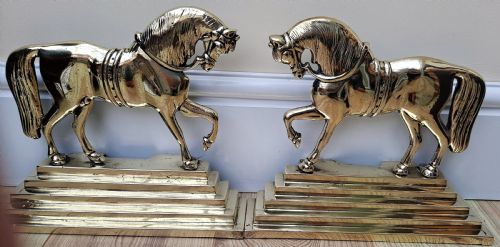
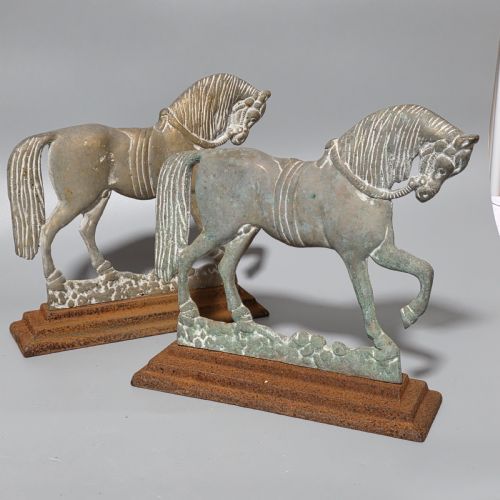


Vintage Horse Door Porter
A vintage horse door porter keeps heavy interior doors open with equestrian presence, cast in solid brass or iron to anchor a room.
Vintage Horse Door Porter
Most examples found here date from the nineteenth century into the early twentieth century, spanning Victorian and Edwardian periods. Buyers encounter both single pieces and matched pairs fashioned in heavy cast metals.
Forms vary from saddled horses and equine figures to specific character subjects like Dr Jim. English origin dominates the listings, reflecting traditional domestic hardware manufacture.
How they were made
Foundries utilised cast brass and cast iron to achieve the substantial weight required for holding doors. Molten metal poured into sand moulds captured the fine muscular detail of horses and the contours of saddles.
Brass versions often received a polished finish to highlight the metallic lustre, whilst iron examples relied on solid casting to provide maximum heft. Secondary assembly was minimal, as the primary mass was cast in one or two robust sections.
Vintage Horse Door Porter Retail Price Guide 2026
Typical asking prices for vintage horse door porter among the pieces listed under this phrase on Sellingantiques today, from the lower quarter to the upper quarter. They describe what is for sale here now, not the wider market.
Among the equine cast iron sits Dr Jim, a character doorstop ready to hold your door.
What varies in quality
The crispness of the casting defines the upper tier of these pieces, where facial expressions, harness details, and equine anatomy remain sharp and well-defined. Softer, worn contours indicate secondary castings or heavy wear over generations of domestic use.
Material choice and overall heft also set examples apart, with heavier brass and iron castings offering superior stability against slamming doors. Ornate detailing and matched pairs demand greater attention from makers, elevating the status of the item.
The Vintage Horse Door Porter Glossary
- Door porter
- A heavy movable weight, often with a carrying handle, placed against an interior door to hold it open. These items were essential in large period houses to manage draughts and regulate airflow between rooms.
- Cast brass
- An alloy of copper and zinc melted and poured into a mould to set into a rigid shape. This material provides both a bright metallic appearance and sufficient density for door control.
- Cast iron
- A strong, heavy iron-carbon alloy shaped by pouring into sand moulds. It offers exceptional mass and durability for utilitarian household objects.
- Chimney horse
- A traditional decorative or functional metal figure, sometimes associated with hearth ornaments or door furniture. They often take equine forms reflecting rural and domestic life.
Vintage Horse Door Porter: Frequently Asked Questions
How heavy are vintage horse door porters?
These pieces possess substantial weight derived from solid cast brass or iron construction. This heavy mass is specifically engineered to hold open interior doors against draughts.
The density varies slightly between iron and brass examples, but all are built to serve as permanent functional weights in a room.
Where were horse door stops used?
Households placed these heavy items on the floor near interior doorways to prevent doors from swinging shut unexpectedly. They were common accessories in period hallways, drawing rooms, and studies.
Their dual role combined practical door control with decorative equestrian subjects suited to Victorian and Edwardian interiors.
Are they sold as pairs?
Listings include both individual doorstops and matched pairs of equine figures. Pairs often originated from grander reception rooms where symmetry beside double doors was desired.
Single examples are equally common, functioning independently to secure standard household doors.
How do I identify a Victorian door porter?
Victorian examples display the characteristic robust casting methods of the nineteenth century, using heavy brass or iron. Stylistic cues include naturalistic equine anatomy and traditional harness details.
Makers of this era focused on utility combined with solid metal craftsmanship, producing durable items designed for daily domestic service.