


Vintage Horn Cane
These vintage horn cane examples combine practical support with hidden blades or ingenious mechanisms, offering both traditional utility and collector intrigue.
Vintage Horn Cane
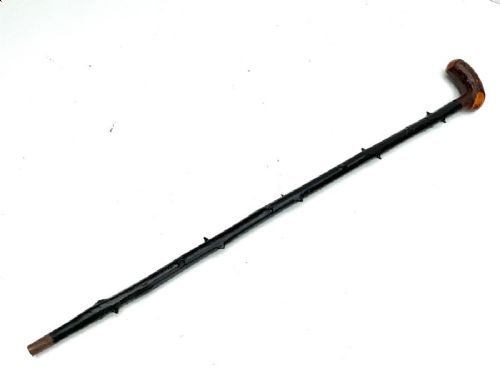
A vintage horn cane is a walking support featuring shaped horn, antler, or bone handles paired with shafts of wood, malacca, or covered materials. You will frequently encounter examples from the nineteenth century, the Edwardian era, and the early decades of the twentieth century.
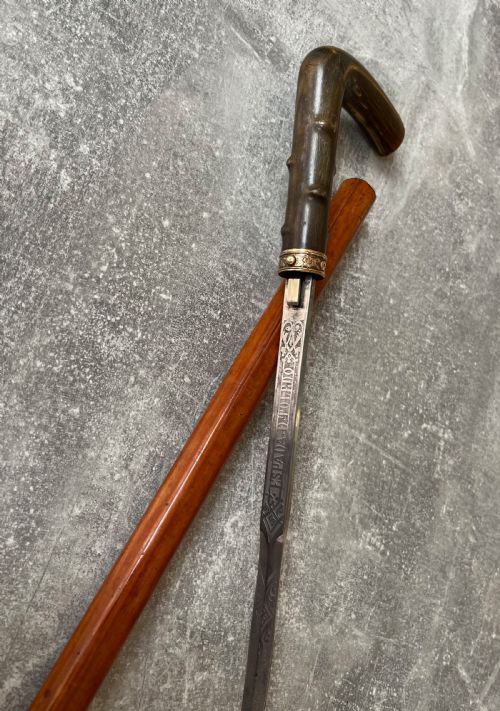
Many items in this category double as sword sticks or incorporate concealed gadgetry such as hidden corkscrews. The dominant styles span Victorian, traditional Irish, and maritime folk art origins.
Materials and construction
Craftsmen utilised specialised joining techniques to unite organic handles with rigid shafts, sometimes incorporating snakeskin coverings or whalebone structures into maritime pieces.
Listings feature items incorporating horn, malacca cane, silver, brass, steel, and rosewood across nineteenth-century and Edwardian periods.
Qualities that distinguish examples
The sophistication of the hidden mechanism or blade distinguishes standard supports from complex gadget sticks, particularly those featuring button releases or integrated corkscrews. Superior execution is evident in the precise fitting of silver collars and the carving detail on handles shaped as animals.
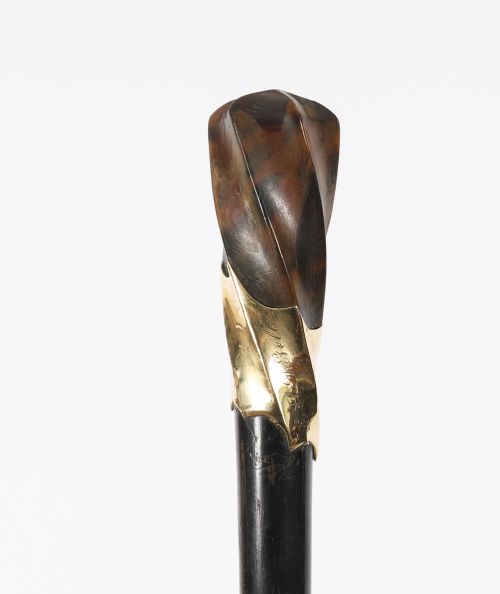
Material selection also defines the tier of a piece, with solid gold pommels and etched Toledo steel blades marking out the more ambitious workshops.
Brigg
The Vintage Horn Cane Glossary
- Pommel
- The rounded handle or decorative knob at the top of a cane. It is shaped from horn, bone, or precious metal to fit the hand.
- Malacca
- A sturdy, spotted rattan cane stem imported from Southeast Asia. It serves as the lightweight and resilient shaft for many traditional walking sticks.
- Sword stick
- A walking cane with a concealed blade locked inside the shaft. A button release typically secures the blade until needed.
- Collar
- The metal band fitted immediately below the handle. It often bears hallmarks, silver mounts, or owner initials.
- Folk art
- Items handcrafted by sailors, rural workers, or independent artisans outside formal manufacturing guilds. Maritime examples frequently utilise whalebone or shark vertebrae.
Vintage Horn Cane: Frequently Asked Questions
What is a vintage horn cane?
A vintage horn cane is a walking support featuring a handle carved from natural horn, paired with a wooden or malacca shaft. These pieces often date from the nineteenth or early twentieth century.
Many examples include hidden functionalities, such as concealed blades or built-in corkscrews, reflecting the ingenuity of period makers.
How do sword sticks work?
Sword sticks conceal a steel blade entirely within the wooden or malacca shaft of the cane. A button release mechanism keeps the blade securely locked inside during normal walking use.
Releasing the catch allows the user to draw the blade smoothly from the protective outer casing.
What materials are used for shafts?
Shafts are predominantly constructed from malacca cane, rosewood, or standard wood. Some maritime pieces incorporate unusual materials such as whalebone or shark vertebrae.
Collars made from silver, brass, or gold-coloured metal frequently reinforce the join between the handle and the shaft.
How do I identify the period?
Dating relies on stylistic clues, construction methods, and metal hallmarks found on silver collars. Nineteenth-century examples often display folk art characteristics or specific regional styles.
Edwardian and later twentieth-century pieces tend to show more standardised manufacturing techniques alongside traditional horn work.