

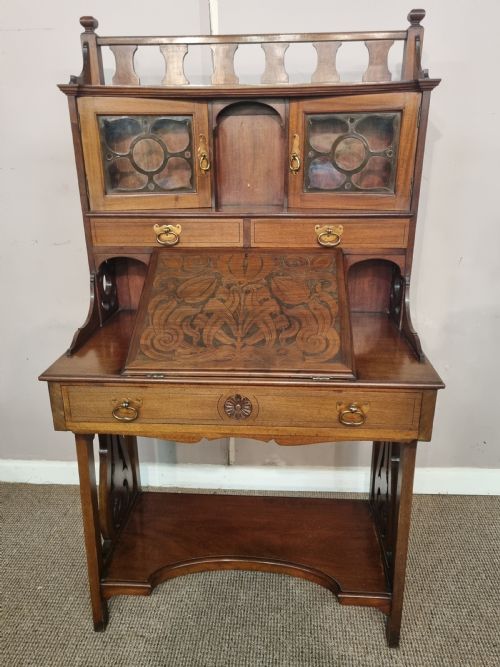


Vintage Home Office Cabinet
These vintage home office cabinets provide clever enclosed workspaces and storage, bringing period character and practical organisation to modern rooms.
Vintage Home Office Cabinet
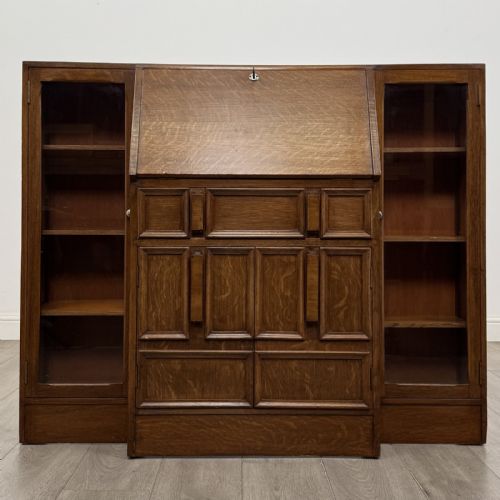
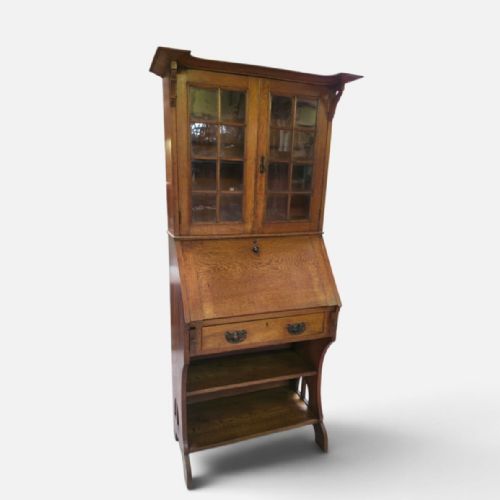
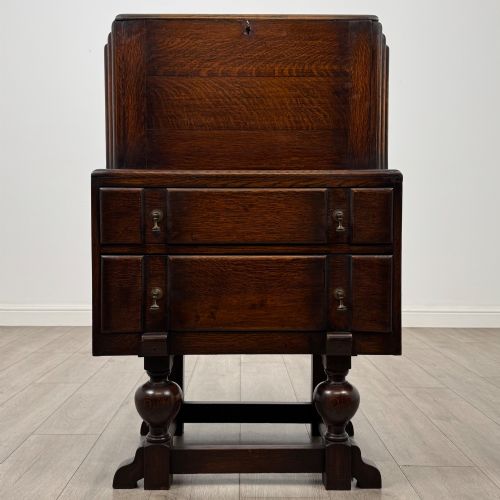
A vintage home office cabinet typically takes the form of a bureau, bureau bookcase, or fitted writing desk designed for private correspondence and administrative work. These pieces combine a writing slope or pull-out desk surface with pigeonholes, small drawers, and larger storage compartments underneath.
Buyers browsing this selection most frequently encounter oak and walnut models from the early twentieth century, alongside Edwardian and Art Deco variations. Forms range from compact narrow writing bureaux to tall bureau bookcases featuring glazed upper display sections.
How they were made
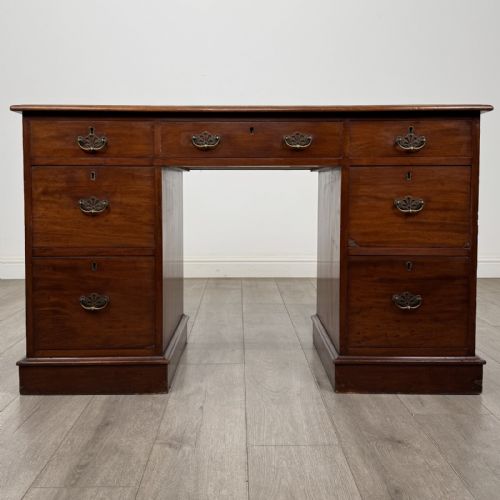
Cabinet makers relied primarily on solid oak, walnut, and mahogany, frequently applying decorative veneers to drawer fronts and writing surfaces. Brass handles, hinges, and escutcheons complete the hardware, while leather inserts occasionally line the writing slopes.
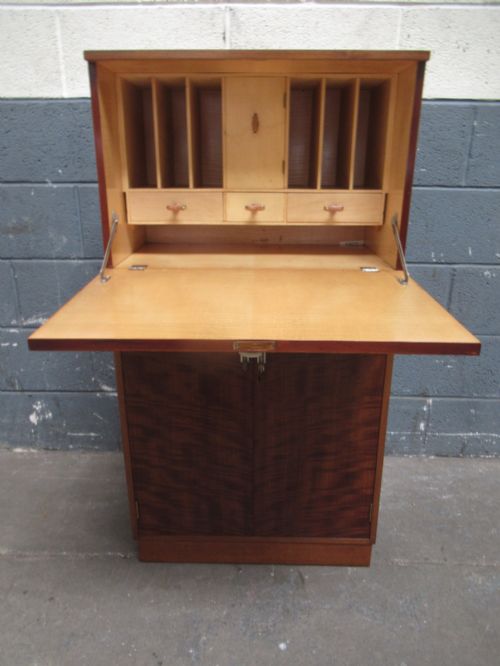
Construction techniques balanced domestic utility with aesthetic display, incorporating hand-carved detailing during the Arts and Crafts period and streamlined geometric forms in later Art Deco examples. Interiors often feature elaborate nests of small drawers and hidden compartments behind drop-front writing slopes.
Vintage Home Office Cabinet Retail Price Guide 2026
Typical asking prices for vintage home office cabinet among the pieces listed under this phrase on Sellingantiques today, from the lower quarter to the upper quarter. They describe what is for sale here now, not the wider market.
Several pieces conceal hidden compartments behind their interior drawers, offering secret spaces originally intended for private letters.
What varies in quality
Quality rests upon the selection of timbers, the crispness of cabinet joints, and the complexity of the internal fittings. Pieces featuring burr walnut veneers or detailed carved woodwork represent a higher standard of craftsmanship than plain utility models.
The sophistication of the internal mechanism dictates the grade of the piece, particularly regarding the smooth operation of drop-front hinges, tambour doors, and automatic support brackets for writing surfaces.
E Gomme·F.H. Marshall & Co Glasgow
The Vintage Home Office Cabinet Glossary
- Bureau
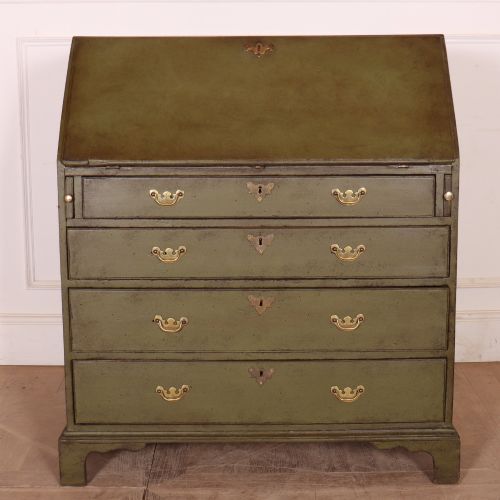
- A desk featuring a hinged sloping flap that opens to reveal a fitted interior of drawers and pigeonholes. This form provides a concealed workspace that can be closed shut when not in use.
- Bureau bookcase
- A tall cabinet combining a lower bureau desk with an upper shelving section, typically enclosed by glazed doors. This dual-purpose form served for both writing and book storage.
- Tambour
- A series of narrow wooden slats glued to a canvas backing, allowing a door to slide smoothly around a curved track. It conceals compartments in desk interiors and cabinet fronts.
- Secretaire
- A piece of furniture incorporating a concealed writing drawer or drop-front desk compartment. The term often denotes a drawer that pulls out and folds down to form a writing surface.
- Pigeonhole
- A small compartment within a desk interior designed for sorting letters and documents. These compartments are characteristic of traditional bureau fittings.
Vintage Home Office Cabinet: Frequently Asked Questions
What is a bureau bookcase?
A bureau bookcase combines a lower writing desk with an enclosed shelving unit above. The drop-front desk opens to reveal fitted pigeonholes while the upper section stores books behind glass doors.
This tall hybrid form maximises vertical storage space while maintaining a dedicated writing area within a single footprint.
How do I use a drop-front desk?
The hinged flap pulls down towards you to create a flat horizontal writing surface. Supporting arms or brackets automatically extend from the cabinet frame to hold the weight of the flap.
Inside, you will find small drawers and letter slots for organisation. Closing the flap hides your papers and maintains a tidy room appearance.
What woods were commonly used?
Oak and mahogany appear frequently across the Victorian and Edwardian periods. Walnut and burr walnut gain prominence in later Art Deco pieces.
Cabinet makers selected these hardwoods for their durability and attractive grain patterns, often enhancing them with decorative veneer work.
How do I identify an Art Deco bureau?
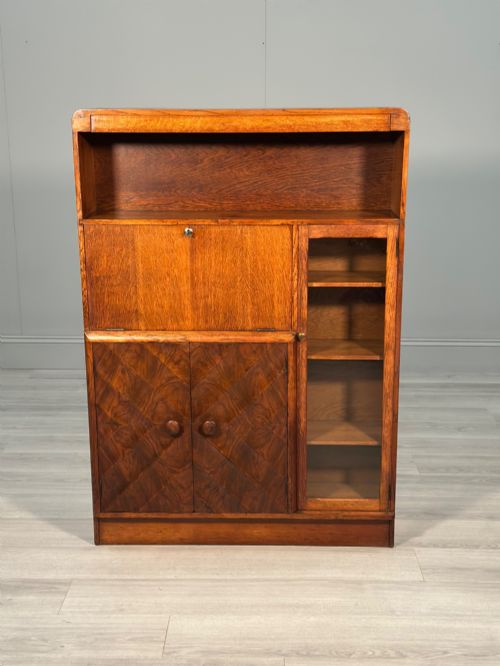
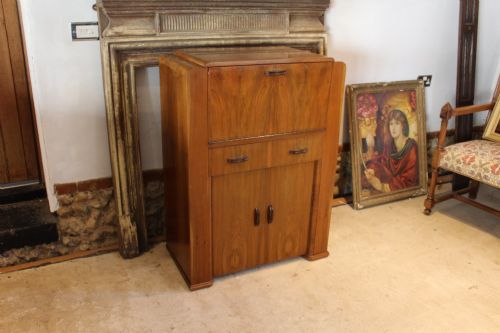
Art Deco pieces from the 1930s feature streamlined silhouettes and striking veneer patterns, often utilising walnut. Carved ornamentation gives way to clean geometric lines and polished wood surfaces.
Makers such as E Gomme and F.H. Marshall produced distinct upright bookcase bureaux during this era.