


Vintage Hinged Gold Bangle
A vintage hinged gold bangle secures around the wrist with a clever pin joint, offering enduring comfort and effortless daily wear.
Vintage Hinged Gold Bangle
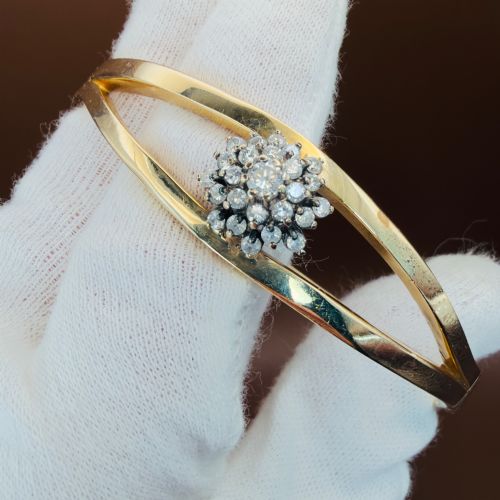
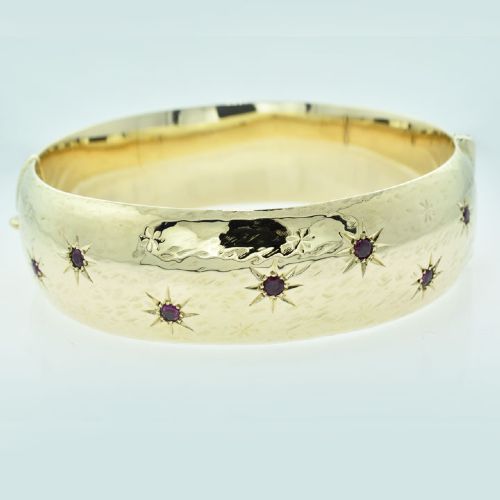
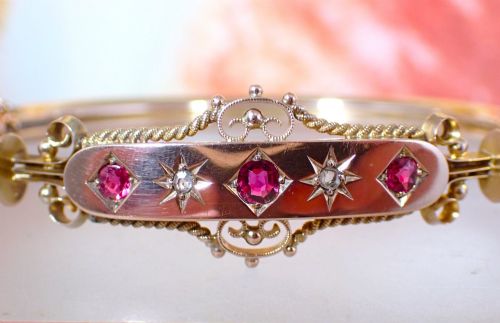
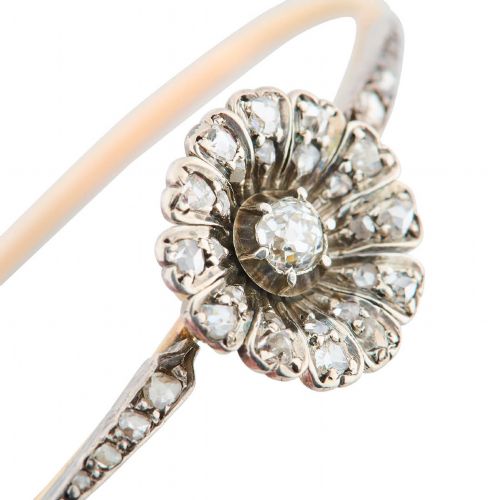
A vintage hinged gold bangle is a rigid circular or oval bracelet designed with a functional side hinge and a secure clasp, enabling the piece to open and close smoothly around the wrist. The selections span the Victorian, Edwardian, and mid-century periods, alongside pieces from the 1920s, 1950s, and 1960s.
The historical forms range from plain polished or floral engraved surfaces to elaborate cluster, double heart, and cuff designs. Whether you prefer the restrained elegance of an Edwardian diamond star motif or the bold presence of a chunky 1960s diamond cluster, these bracelets combine structural engineering with decorative artistry.
How they were made
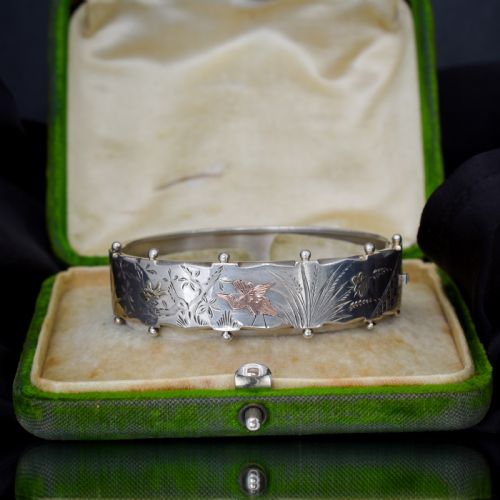
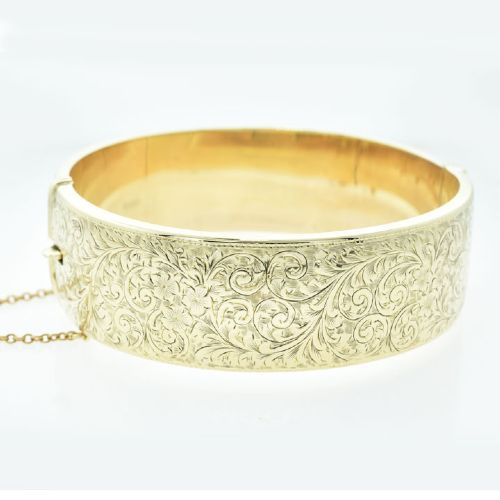
Goldsmiths constructed these bangles using varying purities of yellow and white gold, alongside rolled gold and silver-topped gold, shaping the metal into rigid hoops fastened by hidden hinges and snap clasps. Many surfaces received detailed hand engraving, chasing, or applied floral motifs.
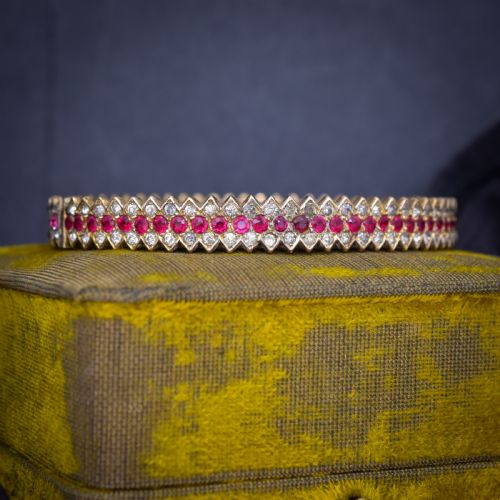
Gemstones such as diamonds, rubies, citrines, amethysts, and moonstones were meticulously set into the gold frames using star settings, bezel settings, or claw mounts. Seed pearls and paste stones were frequently incorporated into intricate geometric or romantic patterns characteristic of their respective decades.
The available listings feature pieces spanning the Victorian and Edwardian eras, the 1920s Art Deco period, and mid-century 1950s and 1960s designs.
What varies in quality
The quality of a vintage hinged gold bangle is determined by the weight and purity of the gold, the integrity of the hinge mechanism, and the calibre of the gem-setting. Heavier gold gauges and substantial gram weights provide greater durability and a more satisfying heft on the wrist.
Superior pieces display crisp, deep hand engraving and secure, well-integrated clasps that click firmly into place. The selection of stones, from finely cut diamonds and natural rubies to neatly matched seed pearls, elevates the overall craftsmanship and historical significance.
Smith and Pepper·Georg Jensen
The Vintage Hinged Gold Bangle Glossary
- Hinge
- A pivoting mechanical joint that allows the bangle to open wide for easy placement on the wrist before clicking shut. This design ensures the bracelet fits closer to the arm than a solid slip-on bangle.
- Seed pearl
- A very small, naturally occurring or early cultured pearl, frequently drilled and threaded or pegged onto jewellery. They appear extensively in Victorian and Edwardian cluster and double heart designs.
- Rolled gold
- A manufacturing method where a layer of gold is mechanically bonded to a base metal core, offering the appearance and wear resistance of solid gold at a different weight. It was widely utilised during the mid-century period.
- Cuff bangle
- A wide, statement form of bracelet that often covers more of the wrist and commands visual attention. These pieces frequently feature prominent engraving or complex gem-set faces.
Vintage Hinged Gold Bangle: Frequently Asked Questions
How do I secure a hinged bangle?
Most hinged bangles feature a side joint that swings open and a tongue-in-groove snap clasp opposite the hinge. Many also include a secondary safety chain for added security during wear.
To fasten the piece, gently pull the halves apart, place it around your wrist, and press them together until you hear or feel a distinct click from the clasp.
Can I wear a vintage gold bangle daily?
Solid gold bangles from the Victorian, Edwardian, and mid-century eras are generally robust enough for regular daily wear. However, pieces set with softer organic gems like seed pearls require extra care to avoid impacts.
Take off your bracelet before engaging in heavy manual work, swimming, or applying cosmetics to protect the metalwork and delicate stone settings.
How do I tell Victorian from Edwardian bangles?
Victorian bangles often feature heavier gold weights, romantic motifs such as double hearts and flowers, and rich coloured stones like amethysts and citrines. The metalwork tends to have a warm, substantial feel with deep hand engraving.
Edwardian pieces typically embrace lighter, airier designs inspired by the Belle Epoque era, frequently combining platinum with white gold, diamonds, and seed pearls in delicate openwork patterns.
What is rolled gold?
Rolled gold is a durable material created by fusing a substantial layer of solid gold to a supportive base metal core under high heat and pressure. It differs from modern plating because the gold layer is thick enough to withstand decades of careful wear.
Pieces made with this technique offer the rich colour and finish of solid gold while providing a lighter structure on the wrist.