
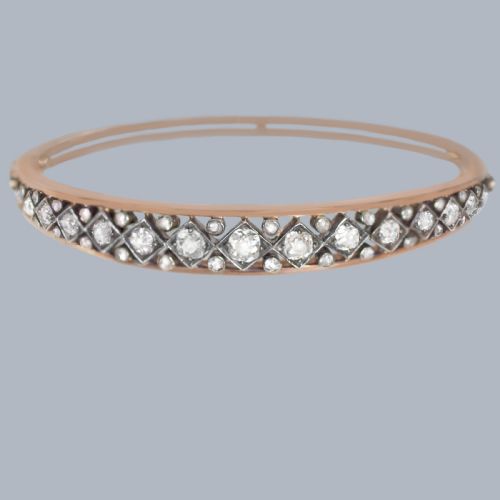


Victorian Edwardian Gold Bangle
A victorian edwardian gold bangle brings together intricate metalwork and enduring gemstones to wear on the wrist every day.
Victorian Edwardian Gold Bangle
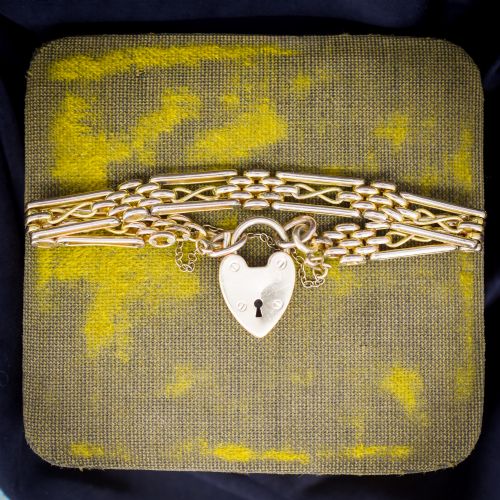
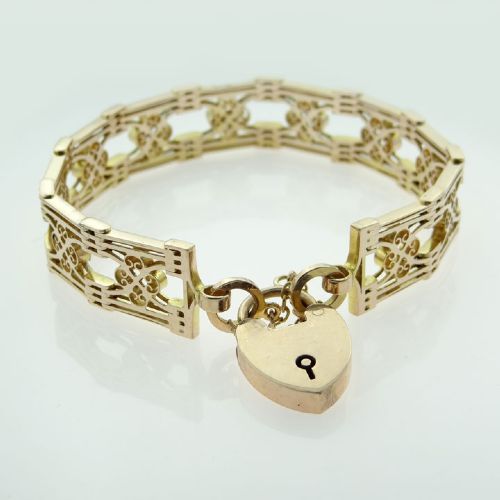
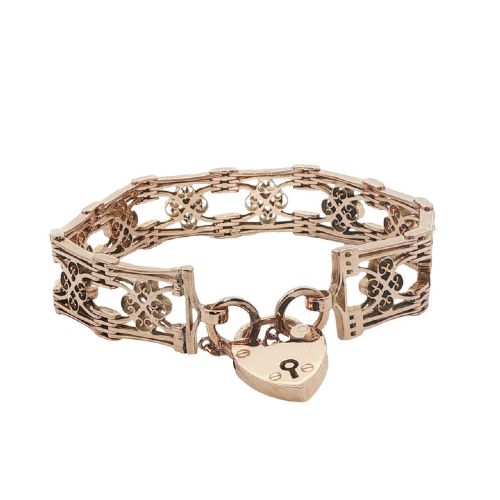
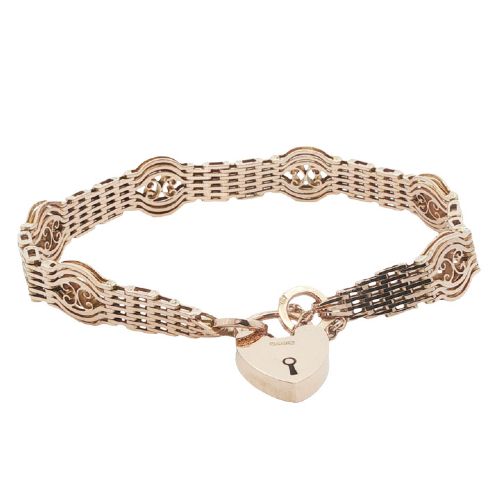
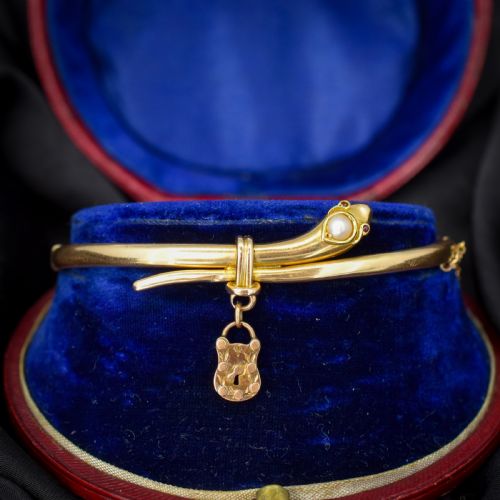
A victorian edwardian gold bangle or bracelet spans the nineteenth and early twentieth centuries, appearing in forms like rigid hinged cuffs, flexible gate links, and delicate curb chains. The selections available encompass solid gold framework often ornamented with symbolic motifs such as hearts, serpents, and lovers knots.
Buyers encounter distinct periods within this range, running from the late nineteenth century through the edwardian era up to the nineteen-twenties. The items take the shape of rigid bangles alongside link bracelets secured with heart padlocks or safety chains.
Materials and Construction Techniques
The pieces rely on nine carat, fifteen carat, and eighteen carat gold in yellow, rose, and white hues, occasionally complemented by rolled gold or silver backings. Artisans constructed rigid hoops and articulated links by hand, integrating secure boxes and spring mechanisms.
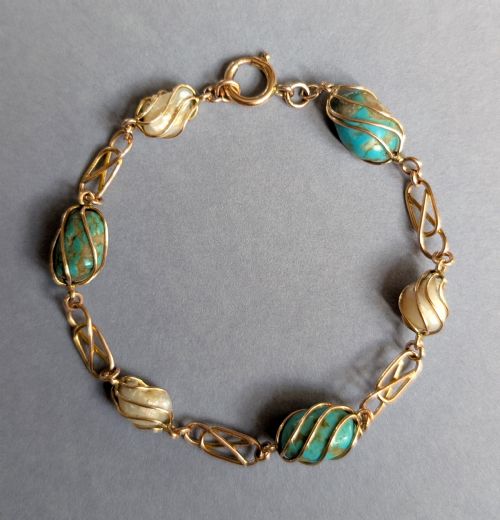
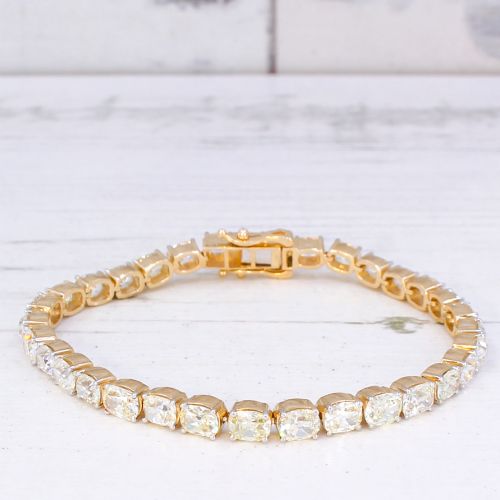
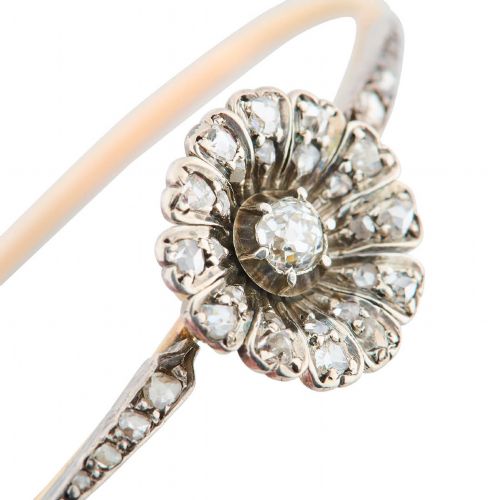
Gems including old mine cut diamonds, seed pearls, turquoise, opals, amethyst, and rubies are flush set, grain set, or mounted in raised star clusters and floral arrangements.
Listings feature items spanning the victorian and edwardian periods, utilising fifteen carat gold, nine carat rose gold, and turquoise alongside diamonds.
Factors Defining the Tier of the Piece
The calibre of a victorian edwardian gold bangle rests upon the weight of the precious metal and the precision of the linkage or hinge. Substantial gold thickness and intact safety chains indicate a higher standard of original manufacture.
Stone selection and setting integrity further separate examples, where matched natural gemstones secure firmly within the metal bezels without replacement or adhesive.
The Victorian Edwardian Gold Bangle Glossary
- Old mine cut diamond
- A diamond shape typical of the nineteenth century featuring a cushion outline, small table, and high crown. This cut predates modern brilliant faceting standards.
- Seed pearl
- A very small natural or saltwater pearl used extensively in cluster and floral jewellery of the period. These tiny spheres are typically half-drilled and pegged onto metal backings.
- Gate bracelet
- A flexible wrist ornament composed of parallel metal bars connected by vertical links. This style frequently terminates in a padlock clasp.
- Rolled gold
- A material formed by fusing a sheet of gold to a base metal core under heat and pressure. It provides the appearance of solid gold with greater durability than plating.
- Padlock clasp
- A functional heart-shaped lock securing a bracelet or bangle. It serves both as a decorative centrepiece and a fastening mechanism.
Victorian Edwardian Gold Bangle: Frequently Asked Questions
How do I wear a antique bangle?
These rigid bracelets slip over the hand or open via a hinged joint secured with a safety chain. They suit daily wear when paired carefully with other wrist adornments.
Take care to secure the safety chain whenever fastening the clasp to prevent accidental loss during movement.
What gold purity is common?
Items from this era frequently utilise nine carat and fifteen carat gold, alongside occasional eighteen carat pieces and rolled gold alternatives. Rose and yellow gold predominate throughout the inventory.
Lower carat options provide durability for flexible link designs, while higher carats often appear in rigid gem-set cuffs.
How are periods identified?
Distinguishing between Victorian and Edwardian items involves examining the gemstone settings, metal colours, and overarching design motifs. Victorian pieces tend toward heavier ornamentation and rose gold.
Edwardian examples often display lighter yellow gold or platinum-topped mountings with delicate seed pearl or diamond arrangements.
Were these items used as padlocks?
The heart padlock functions purely as a decorative clasp for gate and curb link bracelets rather than a security device. They often bear tiny makers marks or hallmarks on the reverse.
Owners historically treated these padlocks as sentimental tokens, sometimes engraving them with initials or dates.