




15ct Yellow Gold Bracelet
These 15ct yellow gold bracelet pieces bring together Victorian and Edwardian craftsmanship through heavy gold links, hinged bangles, and gemstone settings.
15ct Yellow Gold Bracelet
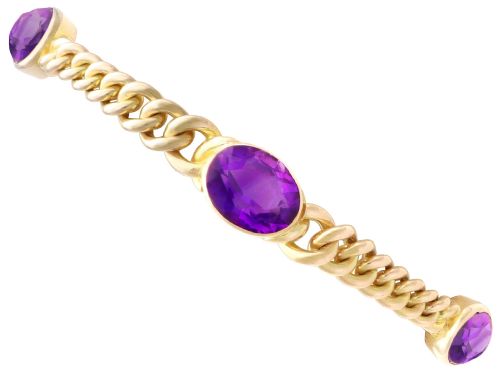
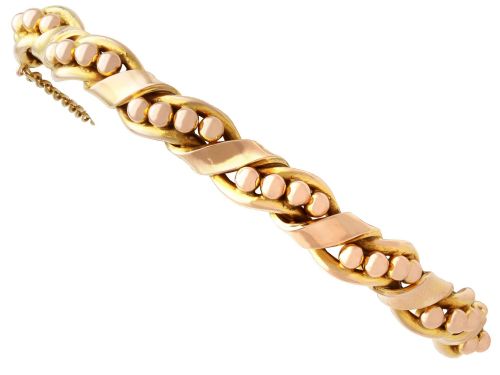
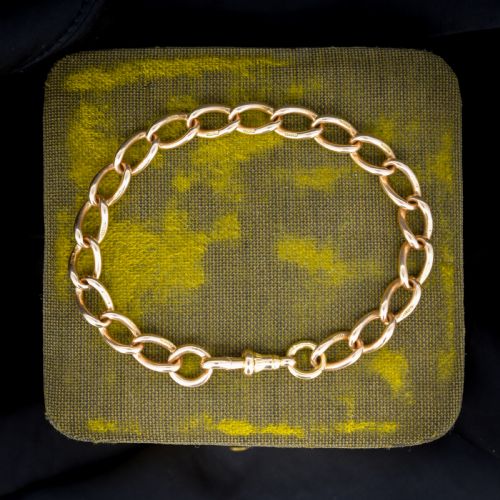
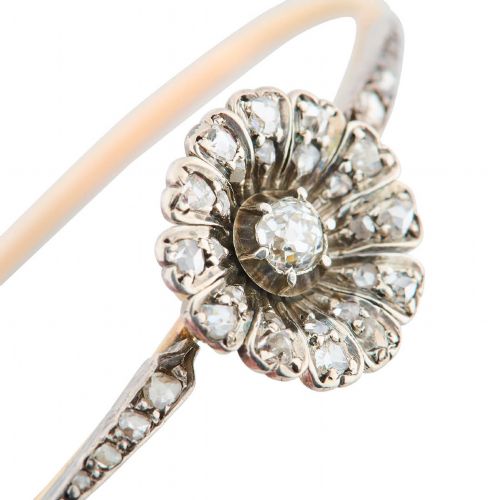
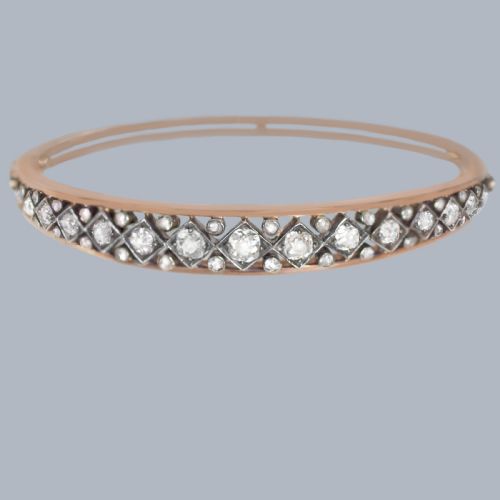
A 15ct yellow gold bracelet encompasses Victorian and Edwardian fine jewellery, ranging from rigid hinged bangles to flexible link chains and charm carriers. Buyers looking at this selection will find a predominance of curb link bracelets fitted with dog clips, alongside gem-set bangles from the 19th century and the early 1900s.
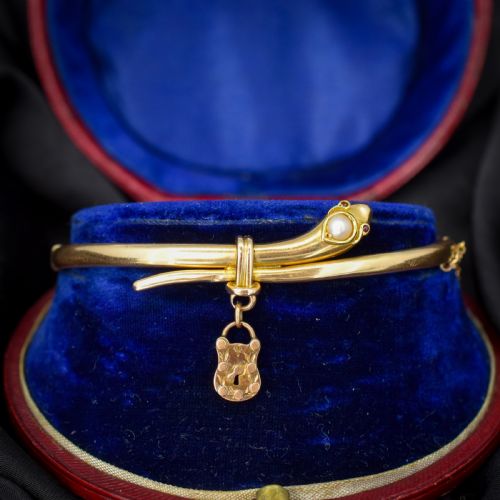
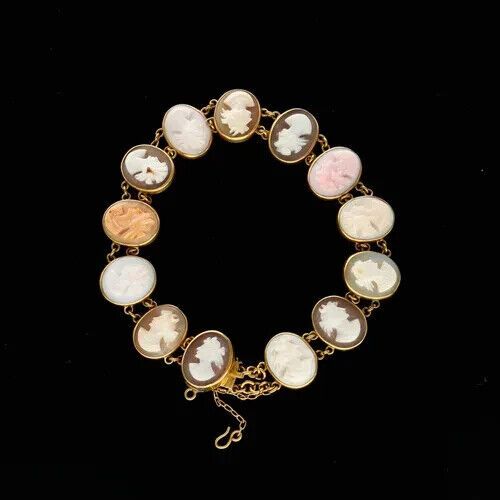
The forms span snake serpent designs, shell cameo panels, and multi-stone clusters featuring garnets, peridots, diamonds, and pearls. Many examples integrate safety chains or secure clasps typical of late Victorian and Edwardian workshops, reflecting the transitional periods of their manufacture.
The selection on this page leans heavily into classic curb link chains and hinged bangles, often decorated with seed pearls or coloured gemstones. These pieces represent the standard output of British jewellers working in the distinctive alloy standard of fifteen-carat gold.
How they were made
The foundation of these pieces relies on fifteen-carat gold, a specific British standard melted down and shaped into hollow or solid curb links, rigid bangle hoops, and delicate wire settings. Goldsmiths employed traditional hand-working techniques to fabricate hinges, secure box clasps, and integrate swivel dog clips into the heavier chain designs.
Gemstones including old mine cut diamonds, seed pearls, turquoise, opals, and garnets were hand-set into bezel or star configurations directly within the gold mount. Master artisans also utilised chasing, engraving, and enamel work to embellish the surface of bangles and charm carriers, balancing structural durability with fine decorative detail.
Materials recorded on this page include 15ct gold, silver, diamonds, pearls, turquoise, opals, peridots, and sapphires.
What varies in quality
The distinction between average and exceptional pieces rests upon the integrity of the goldwork and the original matching of the gemstones. Heavier gauge links and crisp, unrubbed chased details demonstrate superior workshop execution, whereas worn hinges or thin hollow sections indicate lesser durability.
Another measure of quality involves the selection and secure setting of natural stones, such as well-matched seed pearls, clean peridots, and well-proportioned old mine cut diamonds. Pieces retaining their original dog clips, safety chains, and fitted boxes hold greater integrity for collectors.
The 15ct Yellow Gold Bracelet Glossary
- Curb link
- A type of chain made of uniform, slightly twisted oval links that lie flat. This form provides the robust foundation for many antique charm bracelets.
- Dog clip
- A spring-loaded swivel fastening commonly found on Edwardian curb bracelets. It was originally designed to secure pocket watch chains or charms.
- Old mine cut
- An early diamond cut characterised by a cushion shape, a high crown, and a small table. This cut is typical of Victorian gemstone jewellery.
- Bangle
- A rigid circular or oval bracelet that slips over the hand or opens via a hinged joint. Victorian examples often feature safety chains and secure tongue clasps.
- Seed pearl
- Very small natural or cultured pearls used in clusters or floral arrangements. They are frequently threaded onto fine silk or wire within antique gold settings.
15ct Yellow Gold Bracelet: Frequently Asked Questions
How do I care for a 15ct yellow gold bracelet?
Keep the piece away from harsh household chemicals and ultrasonic cleaners, especially if it contains soft gems like pearls, turquoise, or opals. Store it flat in a lined box to prevent the links from twisting or scratching.
Wipe the gold gently with a soft microfibre cloth after wearing to remove skin oils. Regular professional checks by a jeweller will ensure prongs and safety chains remain secure.
Can I add charms to a 15ct gold bracelet?
Many antique curb bracelets and charm carriers were specifically designed to hold multiple fobs, seals, and pendants. Ensure any added charms match the fifteen-carat gold standard to maintain material consistency.
Take care not to overload delicate links, and use secure jump rings soldered by a specialist. This preserves the original structural balance of the chain.
What is the difference between Victorian and Edwardian bracelets?
Victorian pieces tend to be heavier and more robust, often featuring romantic motifs like snakes, substantial gold work, and deep-toned gemstones such as garnets. They reflect the ornate styles popular during the nineteenth century.
Edwardian pieces, made after nineteen hundred, generally showcase lighter filigree, airy settings, and pale stones like peridots, aquamarines, and diamonds. They embrace the delicate, refined aesthetic of the early twentieth century.