

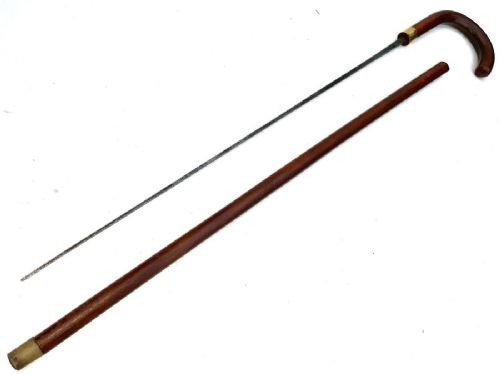
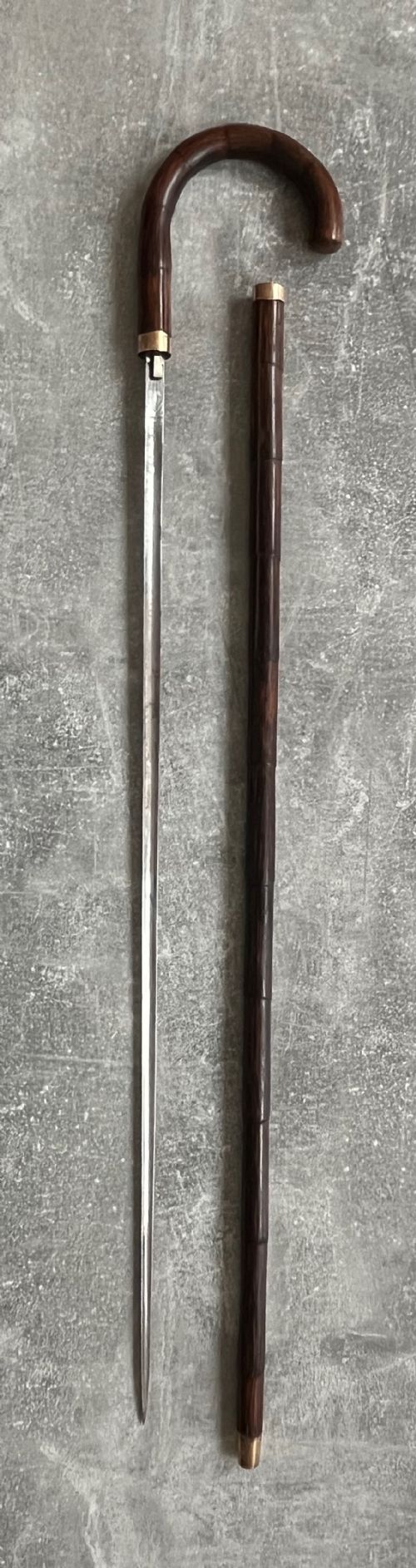
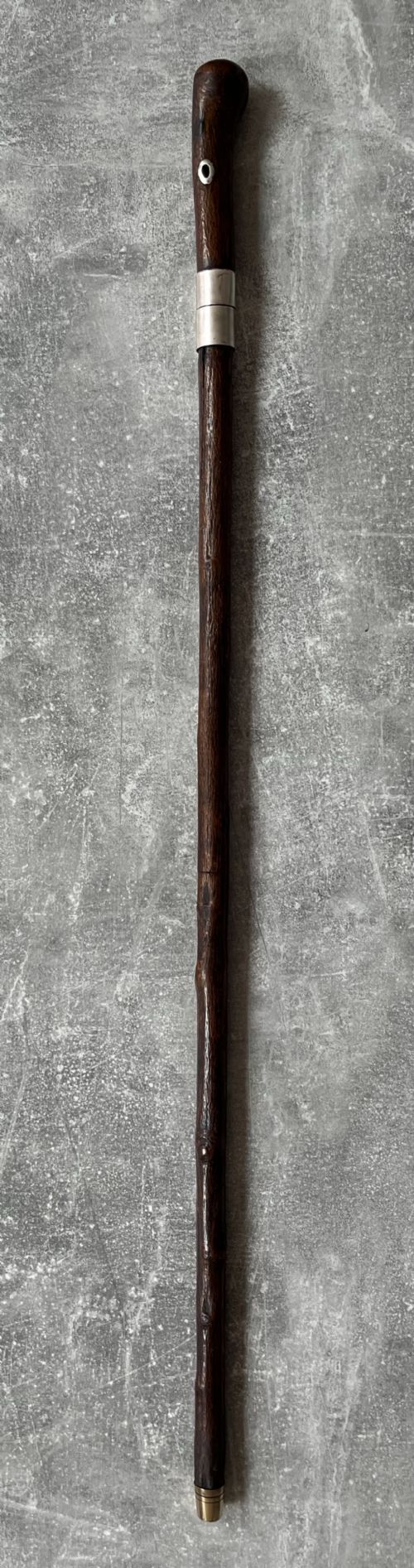


Vintage Hidden Blade Cane
A vintage hidden blade cane is a traditional gentleman's walking stick concealing a functional steel sword within its shaft, combining everyday support with personal defence.
Vintage Hidden Blade Cane
When you search for a vintage hidden blade cane, you encounter nineteenth-century and Edwardian walking sticks designed to house concealed blades. These pieces originate primarily from British, military, and French traditions spanning the late nineteenth century up to the Edwardian period.
The most common versions on this page utilise natural materials such as bamboo, malacca, hazel, and hardwood for the exterior shaft. Handles vary considerably, ranging from simple crook designs and bone pistol grips to silver horses' heads and antler forms.
Military officers and civilian gentlemen carried these walking sticks for practical daily support and discretion. The internal mechanism typically relies on a button release to secure or deploy the steel blade safely.
How they were made
Constructing a vintage hidden blade cane required fitting a steel blade securely inside a hollowed wooden or bamboo shaft. Makers shaped hardwoods, hazel, and malacca to enclose the metal blade while maintaining the outward appearance of a standard walking stick.
Metal components such as brass collars, silver handles, and steel Toledo blades provided durability and weight. Exterior finishes included faux bamboo carving and snakeskin coverings over wood or haft foundations.
Vintage Hidden Blade Cane Retail Price Guide 2026
Typical asking prices for vintage hidden blade cane among the pieces listed under this phrase on Sellingantiques today, from the lower quarter to the upper quarter. They describe what is for sale here now, not the wider market.
Some nineteenth-century gentlemen evidently felt that a standard walk required the option of a Toledo blade hidden inside a convincing snake-skin-covered shaft.
What varies in quality
The sophistication of the handle and the origin of the blade distinguish finer examples from standard items. Silver handles shaped as animal heads or specialised bone pistol grips indicate higher-status commissions.
The inclusion of an etched Toledo blade and a precise button release mechanism separates superior pieces from simpler utilitarian sticks. Material choice also dictates quality, with select hardwoods and detailed horn or antler elements showing greater craftsmanship.
The Vintage Hidden Blade Cane Glossary
- Toledo blade
- A steel blade originating from or styled after the renowned metalworking traditions of Toledo, Spain. These blades are frequently etched and fitted inside sword sticks.
- Malacca
- A slender, resilient species of rattan cane originating from Southeast Asia. It forms a smooth, jointed shaft highly prized for nineteenth-century walking sticks.
- Swagger stick
- A short, light cane traditionally carried by military officers as a symbol of authority. Some examples incorporate concealed blades for dual utility.
- Crook handle
- A walking stick handle curved into a rounded hook shape. This design allows the stick to be easily hung over an arm or a rail.
- Button release
- A mechanical catch built into the collar or shaft that secures the blade inside the cane until pressed. It prevents the hidden weapon from sliding out unexpectedly.
Vintage Hidden Blade Cane: Frequently Asked Questions
How do you release the hidden blade?
Many of these walking sticks utilise a mechanical button release integrated near the handle collar to secure the steel blade. Pressing this button disengages the internal lock so the blade can be drawn smoothly from the shaft.
Simpler versions rely on friction fit or a twist mechanism rather than a visible button release.
What materials were used for the shafts?
Maker workshops utilised natural plant stems and sturdy timbers including bamboo, malacca, hazel, and assorted hardwoods. Some French examples feature hafts covered in snakeskin over a wooden core.
Brass, steel, and silver components frequently reinforce the collar and handle joins.
Were these used by the military?
Military officers frequently carried sword sticks as part of their walking attire or uniform accessories during the nineteenth and early twentieth centuries. These pieces were often termed swagger sticks or military officers walking sticks.
Civilian gentlemen also carried them for personal protection during evening walks in urban environments.
How do I date an Edwardian cane?
Edwardian pieces date from the reign of King Edward VII, spanning the first decade of the twentieth century. Listings from this era typically feature bamboo or hardwood shafts paired with specific handle styles like bone pistol grips.
Earlier nineteenth-century examples often display distinct regional styling, such as nineteenth-century French antler-handled designs.
What handle styles are common?
Handles range from practical wooden crooks to decorative silver animal heads, such as horses. Antler forms and bone pistol grips also appear frequently on nineteenth-century and Edwardian pieces.
The choice of handle often reflects the intended status and taste of the original gentleman owner.