



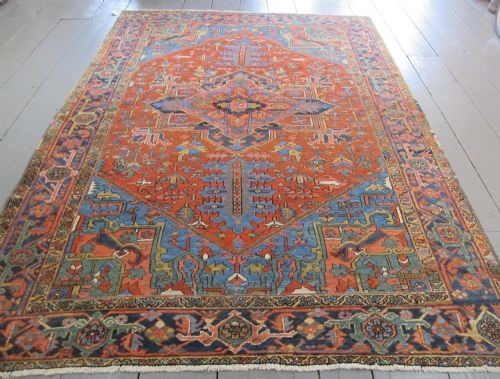
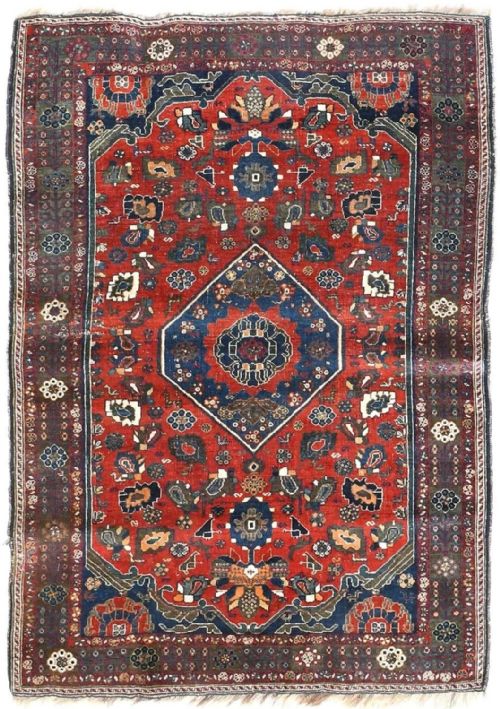


Vintage Heriz Floor Rug
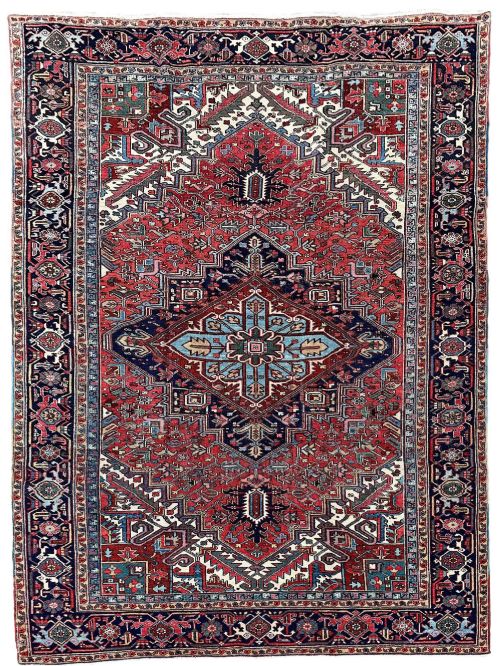
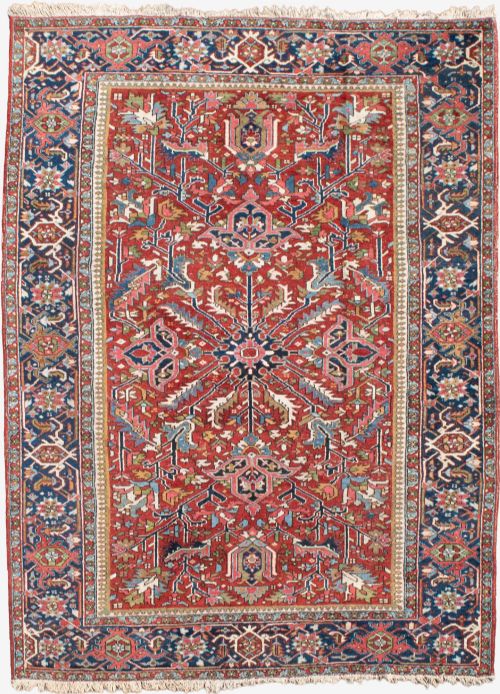
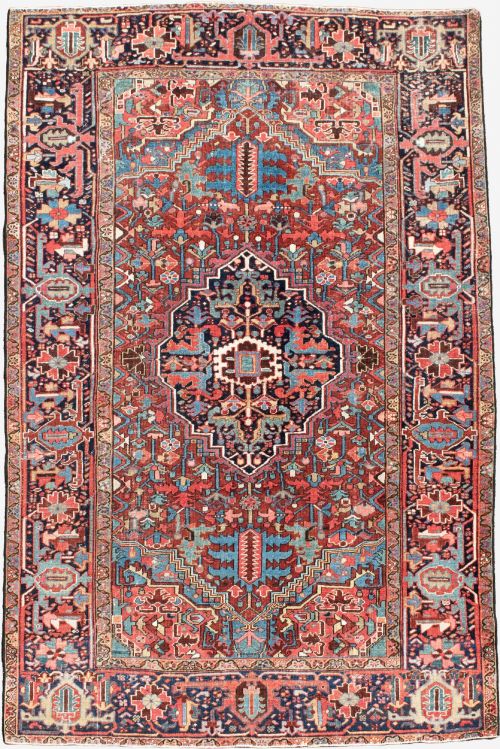
A vintage heriz floor rug delivers robust geometric wool charm for any room, drawn from Northwest Persian weaving traditions.
Vintage Heriz Floor Rug
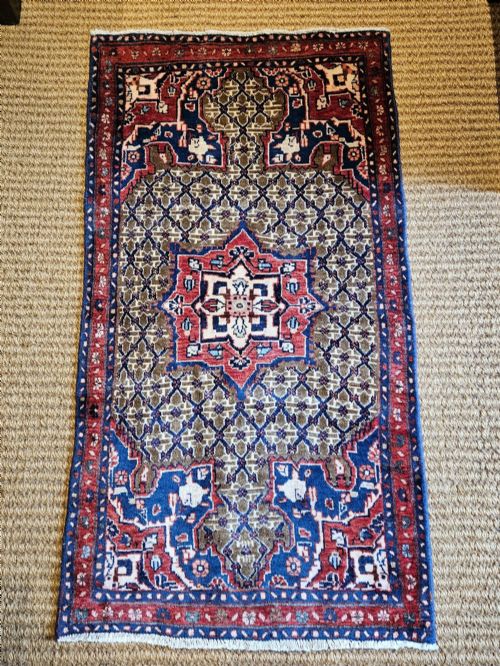
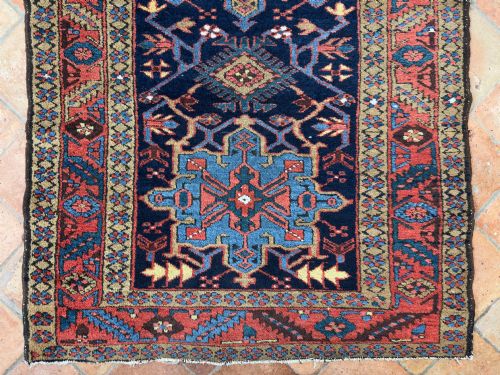
A vintage heriz floor rug is a substantial woven wool carpet originating from the Heriz region of Northwest Persia. These floor coverings span various formats, including large carpets, smaller scatter rugs, hearth sizes, and long hallway runners.
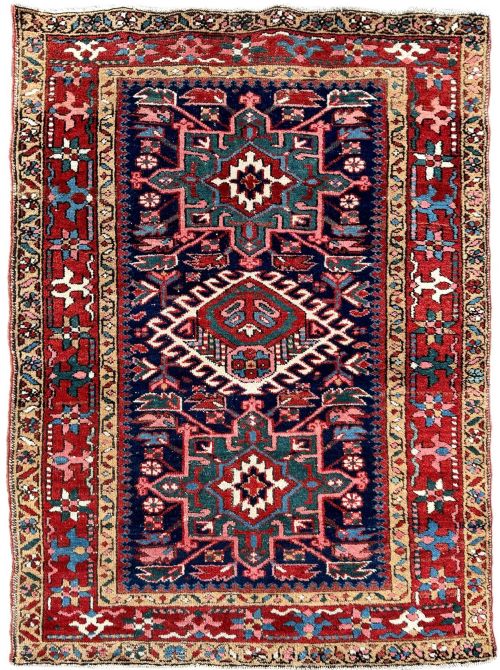
The selection here encompasses traditional Persian styles such as Heriz, Serapi, Karaja, Karadja, and Bakshaish variants. Pieces date across several decades from the mid-nineteenth century through the early twentieth century.
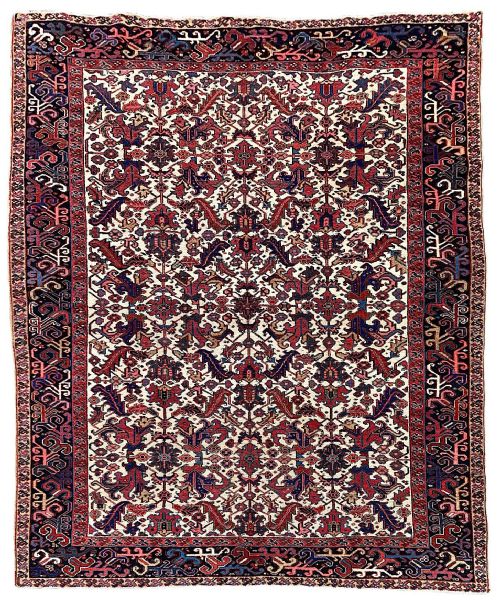
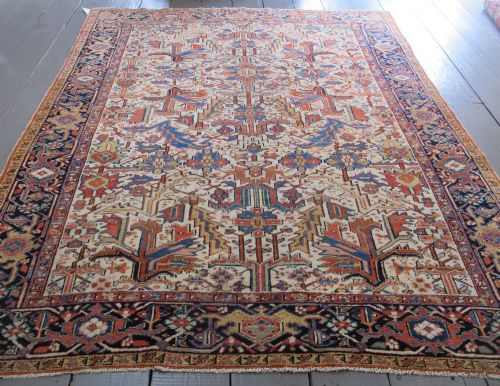
Buyers encounter distinctive large-scale geometric medallions, rectilinear floral motifs, and ivory or colourful grounds. These rugs serve as heavy-duty floor furnishings designed for practical daily use.
How they were made
Weavers constructed these carpets using wool pile knotted onto sturdy cotton foundations. This pairing of natural materials creates a dense, resilient structure capable of withstanding heavy foot traffic over generations.
Production relied entirely on hand-woven techniques characteristic of Northwest Persian village workshops. Artisans employed traditional upright looms to execute precise geometric patterns without modern mechanical assistance.
Some weavers snuck tiny stray animal motifs into the grand geometric borders just to see if anyone was paying attention.
What varies in quality
The precision and complexity of the rectilinear geometric design separate standard examples from exceptional ones. Finer pieces demonstrate superior control over the central medallion layout and border proportions.
The density and handling of the wool pile influence the tactile richness of the surface. Better examples maintain crisp colour contrasts and tight knotting across the cotton foundation.
The Vintage Heriz Floor Rug Glossary
- Heriz
- A region in Northwest Persia known for producing durable geometric carpets with prominent central medallions. These rugs typically display robust wool piles on cotton foundations.
- Karaja
- A style of rug from the Heriz district featuring distinct geometric village patterns and smaller formats like runners. They share the same robust wool construction as larger regional carpets.
- Serapi
- An older classification associated with nineteenth-century Heriz carpets displaying particularly spacious designs and refined colour palettes. These examples often date from the earlier periods of production.
- Bakshaish
- An early village carpet type preceding many standard Heriz productions, notable for stylized tribal designs and organic geometry. They represent some of the earliest pieces found in this tradition.
- Runner
- A long, narrow carpet format designed specifically for hallways and corridors. These pieces maintain the same wool and cotton materials as larger area rugs.
Vintage Heriz Floor Rug: Frequently Asked Questions
Where were these rugs made?
These rugs originate from the Heriz region and surrounding districts in Northwest Persia. Village weavers produced them using local wool and traditional hand-knotting methods.
The regional style is distinct for its bold geometric patterns and durable construction, setting it apart from urban Persian workshop weaving traditions.
How do I care for a wool rug?
Regular vacuuming without a beater bar removes surface dust and keeps the wool pile clean. Professional cleaning handles deeper maintenance when necessary.
Keep the rug out of direct continuous sunlight to protect the natural dyes used in the wool. Rotating the floor covering periodically ensures even wear patterns across high-traffic areas.
What is the difference between a carpet and a runner?
Carpets are larger, wider formats designed to anchor central floor spaces in rooms such as living areas or dining rooms. They provide extensive coverage and prominent geometric medallion displays.
Runners are long and narrow, specifically proportioned for hallways, landings, and corridors. They share identical wool materials and village motifs but fit linear architectural spaces.
How are different periods identified?
Dating relies on stylistic evolution, dye types, and structural characteristics visible in the wool and cotton foundation. Earlier nineteenth-century examples often exhibit more open compositions and softer palettes.
Early twentieth-century pieces tend toward bolder geometric layouts and saturated tones. Comparing the weave density and wool quality helps establish the likely decade of production.