
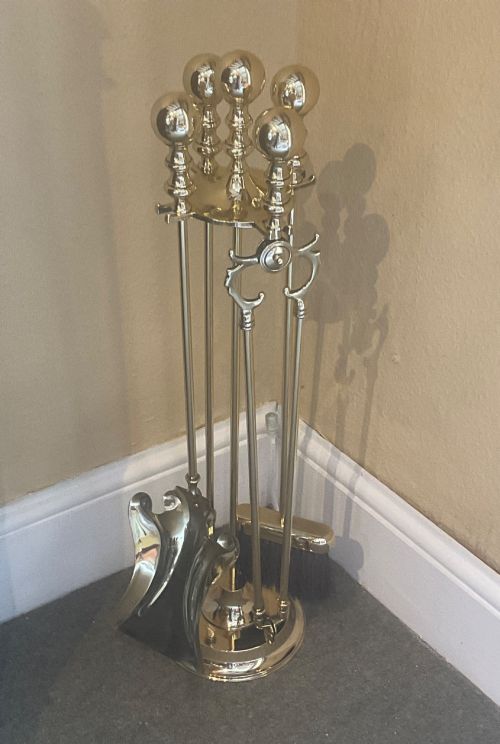


Vintage Hearth Companion Set
A vintage hearth companion set brings together the poker, tongs, shovel and stand that keep an open fire burning cleanly.
Vintage Hearth Companion Set
A vintage hearth companion set gathers the essential tools needed for tending a coal or wood fire, usually comprising a poker, shovel, tongs and occasionally fire dogs or a stand to hold them all in place. When searching for a vintage hearth companion set, buyers encounter functional assemblages that date from the eighteenth century through to the early twentieth century.
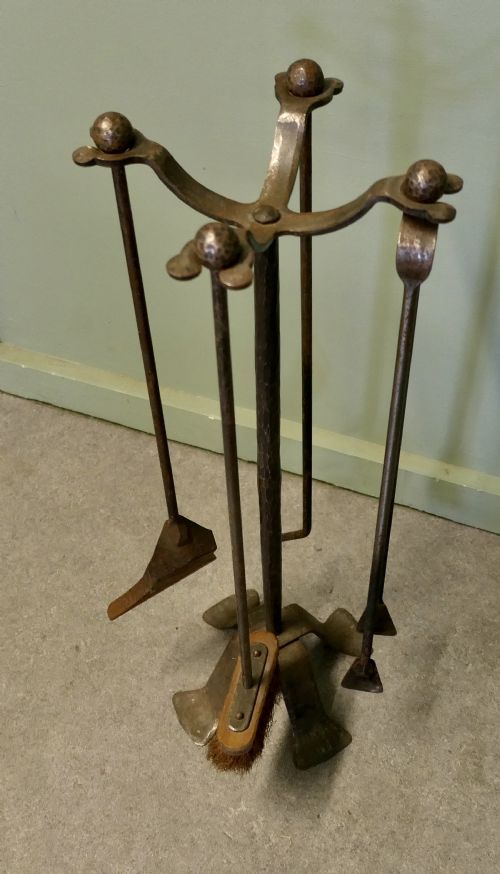
The pieces on this page span several distinct eras, notably the Victorian, Georgian and Edwardian periods, alongside specific design movements such as Arts and Crafts, Gothic Revival and Art Nouveau. Most examples originate from English country houses or French manors, reflecting domestic habits of heating rooms with open hearths before central heating took over.
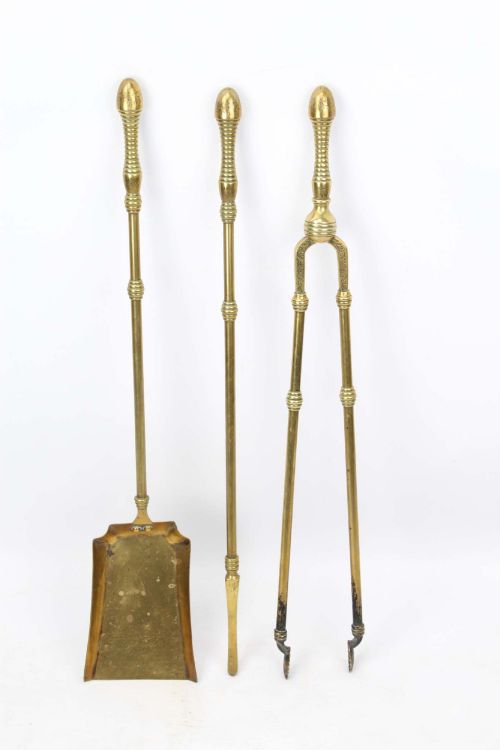
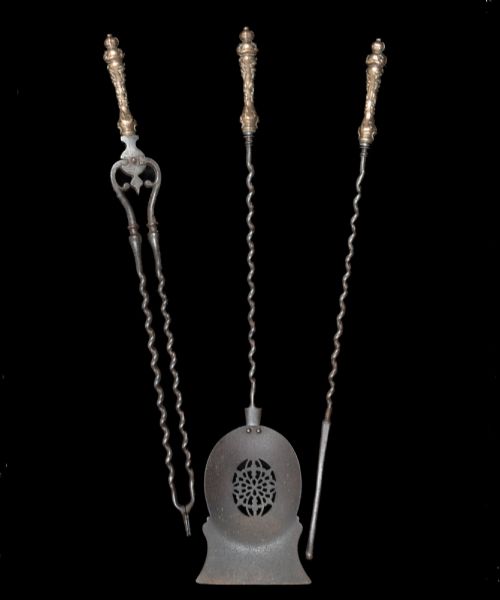
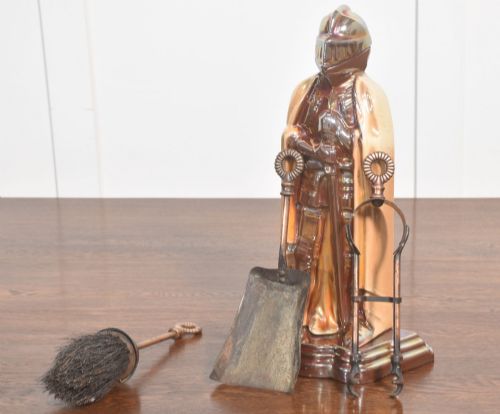
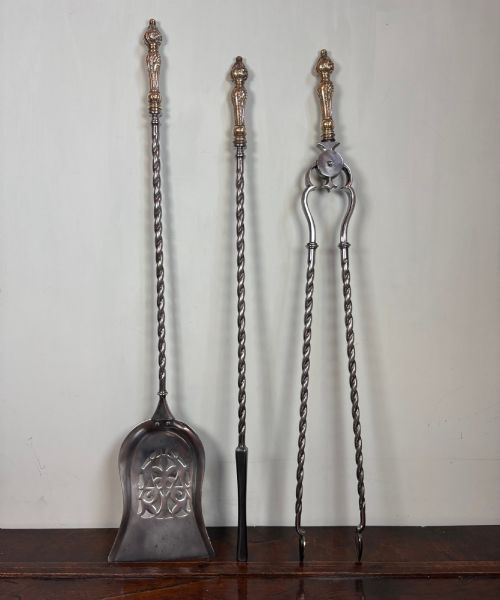
Forms range from strict utilitarian steel irons to elaborate brass sets featuring rope twist handles, Rococo scrollwork or figurative novelties like cast iron golfers and medieval knights. Buyers select these sets to serve a practical function beside an active fireplace or to provide period character to a chimney breast.
Materials and Construction Methods
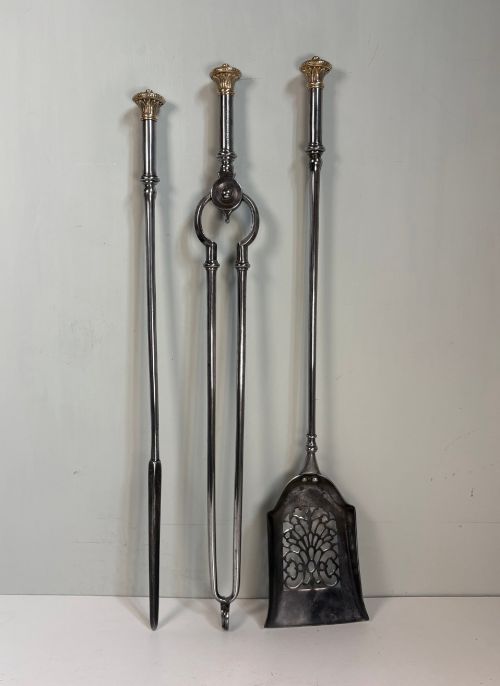
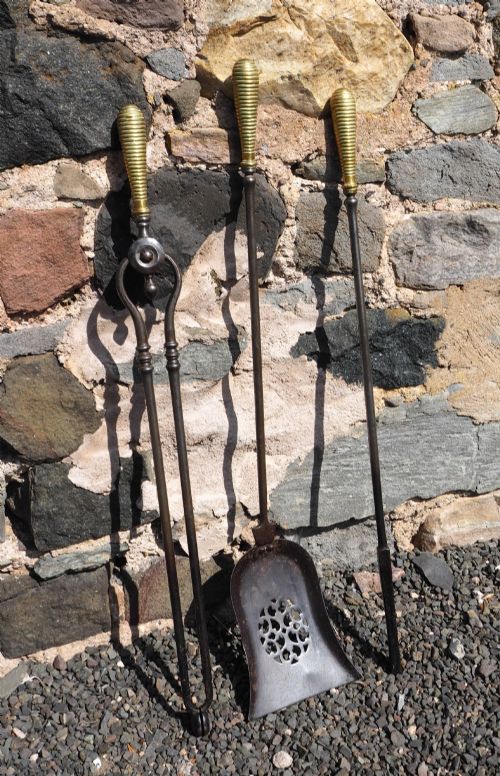
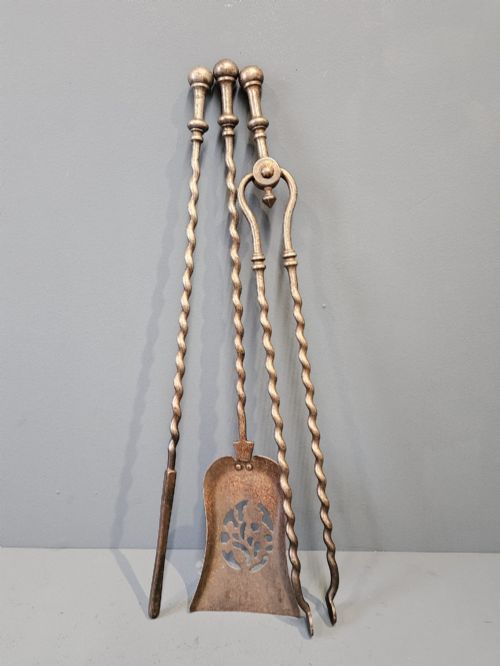
Blacksmiths and metalworkers forged these tools using iron, steel, brass, gunmetal and copper, often combining brass handles with robust steel shafts to balance visual warmth with structural strength. Polished steel and wrought iron appear frequently among the nineteenth century examples, offering durability under intense heat.
Casting and hand-beating shaped the decorative elements, such as the heavy brass finials and detailed companion stands seen in Victorian and Edwardian workshops. The integration of bronze and painted metal on specific decorative figures demonstrates varied foundry techniques tailored to domestic display.
Several sets feature figurative novelty handles shaped as nineteenth-century golfers or armoured knights standing ready to defend the mantelpiece.
Indicators of Quality and Craftsmanship
Superior sets reveal themselves in the substance of the metal and the integrity of the joins, where heavier gauges of brass and thick forged steel withstand daily lifting without bending at the neck. The quality of a set often rests on the tactile weight of the individual tools and whether handles remain firmly seated on their shafts.
Design ambition separates standard utilitarian ironmongery from finer examples featuring hand-turned rope twist details, crisp Rococo casting, or balanced proportions designed to sit harmoniously within an inglenook. Matching components that share a unified aesthetic from the same period indicate a cohesive original suite rather than a later assembled grouping.
The Vintage Hearth Companion Set Glossary
- Companion set
- A matched collection of fireplace tools, typically including a poker, shovel and tongs, gathered together on a stand or beside fire dogs. These sets organise hearth maintenance equipment neatly.
- Fire irons
- The individual poker, shovel and tongs used for moving fuel and ash within an open fireplace. They are forged from iron or steel and frequently topped with brass grips.
- Inglenook
- A large recessed fireplace space, often flanked by seats, designed to accommodate heavy fire tools and large logs. Country house hearths frequently utilise this expansive architectural feature.
- Fire dogs
- Andirons placed horizontally on the hearth to support logs for burning and to hold companion tools upright. They often match the brass or ironwork of the associated fire tools.
- Rococo style
- An ornate design movement characterised by asymmetrical scrollwork, C-curves and shell motifs. This aesthetic appears on decorative brass companion sets from the nineteenth and twentieth centuries.
Vintage Hearth Companion Set: Frequently Asked Questions
How do I choose the right size companion set?
Consider the depth and scale of your fireplace opening, ensuring the length of the poker and shovel suits the hearth without appearing dwarfed or oversized.
Larger inglenook fireplaces accommodate heavy nineteenth-century iron tools, whereas tighter modern chimney openings require more compact brass sets.
Are these old fire tools safe to use daily?
Solid steel and iron tools from the Victorian and Georgian periods remain entirely practical for tending an active open fire.
Check that handles are secure and that the metal shafts show no deep structural corrosion before putting them to regular service.
What is the difference between brass and steel tools?
Steel and iron provide the heavy, rigid strength needed for lifting heavy logs and shifting dense coal beds inside the grate.
Brass is softer and serves primarily for decorative handles, stands and lighter companion sets intended to catch the room's light.
How do I date an antique companion set?
Examine the manufacturing marks, assembly methods and stylistic cues such as Arts and Crafts simplicity or Victorian Rococo casting.
Tool shapes and handle fixings often shift noticeably between eighteenth-century Georgian examples and early twentieth-century Edwardian production.