

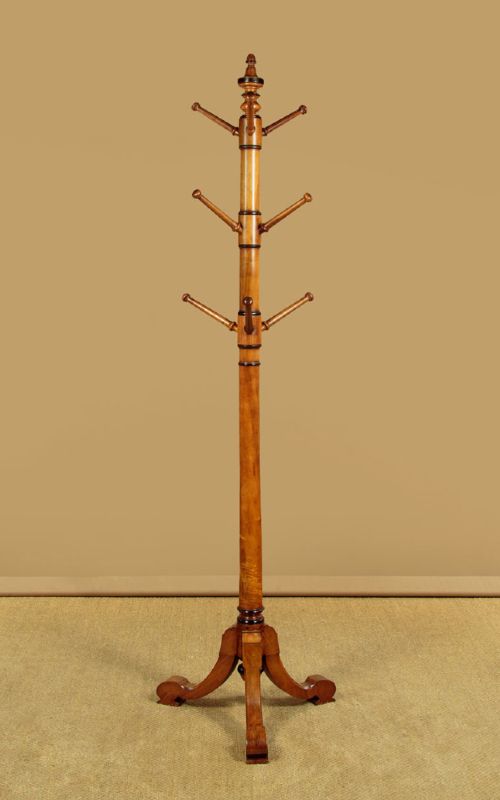
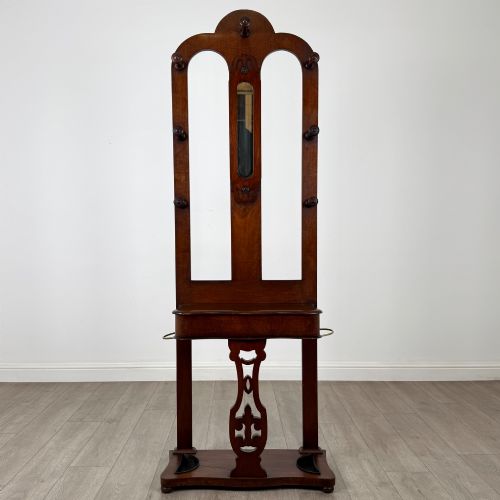
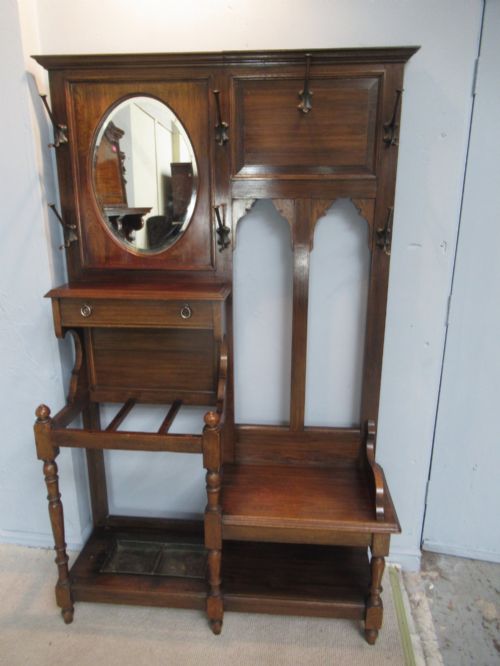
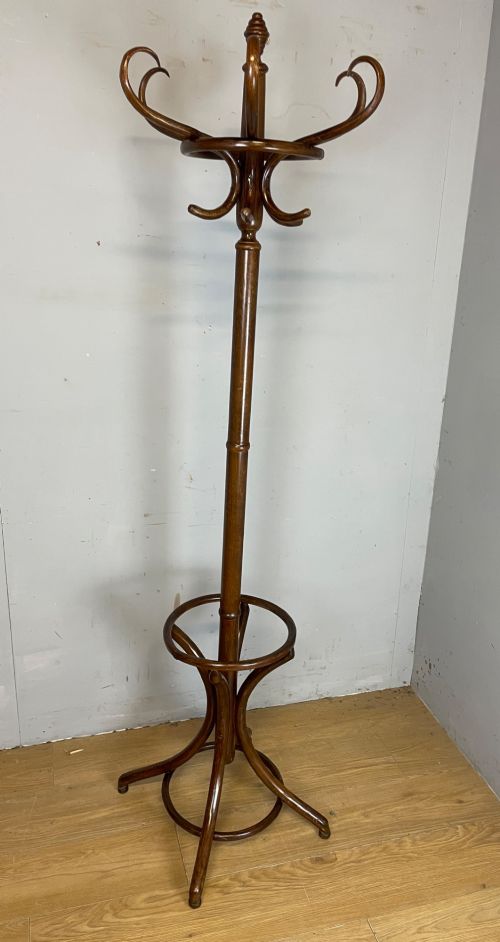
Vintage Hallway Hat Stand
A vintage hallway hat stand organises coats and hats while setting the character of an entrance space.
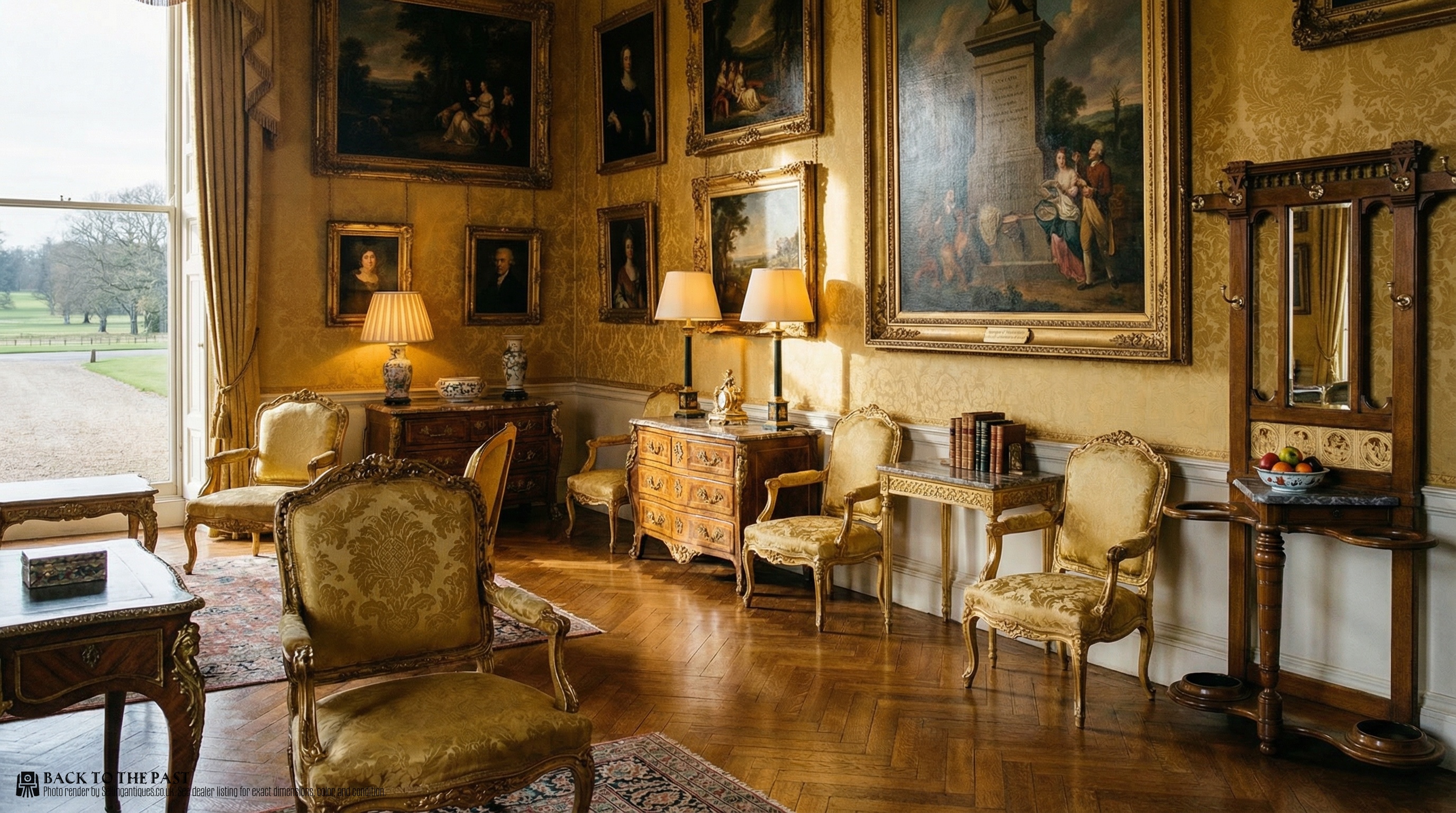
Vintage Hallway Hat Stand
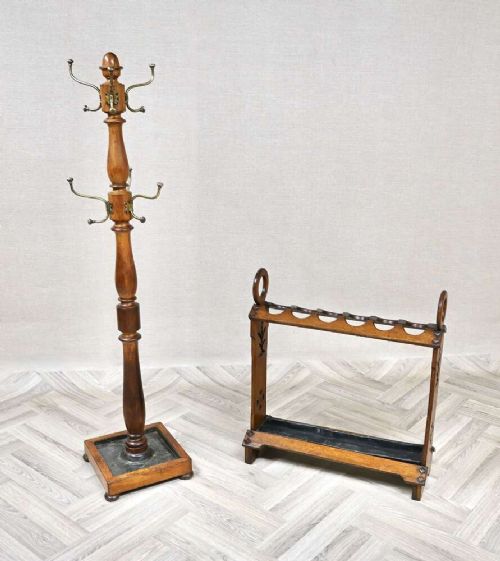
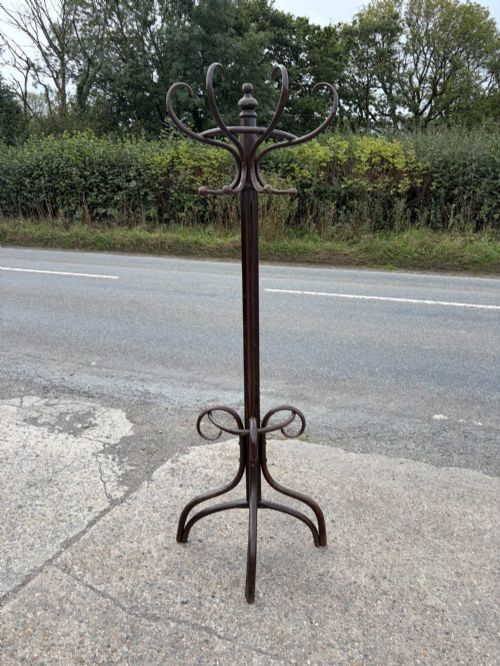
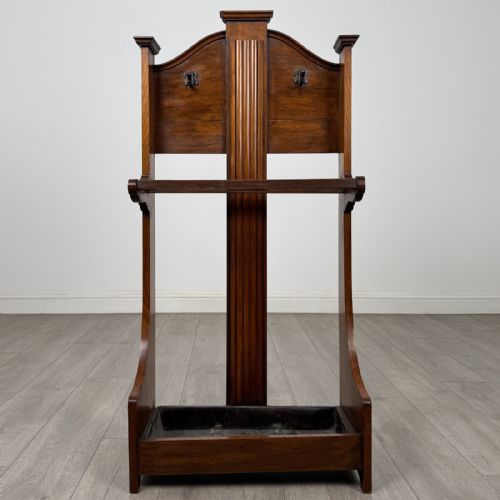
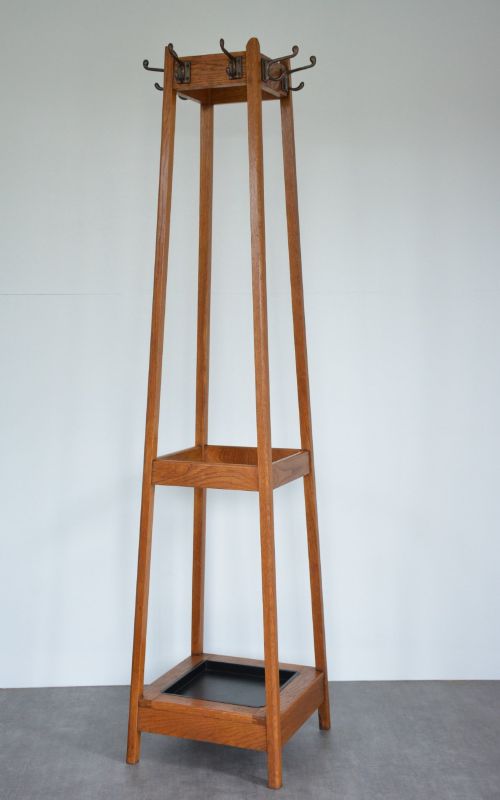
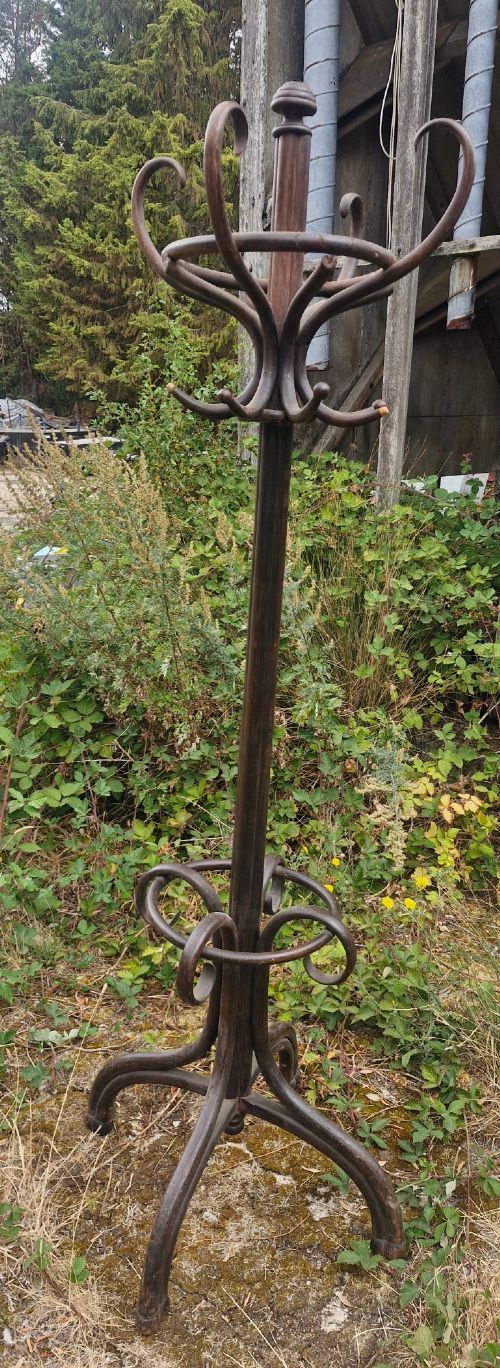
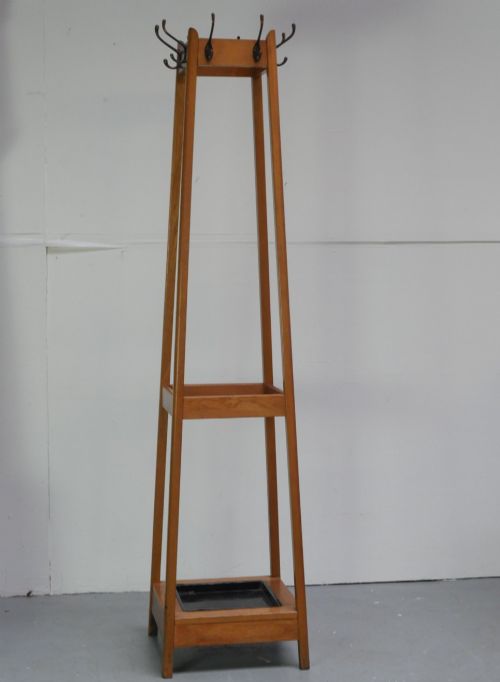
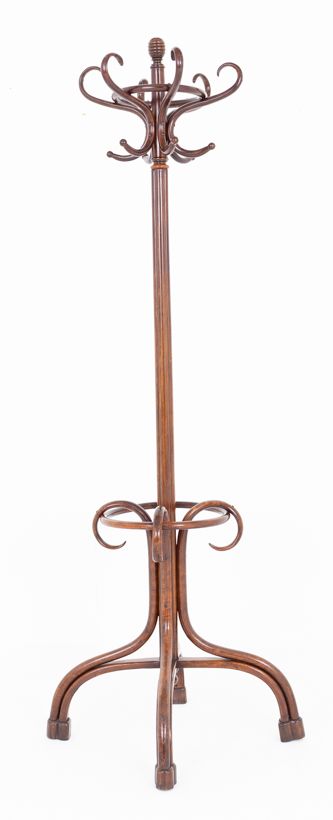
The versions most frequently met on this page include lightweight bentwood designs alongside heavier solid timber forms. Oak, mahogany, walnut, and beech dominate the available selection, often featuring integrated brass or metal hardware.
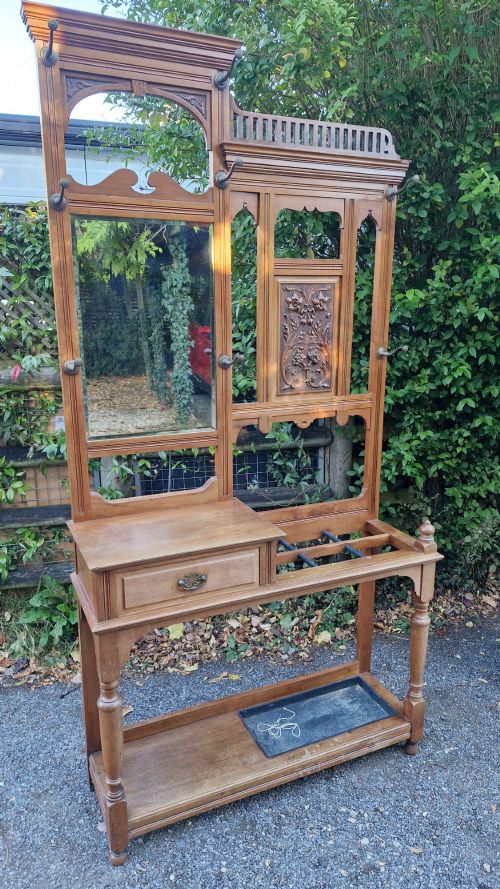
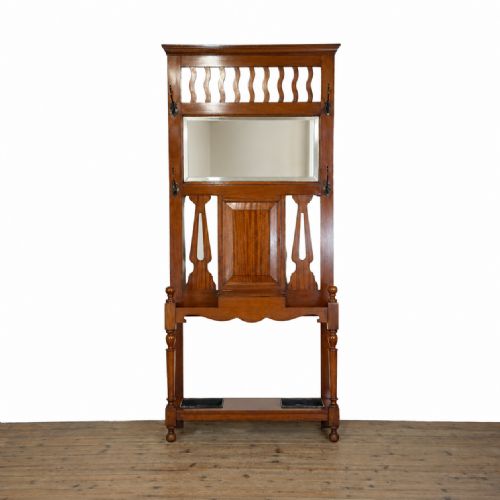
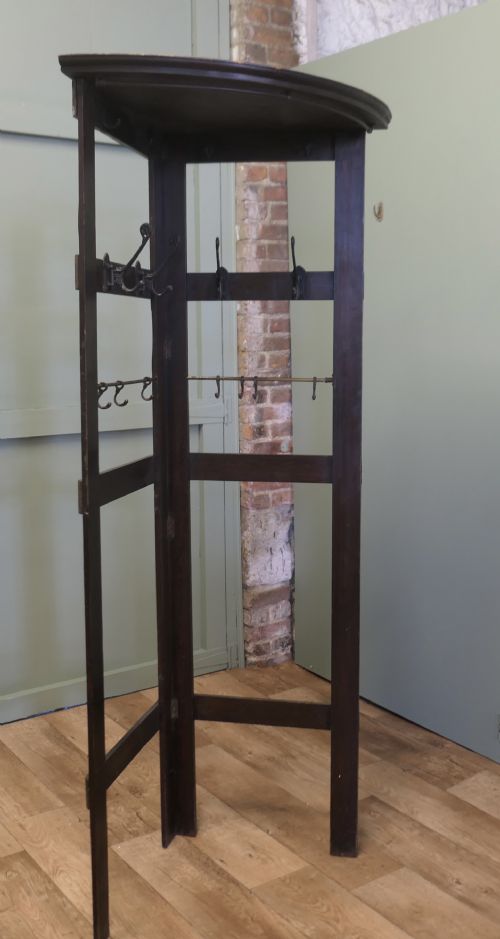
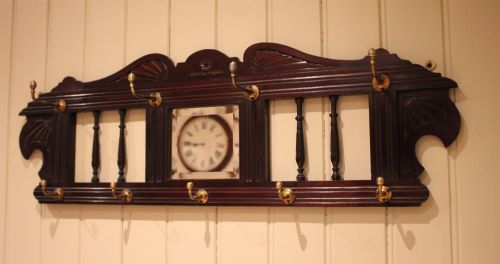
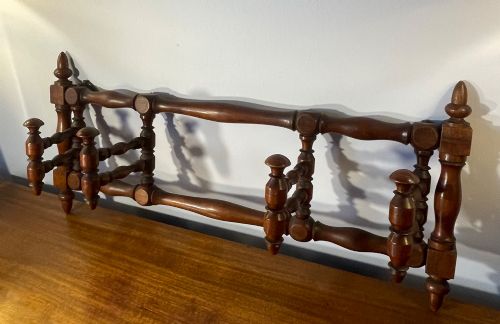
Buyers encounter both freestanding hall trees and wall-mounted racks designed for compact cloakrooms and reception halls. Many incorporate specialised compartments for sticks, gloves, and wet umbrellas alongside the primary hat hooks.
Materials and construction
Makers utilised solid timbers like oak, mahogany, and walnut for substantial hall pieces, applying traditional joinery and carved details. Beechwood underwent steam-bending processes to create the curved frameworks characteristic of bentwood hall trees.
Metal elements such as brass, cast iron, and cow horn provided durable hooks and structural attachments. Glass appeared primarily in bevelled mirrors fitted to the backboards of larger hall trees.
Vintage Hallway Hat Stand Retail Price Guide 2026
Typical asking prices for vintage hallway hat stand among the pieces listed under this phrase on Sellingantiques today, from the lower quarter to the upper quarter. They describe what is for sale here now, not the wider market.
Current listings feature items spanning the nineteenth century through the 1950s, constructed primarily from oak, mahogany, and bentwood beech.
Assessing quality
The distinction between standard utility items and superior examples lies in the integrity of the timber selection and the refinement of the carved or bent details. Heavier gauge woods and robust structural joints determine the longevity of freestanding coat stands.
Superior pieces display thoughtful integration of functional accessories, such as secure drip trays, uncompromised mirror silvering, and firmly anchored metal hooks capable of bearing heavy winter garments.
Astrola·Jas Shoolbred·Thonet·Fischel
The Vintage Hallway Hat Stand Glossary
- Bentwood
- Wood shaped by exposure to steam and pressure into curved structural forms. This technique created lightweight, resilient frames popular in early twentieth-century hall stands.
- Hall tree
- A freestanding piece of furniture designed for an entrance hallway, incorporating hooks for hats and coats, a mirror, and umbrella storage. These items served as central cloakroom fixtures in period homes.
- Demi-lune
- A half-moon or semicircular shape utilised in the design of compact hall stands. This configuration allowed furniture to sit flush against hallway walls while occupying minimal floor space.
- Drip tray
- A metal container placed at the base of a stand to catch water from umbrellas and walking sticks. These trays protected wooden flooring from moisture damage.
- Arts and Crafts
- A design movement emphasising handcraftsmanship, simple forms, and honest construction materials. Pieces from this style prioritised visible timber grain and functional utility.
Vintage Hallway Hat Stand: Frequently Asked Questions
How do I choose the right size?
Measure available floor space and clearance heights in your entrance area before selecting a freestanding or wall-mounted design.
Consider whether you need additional depth for umbrella wells or if a narrow wall rack suits a compact hallway better.
Where should I place my stand?
Position the piece near your primary entrance to catch coats, hats, and wet umbrellas as you step inside.
Ensure adequate clearance around the base so doors and umbrella trays remain easily accessible.
How do I care for wooden stands?
Dust timber surfaces regularly with a soft cloth and apply appropriate wax periodically to maintain the finish.
Keep wooden bases away from direct moisture sources by emptying metal drip trays promptly after wet weather.
How do I identify the period?
Examine the decorative motifs, such as organic Art Nouveau curves or sturdy Arts and Crafts construction details.
Timber choices and hardware styles also offer reliable clues to whether a piece originates from the Victorian era or later decades.