
Vintage Hallway Coat Rack
A vintage hallway coat rack greets visitors with timber warmth and practical utility, holding daily outdoor wear in an organised fashion.
Vintage Hallway Coat Rack
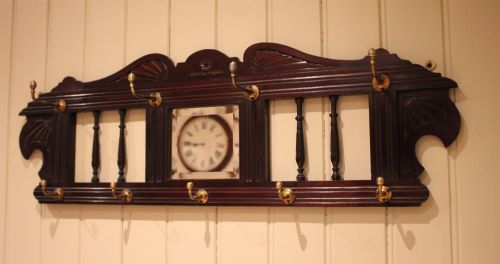
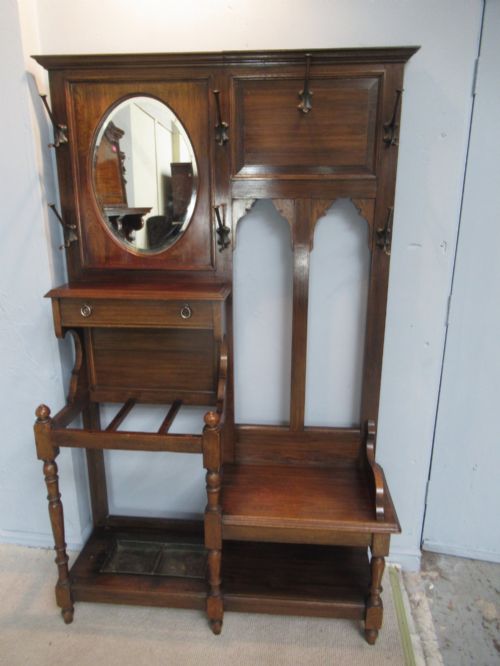
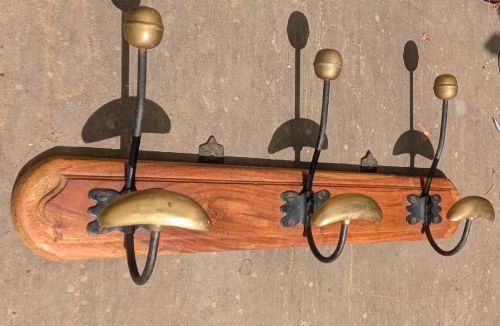
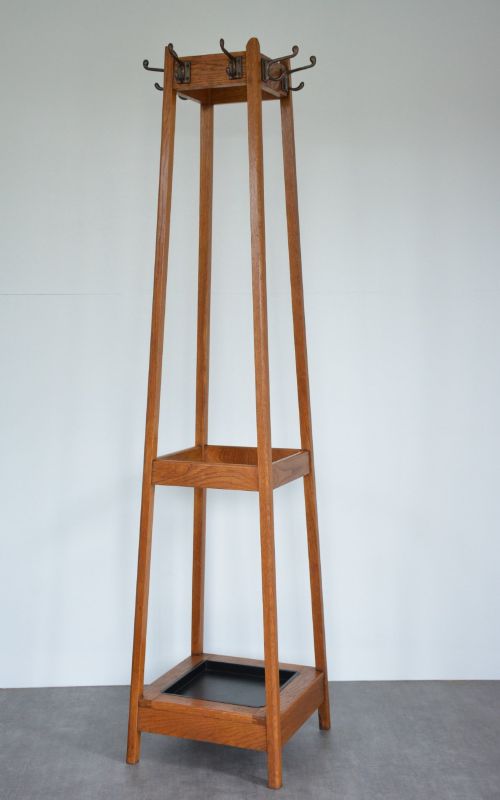
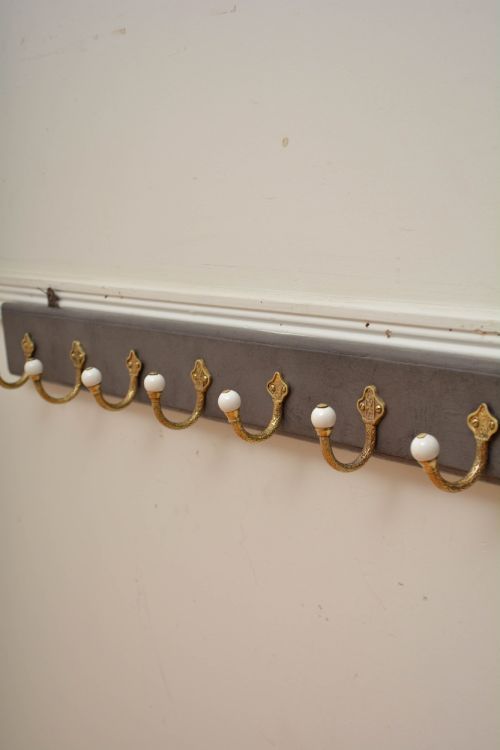
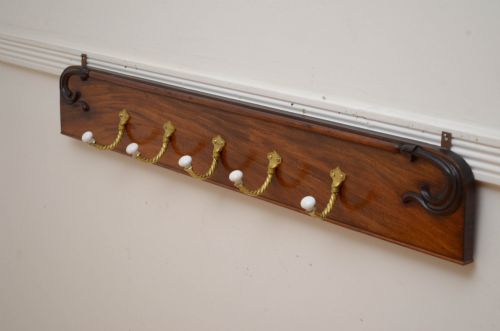
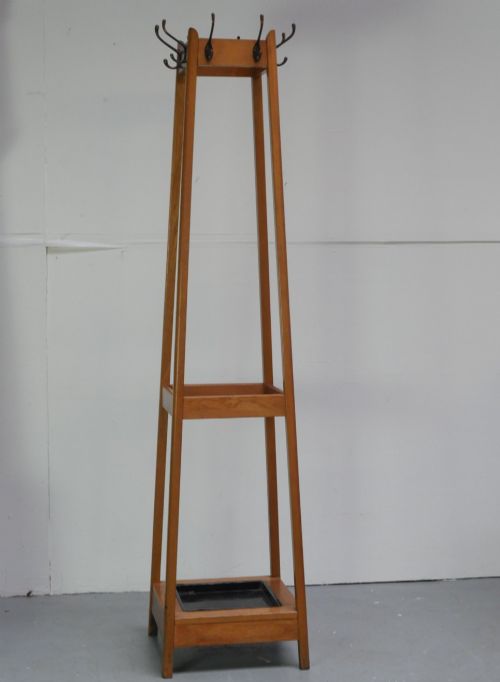
A vintage hallway coat rack encompasses everything from simple wall-mounted timber backboards fitted with brass and ceramic hooks to substantial freestanding oak and mahogany hall stands. These pieces range from compact cloakroom racks designed for tight spaces to multi-functional hall seat stands equipped with umbrella holders and drip trays.
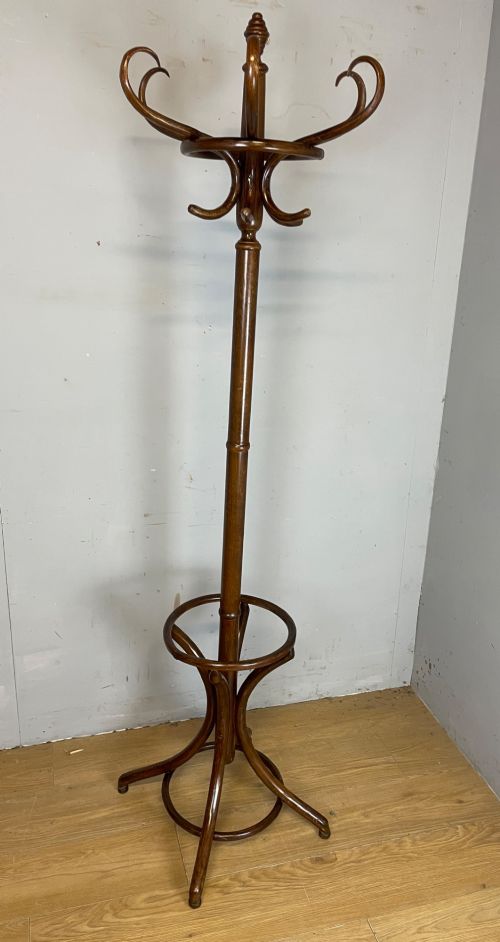
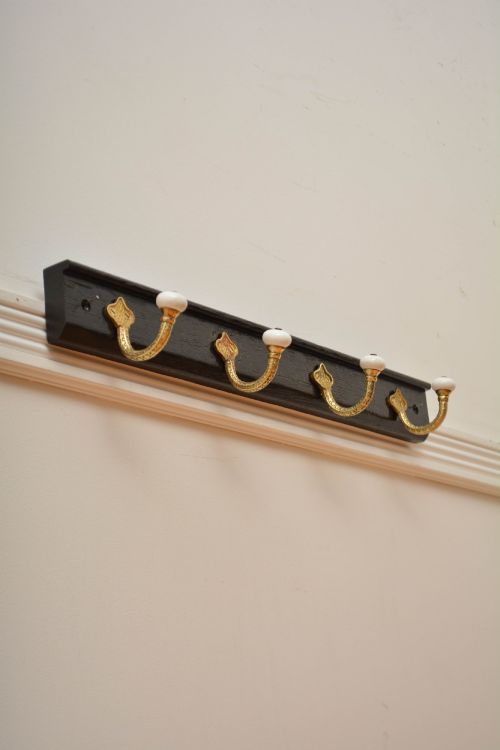
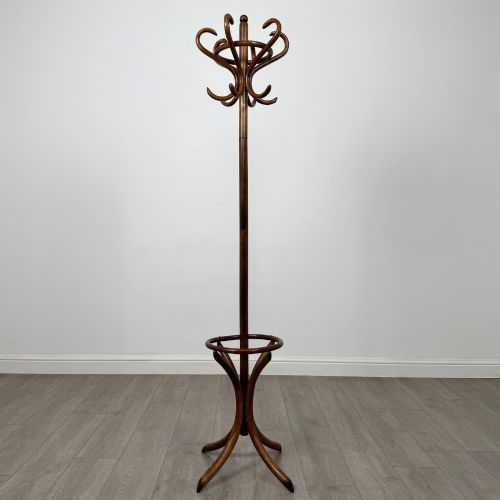
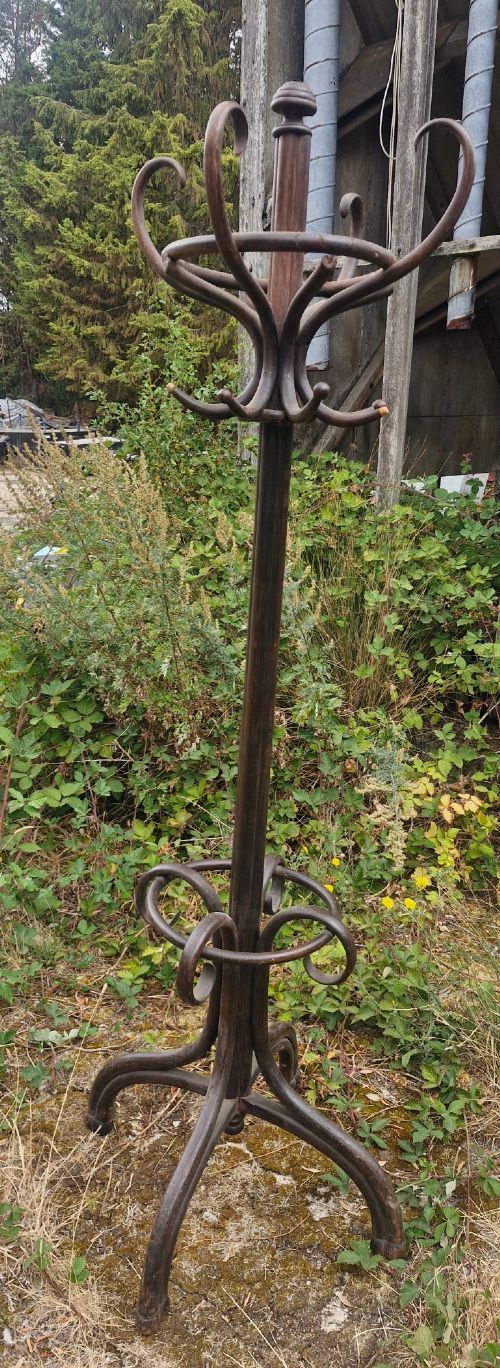
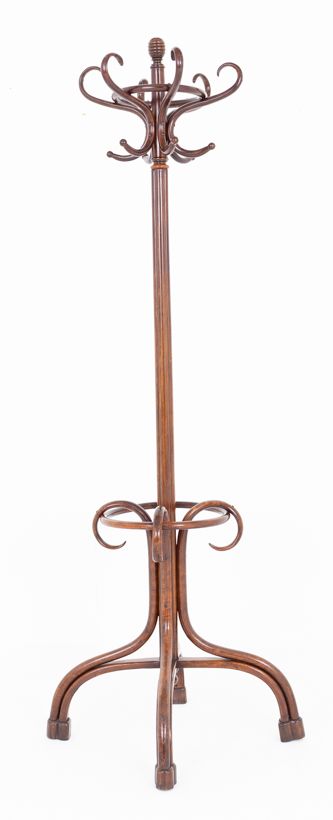
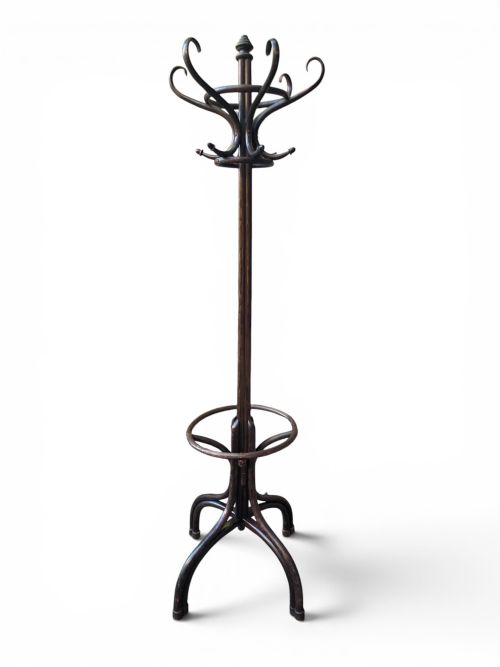
Wall-mounted variants frequently pair ebonised pine or solid oak boards with cast metal hooks and porcelain mantle tips. Freestanding forms embrace the verticality of hall trees, alongside lighter bentwood designs shaped to hold hats, sticks, and heavy coats without dominating narrow entryways.
Materials and construction methods
Makers relied heavily on durable hardwoods like oak and mahogany for wall-mounted boards and structural hall furniture, often finishing surfaces with ebonised treatments or polished grains. Beech served as the primary timber for steam-bent coat stands, allowing craftsmen to curve wood into graceful, load-bearing hooks and umbrella rings.
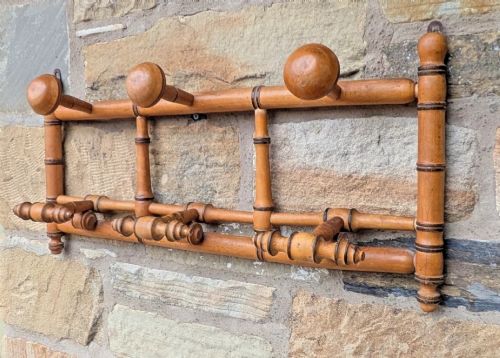
Hardware combined functional strength with decorative appeal through cast brass hooks, occasionally complemented by glazed ceramic or porcelain inserts. Bamboo and faux bamboo styles added exotic texture, while integrated metal drip trays beneath umbrella holders protected timber bases from standing water.
Umbrella drip trays hidden beneath seat compartments caught the English drizzle before it reached the hallway floorboards.
Evaluating standard and distinction
Quality rests in the integrity of the timber framing, the matching or completeness of original brass and ceramic hooks, and the stability of glued or screwed joints. Superior pieces retain matching sets of mounted hooks and uncompromised backboards, whereas lesser examples show mismatched replacement hardware or stress fractures around screw points.
Freestanding bentwood items demonstrate craftsmanship through smooth, unbroken curves in the steam-bent beech and firm vertical alignment. Wall-mounted racks reveal their pedigree in the depth of the timber moulding and the weight of the cast metal fixtures rather than surface ornamentation alone.
Thonet·Jas Shoolbred·Astrola
The Vintage Hallway Coat Rack Glossary
- Bentwood
- Timber shaped by steaming and bending it into curved forms, commonly utilised in lightweight hat and coat stands. This technique gained widespread popularity during the nineteenth and early twentieth centuries.
- Hall Stand
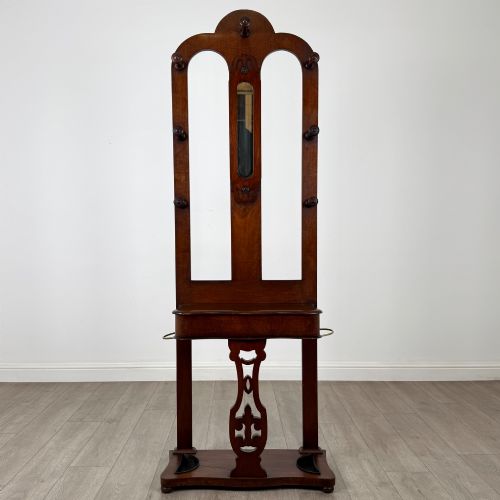
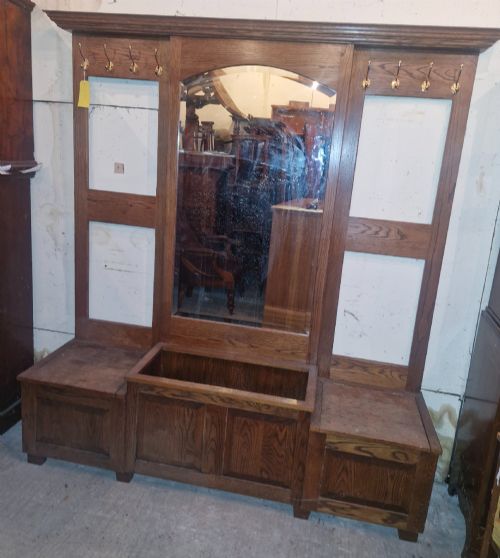
- A large freestanding hallway furnishing incorporating coat hooks, a mirror, and frequently a seat with a lower umbrella storage compartment. These pieces anchored the entranceway of period homes.
- Demi Lune
- A half-moon or semicircular shape utilised in the design of space-saving hall stands meant to sit flat against a wall. This profile maximised floor space in narrow corridors.
- Ebonised
- Timber treated with a dark stain or finish to imitate the appearance of ebony. Victorian cabinet makers frequently applied this technique to oak and pine backboards to contrast with bright brass hooks.
- Cloakroom Rack
- A long, narrow wall-mounted board fitted with multiple coat hooks for visitor outerwear. These utilitarian items were standard fixtures in period reception spaces.
Vintage Hallway Coat Rack: Frequently Asked Questions
How do I secure a wall-mounted coat rack safely?
Wall-mounted racks require sturdy fixings directly into wall studs or appropriate masonry plugs to support the heavy weight of winter coats and umbrellas.
Ensuring the mounting screws match the depth and diameter of the pre-drilled holes on the timber backboard prevents splitting the wood under tension.
What is the difference between a hall stand and a coat rack?
A coat rack is typically a compact wall-mounted board with hooks, designed strictly for hanging garments in confined entryways.
In contrast, a hall stand is a substantial freestanding piece of furniture that often includes an umbrella well, a mirror, and a seating bench.
How do I care for bentwood stands?
Bentwood furniture benefits from placement away from direct heat sources and sudden temperature shifts, which can dry out and weaken the steam-bent beech.
Applying a traditional beeswax polish helps maintain the lustre of the timber without building up heavy chemical residues on the curved surfaces.
Are ceramic hook inserts original?
Many Victorian and Edwardian hooks feature glazed porcelain or ceramic centres designed to prevent rust stains on delicate garments.
While original ceramic inserts show minor crazing or age-related hairline cracks, replacements often stand out due to overly bright white glazes and modern threading.