



Vintage Hallstand
A vintage hallstand provides an immediate anchor for the entrance, bringing together practical coat storage and structural timber or metalwork.
Vintage Hallstand
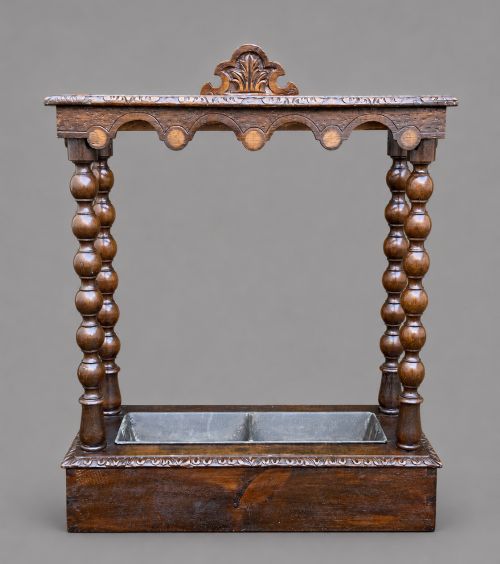
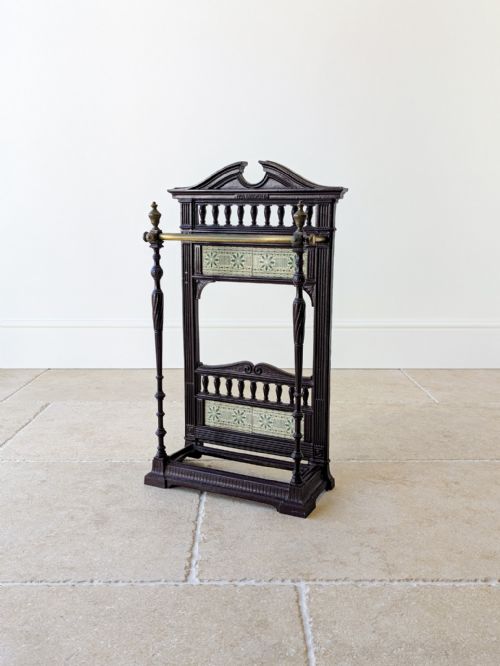
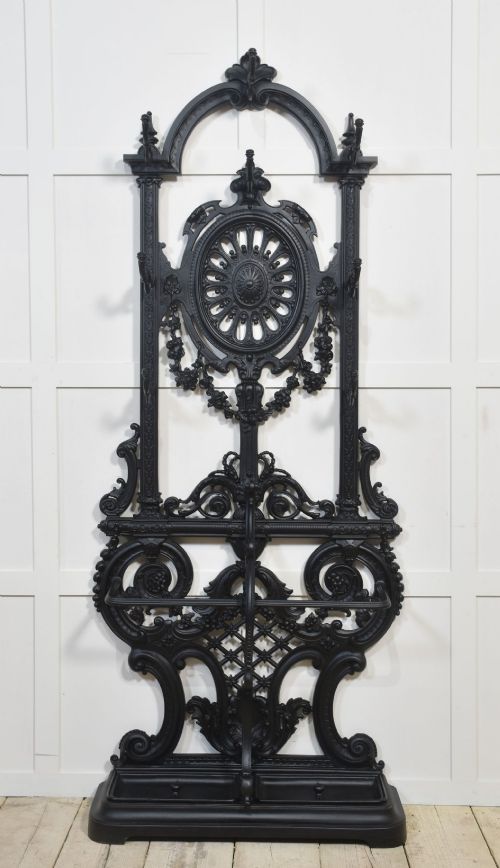
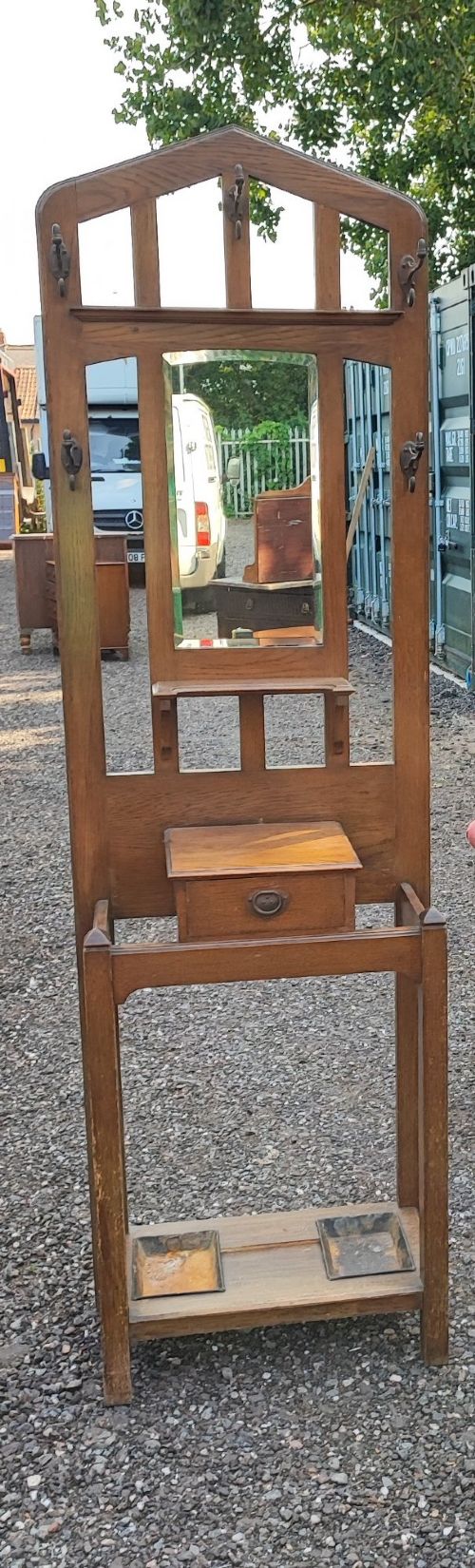
A vintage hallstand serves the entrance passage by combining facilities for hats, coats, and walking sticks within a single framework. The pieces appearing here span from the nineteenth century through the Edwardian era into the mid-twentieth century, capturing shifts in domestic organisation.
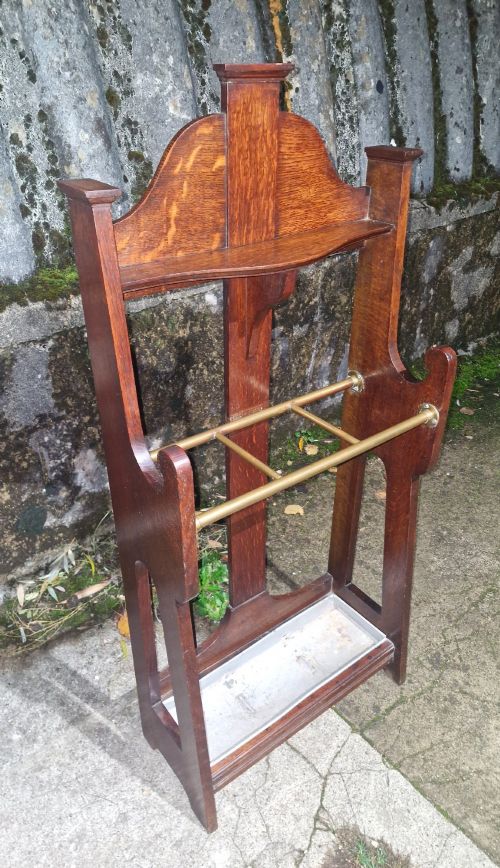
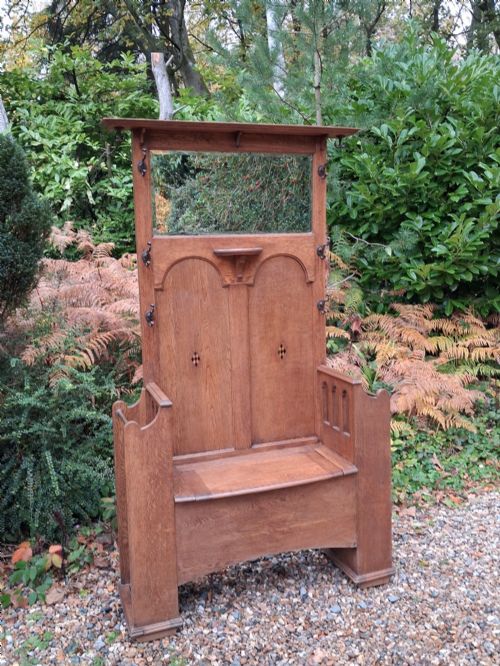
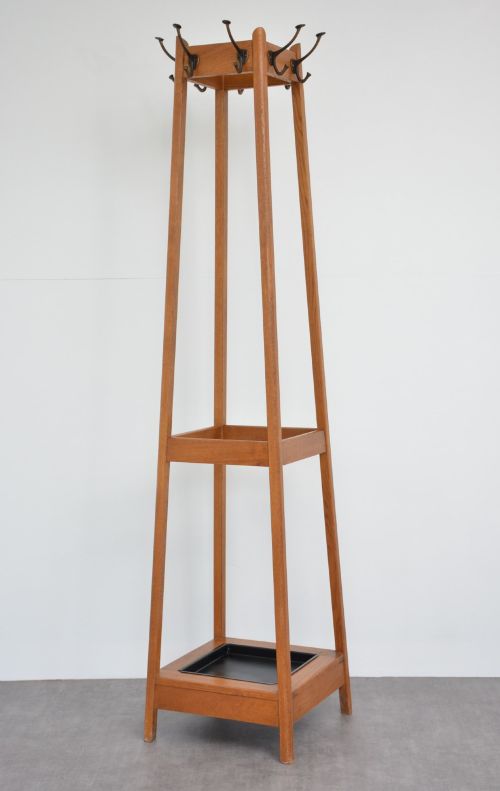
Victorian examples frequently utilise heavy timber or cast iron, while later Edwardian and Arts and Crafts pieces lean towards lighter oak frames and integrated mirrors. Alongside complete hallstands, the selection includes specialised umbrella stands, coat racks, and stick stands.
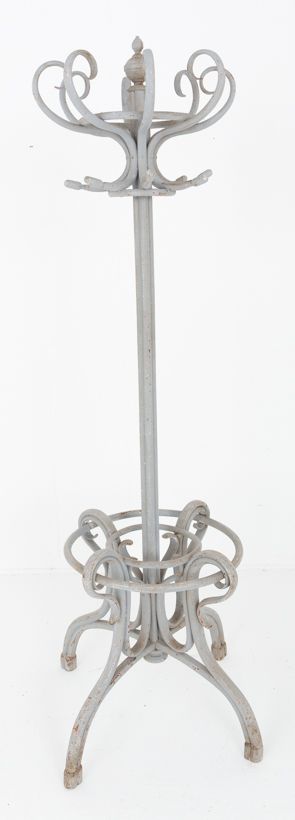
Makers and workshops of the period produced both elaborate hall furniture for country houses and streamlined bentwood designs for smaller hallways. Walnut, mahogany, and bamboo appear among the structural materials, offering distinct visual weights for different interior spaces.
Materials and construction
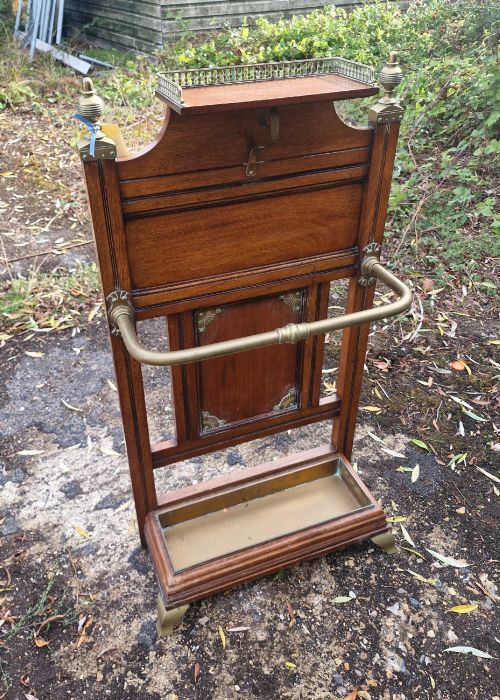
Solid oak and mahogany provide the primary structural framework for timber hallstands, frequently joined with brass hooks, rails, and drip trays. Metal versions rely on cast iron, often shaped through decorative founding techniques associated with foundries like Coalbrookdale.
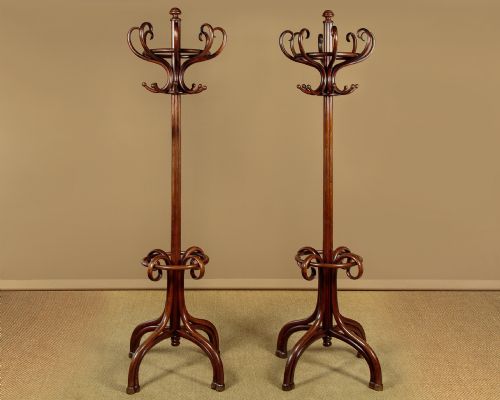
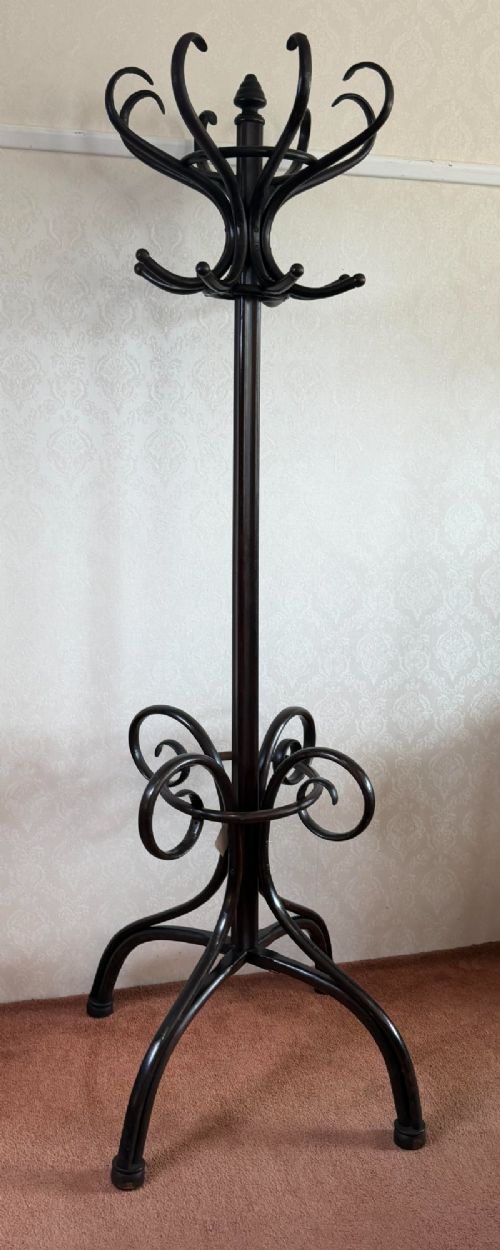
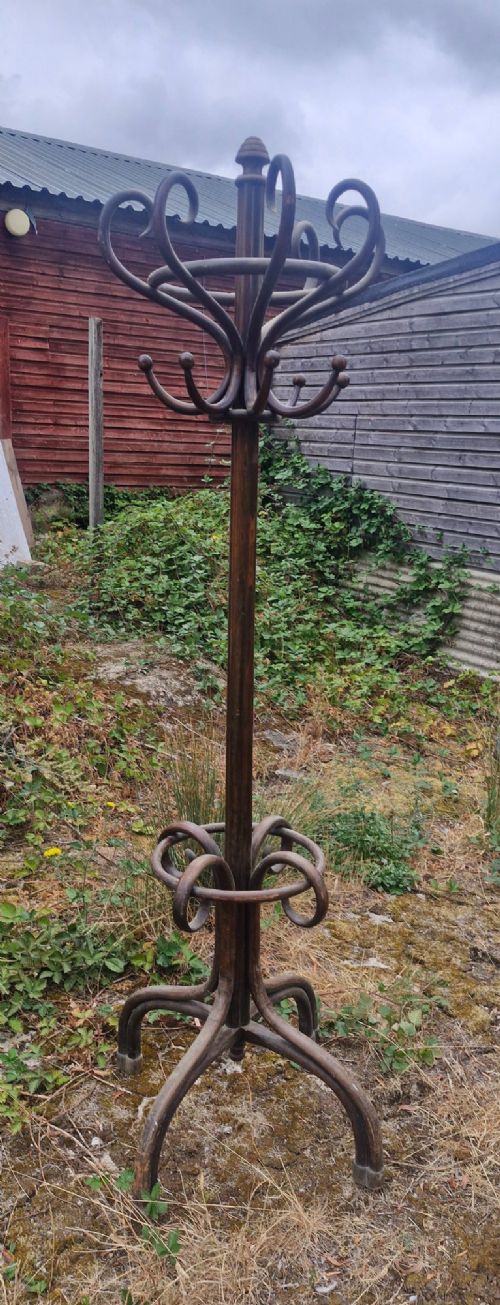
Bentwood manufacturing utilises steamed beech to create curved hat and coat stands with integrated umbrella holders. Secondary materials such as glass, marble, and bamboo introduce contrasting textures to the back panels and umbrella bases.
Vintage Hallstand Retail Price Guide 2026
Typical asking prices for vintage hallstand among the pieces listed under this phrase on Sellingantiques today, from the lower quarter to the upper quarter. They describe what is for sale here now, not the wider market.
The selection includes pieces constructed from oak, mahogany, walnut, bamboo, cast iron, and bentwood.
Quality and execution
Construction methods dictate structural longevity, distinguishing robust mortise and tenon joints in hardwood frames from simpler assemblies. The weight and crispness of cast iron components mark the difference between standard production items and finely detailed foundry work.
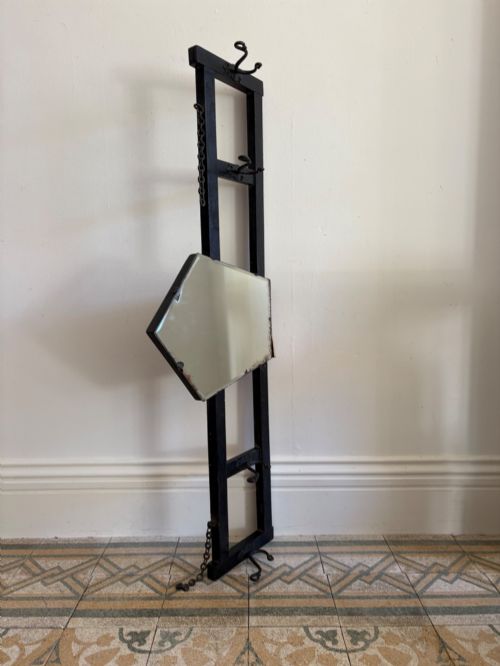
The integration of secondary elements, such as original brass drip trays, bevelled mirror glass, and substantial coat hooks, indicates the original grade of the piece. Well-preserved surface finishes on bentwood and carved woodwork retain the definition intended by the maker.
Coalbrookdale·Astrola·James Shoolbred·Fischel
The Vintage Hallstand Glossary
- Bentwood
- Wood that has been heated with steam and bent into curved structural forms. This technique created lightweight, durable coat and hat stands during the late nineteenth and early twentieth centuries.
- Drip tray
- A removable metal basin placed at the base of a stick or umbrella stand. It catches moisture from wet walking accessories to protect the surrounding flooring.
- Boot jack
- A small V-shaped device designed to hold the heel of a boot while the wearer steps out of it. These practical tools appear alongside entrance furniture in country houses.
- Arts and Crafts
- A design movement prioritising traditional craftsmanship and visible construction methods over mass-produced ornamentation. Hallstands from this tradition typically feature unadorned oak and hand-hammered metal details.
- Gothic Revival
- An architectural and decorative style drawing on medieval ecclesiastical forms. Pieces in this category often display pointed arches, heavy tracery, and dark timber.
Vintage Hallstand: Frequently Asked Questions
How do I choose the right size?
Measure the available wall space and hallway width carefully before selecting a piece. Full hallstands with mirrors require more clearance than narrow coat racks or half-moon umbrella stands.
Consider the projection of the coat hooks and umbrella wells into the room. Compact bentwood designs suit smaller entryways, while substantial oak or cast iron pieces anchor larger halls.
How were hallstands used originally?
These pieces served as the primary reception furniture for visitors and residents entering a Victorian or Edwardian home. Hats, outer garments, and walking sticks were stashed immediately upon arrival.
The integrated mirrors allowed a final check of appearance before heading out, while the lower trays caught rain from wet umbrellas and boots.
Are cast iron stands stable?
Cast iron provides considerable natural weight, making these stands exceptionally stable for holding heavy winter coats and wet umbrellas. Their substantial mass prevents tipping when garments hang unevenly.
Original models often feature heavy bases specifically engineered to counterbalance heavy loads of walking sticks and heavy garments.
How do I care for wooden hallstands?
Maintain the timber by applying appropriate wax polish periodically to nourish the surface and prevent drying. Avoid placing wooden stands in areas subject to excessive moisture or direct sunlight.
Keep brass hooks and drip trays clean using standard metal care appropriate for the finish. Ensure wet items placed in umbrella holders are dried regularly to protect surrounding wood or metal.