

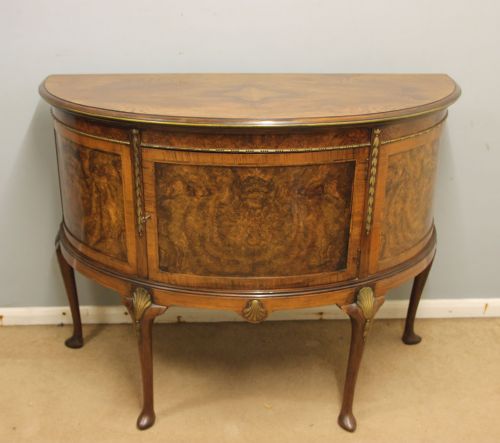
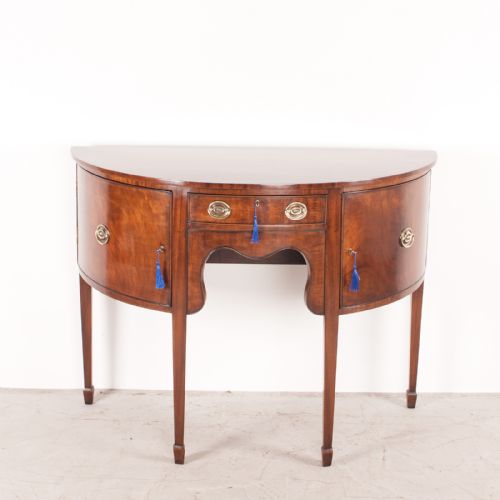


Vintage Half Moon Sideboard
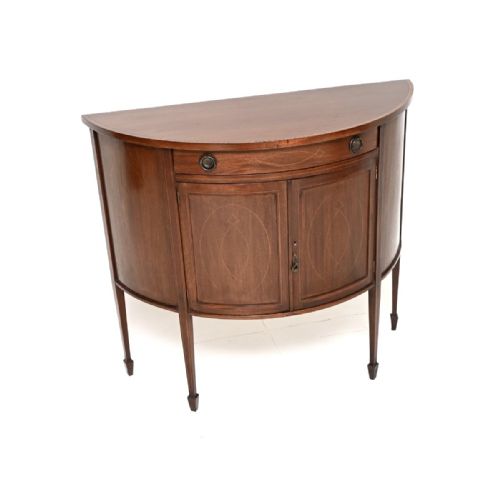
These vintage half moon sideboard pieces bring curved elegance and deep mahogany or satinwood tones to a hallway or dining room.
Vintage Half Moon Sideboard
When you search for a vintage half moon sideboard, you are looking at demi-lune cabinets and sideboards designed to fit snugly against a wall while offering discreet storage. The pieces on this page span the late nineteenth century through to the 1930s, taking in Edwardian examples and later revivals.
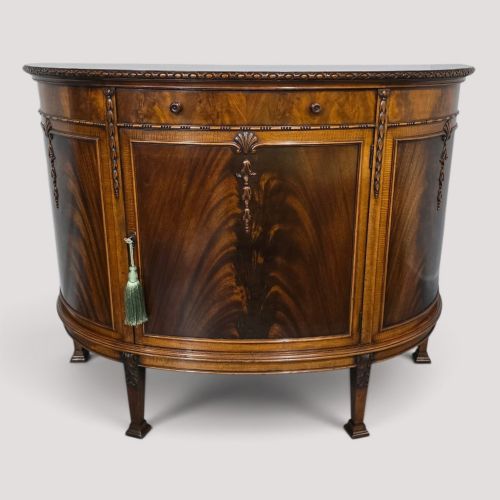
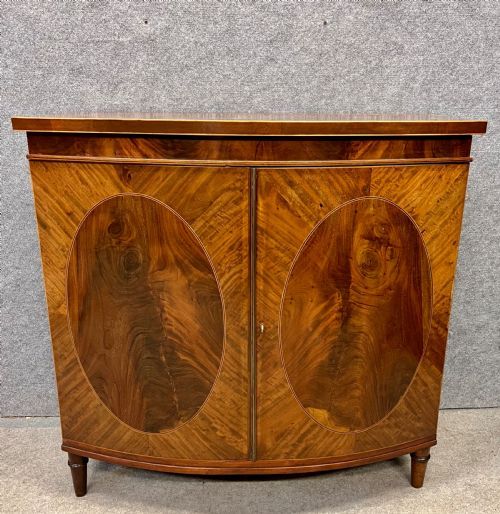
You are most likely to meet mahogany or satinwood versions on this page, often built in styles that look back to Sheraton or French Directoire designs. These items frequently function as side cabinets, commodes or compact sideboards suited to rooms where depth is at a premium.
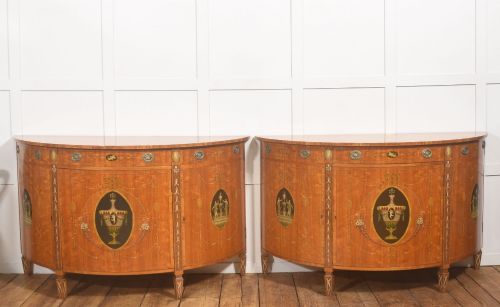
The forms range from understated mahogany carcasses to painted satinwood cabinets adorned with intricate detail. Makers of these periods drew on neoclassical idioms, resulting in balanced proportions and curved doors that disguise internal shelving.
How they were made
Surface ornament relied on contrasting satinwood inlay, painted details, and occasional ebonising to create architectural depth. Brass fittings such as handles and escutcheons finished the doors and drawers, anchoring the lighter timbers.
Vintage Half Moon Sideboard Retail Price Guide 2026
Typical asking prices for vintage half moon sideboard among the pieces listed under this phrase on Sellingantiques today, from the lower quarter to the upper quarter. They describe what is for sale here now, not the wider market.
Listings span from the 1880s through the Edwardian era to the 1930s, featuring mahogany, satinwood and burr walnut.
What varies in quality
The distinction between standard production and finer pieces lies in the crispness of the inlay and the hand-painted decoration. Superior cabinets display precise botanical or neoclassical motifs rather than mechanical regularity.
Construction methods also separate the tiers, visible in the careful matching of veneers across curved door fronts and the weight of the brass hardware used.
The Vintage Half Moon Sideboard Glossary
- Demi-lune
- A half-moon shape used for furniture designed to stand flush against a wall. This profile maximises floor space while providing a substantial top surface.
- Satinwood
- A durable, lustrous timber from tropical trees that yields a pale golden yellow finish. It is often used as a veneer or inlay.
- Sheraton Revival
- A late nineteenth and early twentieth century style that reinterprets the late eighteenth century designs of Thomas Sheraton. It favours light woods, delicate inlay and classical symmetry.
- Ebonised
- Wood treated with a chemical stain or black finish to imitate ebony. This technique was popular in nineteenth century French and English cabinet making.
- Commode
- A low cabinet with drawers or doors, originating in France. In these listings, it often describes a decorative demi-lune storage piece.
Vintage Half Moon Sideboard: Frequently Asked Questions
What is a demi-lune cabinet?
A demi-lune cabinet is a piece of furniture built with a semicircular front and a flat back designed to rest against a wall. The curved shape allows it to sit neatly in hallways or narrower rooms without obstructing pathways.
These cabinets typically feature cupboards or drawers hidden behind the curved facade, combining display space on top with practical storage below.
Where should I place a half moon sideboard?
These sideboards suit entrance halls, dining rooms or living spaces where a standard rectangular cabinet would project too far into the room. Their shallow depth makes them useful for narrow circulation areas.
They often serve as lamp tables or serving surfaces during gatherings while holding table linen or everyday items inside.
How do I date an Edwardian demi-lune cabinet?
Dating relies on timber selection, construction techniques, and stylistic revivals present in the piece. Edwardian items often combine mahogany or satinwood with lighter inlaid stringing.
Examining the interior drawer linings, backboards and screw types also helps establish whether a piece originates from the early twentieth century or a later revival.
Are these sideboards suitable for small rooms?
Their curved profile and restricted depth make them well suited to compact interiors. They provide surface space and enclosed storage while occupying minimal floor area.
The pale tones of satinwood or painted finishes can also help lift darker corners of a room.