



Vintage Gul Pattern Rug
These vintage gul pattern rug pieces bring tribal Central Asian geometry into a modern interior.
Vintage Gul Pattern Rug
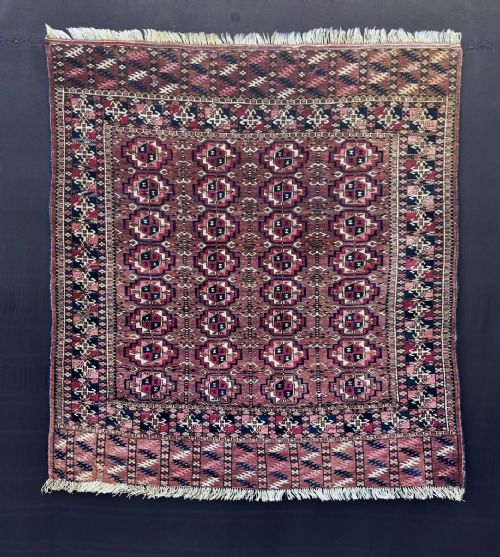
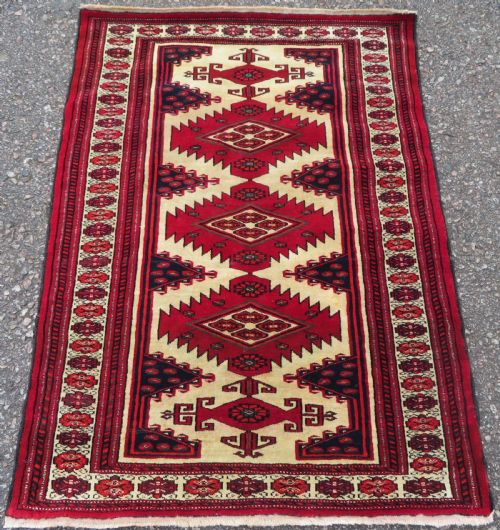
A vintage gul pattern rug draws on traditions from Central Asia, specifically Turkmen and Baluch tribal workshops. Buyers inspecting this page will frequently encounter pieces woven by tribes such as the Tekke, Ersari, Yomut, and Kizyl Ayak.
The objects span formats from small dowry and wedding rugs to tent door hangings and large country house carpets. Dating stretches from the mid-nineteenth century through the decades up to nineteen thirty, showing enduring nomadic patterns.
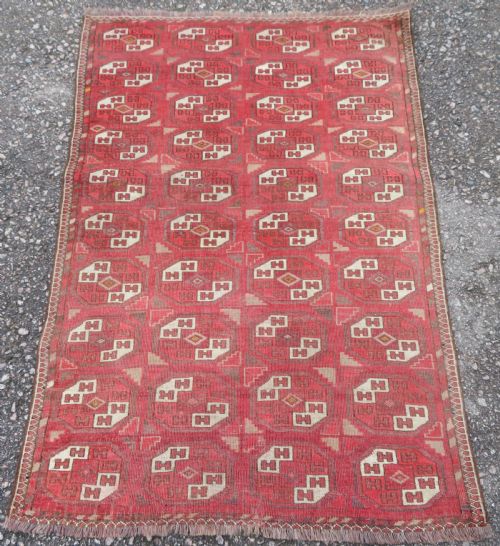
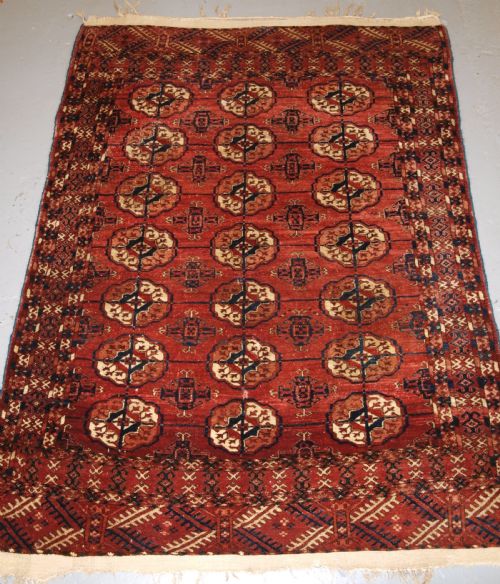
Geometrical octagonal medallions known as guls dominate the field, framed by complex geometric borders. These textiles served functional and ceremonial roles within tribal life before entering the decorative market.
Materials and construction
The pieces rely primarily on wool and hand-spun wool, yielding a tactile and resilient pile. Natural dyes provide the underlying palette, interacting with the fibre to produce deep tones that age gracefully.
Nomadic weavers utilised traditional upright looms to knot these textiles by hand, ensuring structural density. The survival of such rugs across the centuries demonstrates the durability inherent in their method of manufacture.
The listings span from eighteen sixty to nineteen thirty, covering nineteenth century Baluch and Turkmen tribal production.
Assessing quality and depth
Quality rests upon the fineness of the knotting and the crispness of the geometric gul drawing. Finer wool selection and greater density of pile separate standard village production from master tribal pieces.
The depth and variation within the natural dyes create a visual vibrancy that flat chemical colours lack. Preservation of the original outer borders and structural integrity further distinguish superior examples.
The Vintage Gul Pattern Rug Glossary
- Gul
- An octagonal medallion motif repeated across Central Asian carpets, often denoting specific tribal origins. Each tribe utilised distinct variations of this primary design.
- Kapunuk
- A decorative tent door hanging produced by Turkmen tribes, characterised by a distinctive shape designed to frame the entrance. These pieces served both ritual and domestic purposes in nomadic settlements.
- Torba
- A small wall-hanging bag or storage sack woven by nomadic groups. They frequently display the same careful gul motifs seen on larger carpets.
- Beshir
- A sub-group of Ersari Turkmen weaving known for larger scale designs and alternative palette choices. These carpets often depart from strict red grounds.
- Main carpet
- A large-format floor covering intended for principal family use within the tribal tent or dwelling. They require considerable time and resource to complete.
Vintage Gul Pattern Rug: Frequently Asked Questions
What is a gul pattern?
A gul is a repeating octagonal medallion that forms the primary decorative motif in Central Asian tribal weaving. These geometric designs often identify the specific tribe or clan that produced the textile.
Over generations, individual weaving groups developed their own variations, allowing scholars and collectors to trace origins through these distinct forms.
How do I identify a Tekke rug?
Tekke rugs typically feature precise, finely knotted structures with neat rows of primary guls and secondary guls. The palette leans heavily towards rich madder reds.
They frequently appear in smaller formats such as dowry rugs and tent bags, displaying exceptional wool softness and careful attention to border details.
Are these rugs suitable for heavy traffic?
Many of these pieces were constructed as heavy duty and hard wearing floor coverings for daily nomadic use. Their dense wool pile withstands regular foot traffic when placed over a suitable underlay.
Placing them in moderate traffic areas balances the preservation of antique pile with daily practical enjoyment.
How should I clean my antique rug?
Professional dusting and specialist textile washing remain the safest methods for maintaining natural dye pile carpets. Water immersion and harsh chemical detergents damage the delicate wool fibres.
Gentle surface vacuuming without a beater bar removes trapped grit and preserves the integrity of the hand-spun wool.