
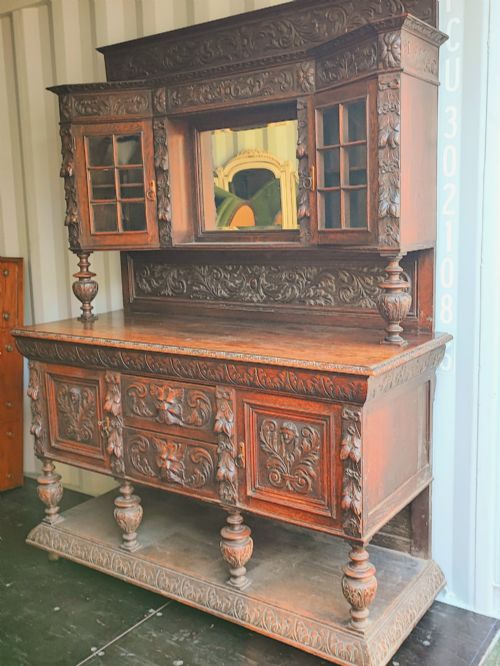
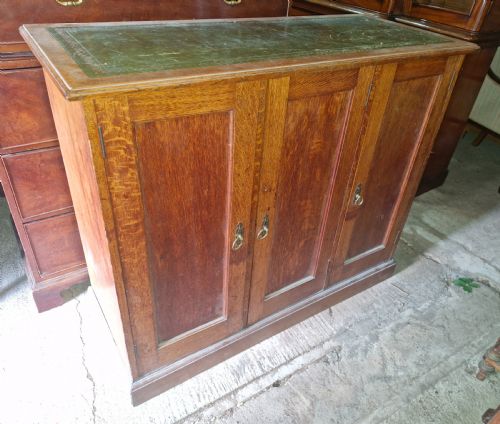
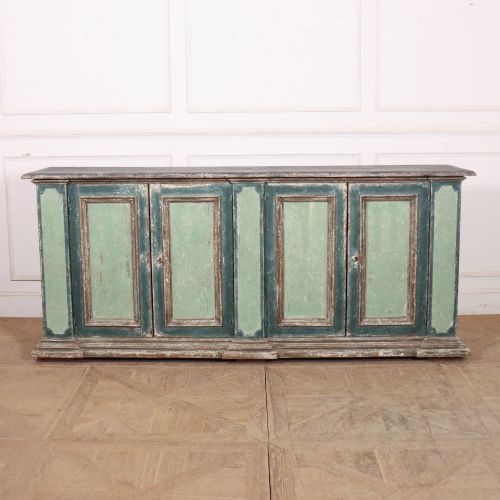


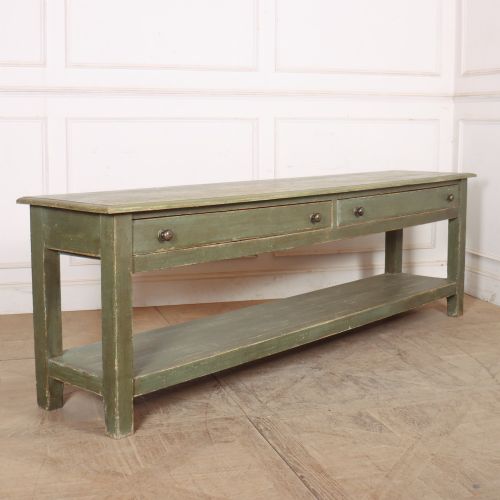


Vintage Green Sideboard
These vintage green sideboards bring painted character and storage to a room, ranging from country pine to French polished mahogany.
Vintage Green Sideboard
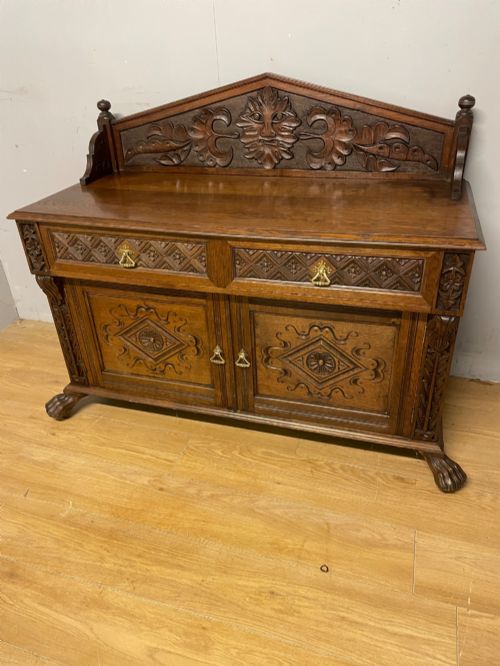
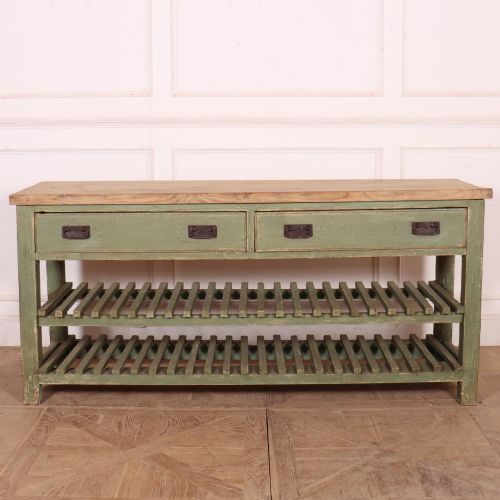
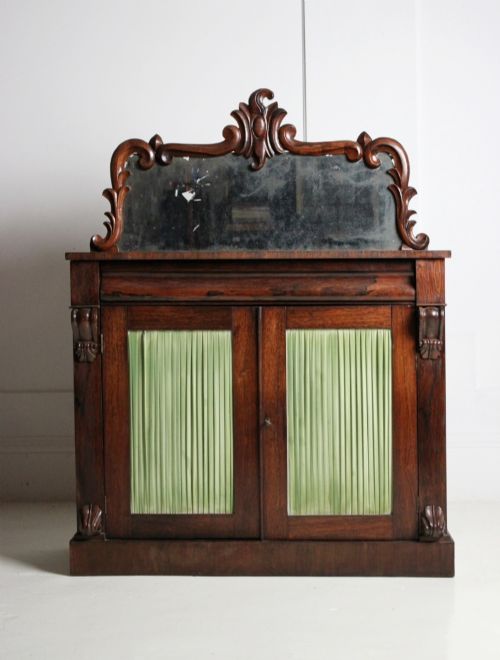
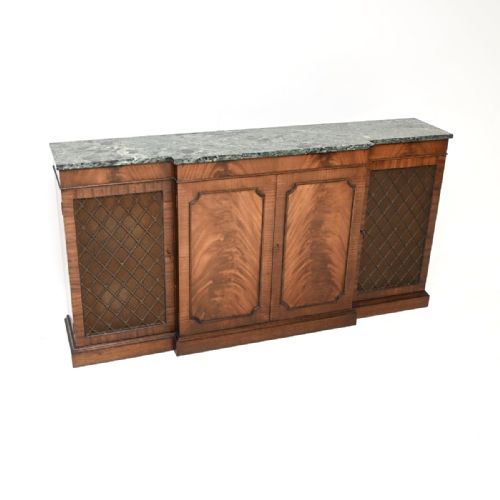
A vintage green sideboard serves as a practical storage unit while bringing distinct painted colour to an interior scheme. When exploring this selection of vintage green sideboard designs, you encounter forms ranging from 18th-century country pine cupboards to 19th-century dresser bases and marble-topped cabinets.
The objects combine functional utility with decorative painted surfaces, often finished in soft greens that suit both traditional and modern spaces. Originating from English country houses, French provinces, and Scandinavian workshops, these pieces bring regional craftsmanship directly into domestic settings.
How they were made
Construction relies primarily on solid timbers such as pine, oak, and mahogany, shaped through traditional joinery techniques like panelled framing and dovetailed drawers. Many pieces feature applied mouldings, carved details, and brass hardware to accent the main structure.
Surfaces are finished with layers of historical paint, sometimes complemented by marble tops or zinc surfaces. The application of paint varies from utilitarian coats on kitchen dressers to intricate marquetry and parquetry on finer cabinets.
Periods represented on this page range from the 18th century through the Victorian era up to the 1930s.
What varies in quality
Quality rests upon the integrity of the timber framing and the preservation of original surfaces. Pieces with intact period paintwork and solid structural joinery command higher regard than those with compromised bases or later, heavy-handed repainting.
The refinement of the hardware, the precision of the drawer construction, and the presence of luxury additions like marble tops separate standard utilitarian storage from exceptional decorative examples.
The Vintage Green Sideboard Glossary
- Dresser base
- A low storage unit with drawers and cupboards, historically used in kitchens for food preparation and serving.
- Breakfront
- A cabinet design where the central section projects forward from the flanking outer sections.
- Marquetry
- Decorative veneer work forming pictorial patterns using various coloured woods laid into a ground.
- Potboard
- An open slatted lower shelf on a dresser or serving table, traditionally used for storing heavy pots and pans.
- Serpentine front
- A furniture front curved with a convex centre flanked by concave ends, creating a flowing movement.
Vintage Green Sideboard: Frequently Asked Questions
Where should I place a sideboard?
These pieces fit naturally in dining rooms, hallways, or kitchens where both surface space and enclosed storage prove useful. Their painted finishes allow them to anchor a room as a central colour accent.
Ensure you measure the floor space and clearance for opening doors and drawers before settling on a permanent location in your home.
How do I clean painted wood?
Dust surfaces regularly with a soft, dry cloth to prevent dirt accumulation on the painted finish. Avoid harsh chemical cleaners that can strip or soften historical paint layers.
For stubborn marks, use a slightly damp cloth with mild soap, drying the wood thoroughly immediately afterwards to protect the timber underneath.
Are these pieces suitable for daily use?
Solid timber construction and sturdy joinery make these sideboards well-equipped for holding dinnerware, linen, and household items. The internal shelving and deep drawers provide practical organisation for modern living.
Take care with hot dishes or moisture on unsealed wooden surfaces by using mats and coasters to preserve the finish.
How do I identify a period piece?
Look for construction markers such as hand-cut dovetails in the drawers, backboards made of single wide planks, and period-appropriate iron or brass hardware. Tool marks left by saws and planes provide physical evidence of age.
Paint analysis and the natural wear patterns around frequently handled areas also help confirm the historical context of the piece.