
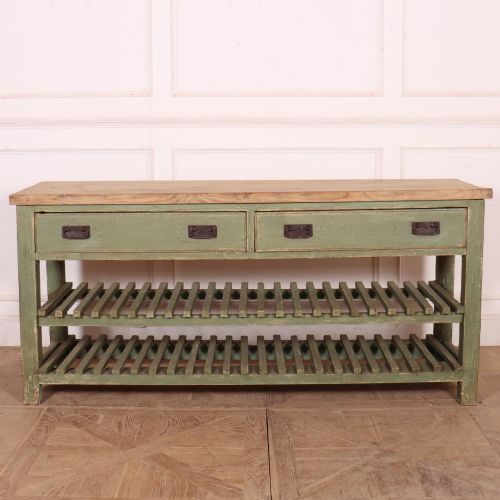
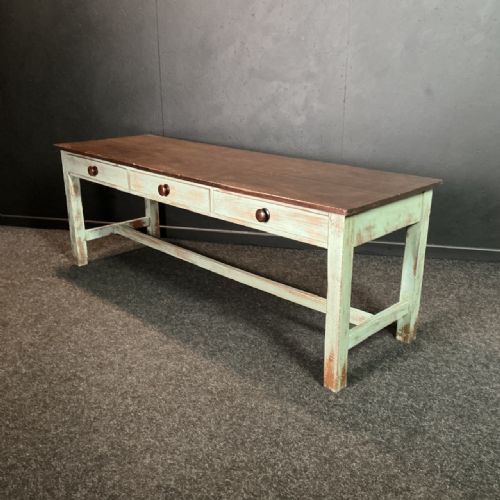

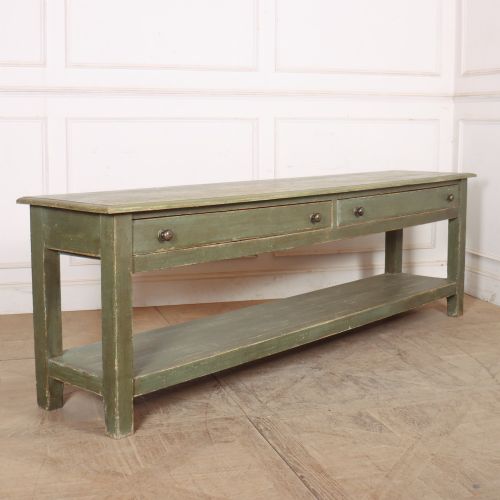


Green Painted Prep Table
These green painted prep table examples combine robust utility with aged surface character, offering practical work surfaces that anchor a country interior.
Green Painted Prep Table
A green painted prep table serves as a sturdy workspace, drawing on forms made for work in kitchens, bakeries and schools during the nineteenth and early twentieth centuries. These tables take several shapes, including long console tables, potboard serving tables, kitchen tables and drapers tables.
The versions most commonly found here date from the nineteenth century through the early twentieth century, spanning from eighteen sixty to nineteen twenty. They originate from English, French, and Scandinavian workshops, carrying regional details such as drawers or pot-shelves.
Makers built these pieces for service rather than display, utilising durable timbers suited to daily tasks. Buyers select them to bring functional surface area and authentic period patination into modern domestic spaces.
How they were made
Makers constructed these tables primarily from solid pine and oak timber, often combining wood with cast iron or brass hardware for structural strength. Tops frequently consist of thick scrubbed wood or marble slabs designed for pastry work and food preparation.
Surfaces received layers of paint, with many pieces retaining original painted finishes that show weathering from decades of use. Iron brackets, brass pulls and pot-shelves were integrated to support heavy kitchen and baking equipment.
A French marble top pastry table brings the cool calculation of nineteenth-century baking directly into your modern kitchen.
What varies in quality
Quality depends upon the integrity of the original construction and the preservation of authentic surface paint rather than applied decoration. Tables retaining untouched nineteenth-century painted finishes carry more historical weight than later restorations.
Proportion and scale also separate standard utility items from finer workshop pieces, particularly in longer console formats or tables featuring integrated drawers and potboards. The presence of original marble tops or untouched pine structures elevates the standing of an individual piece.
The Green Painted Prep Table Glossary
- Potboard
- An open lower shelf built into a table or dresser base, traditionally used for storing pots and heavy kitchen utensils. This practical addition provides extra stability to the frame.
- Pastry Table
- A specialised work table featuring a marble or smooth stone inset top designed to keep pastry cool during preparation. These tables date predominantly to the nineteenth century.
- Drapers Table
- A long, wide work table originally utilised in textile shops for measuring and cutting cloth. They offer generous surface areas well suited to modern dining or workspace demands.
- Dresser Base
- The lower section of a kitchen dresser, constructed with cupboards or drawers for storage beneath a sturdy top. They functioned as primary food preparation surfaces in country houses.
Green Painted Prep Table: Frequently Asked Questions
How were these tables used originally?
These tables served as heavy-duty work surfaces for baking, food preparation, and school dining. They stood in kitchens, larders, and workrooms where durability mattered most.
Their robust timber frames and practical drawers or pot-shelves held utensils, ingredients, and heavy cookware close at hand during daily tasks.
Where do these tables originate from?
The pieces originate from workshops across England, France, and Scandinavia. Each region imparted subtle differences in proportions and framing techniques.
French and Swedish examples often feature distinct painted finishes and longer console formats, while English versions frequently incorporate potboard shelves or drawer arrangements.
How do I care for an original painted surface?
Maintain original paintwork by avoiding harsh chemical cleaners and excessive moisture. Dust gently with a dry or slightly damp cloth to preserve the historical surface.
Keep the table away from direct heat sources and strong sunlight to prevent the aged timber and paint layers from drying out or flaking.
Can I use a prep table for dining?
These tables adapt well to modern dining spaces due to their generous proportions and sturdy construction. Long console and kitchen table formats provide ample seating room.
The aged wood and painted finishes introduce tactile character and historical depth into dining rooms and open-plan kitchens.