




Traditional Painted Dresser Base
A traditional painted dresser base brings honest utility and time-worn character to a kitchen, offering generous surface workspace and concealed storage beneath.
Traditional Painted Dresser Base
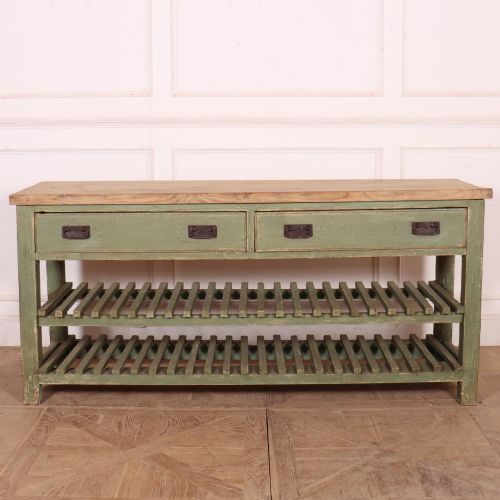
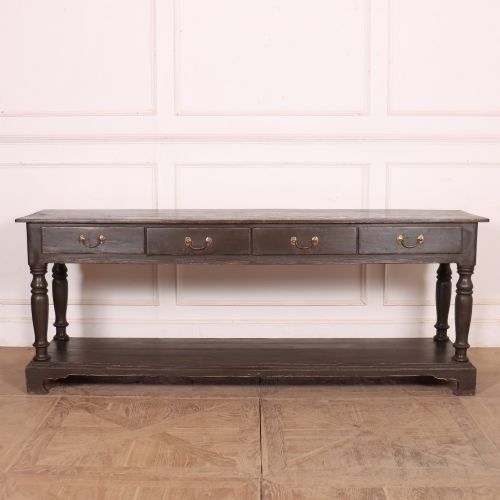
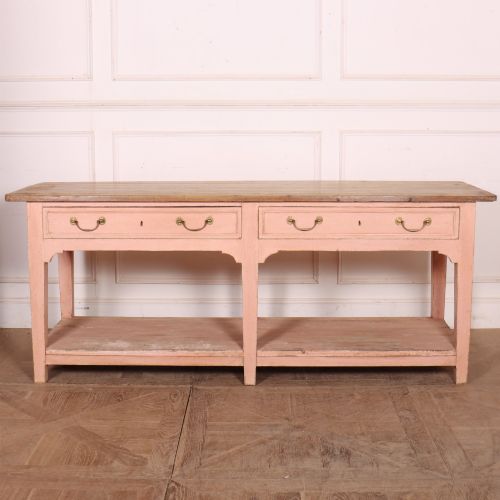
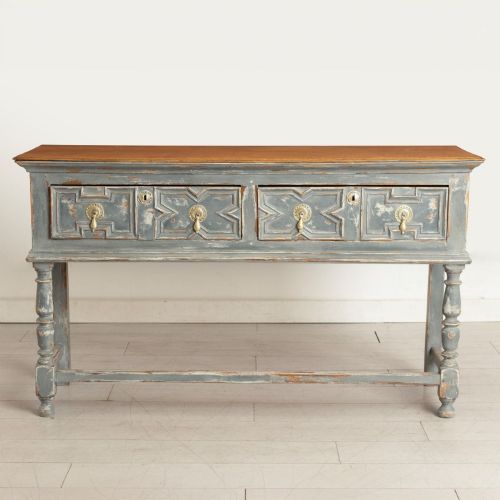
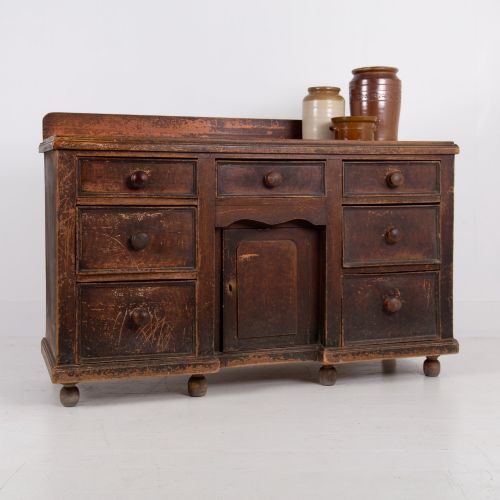
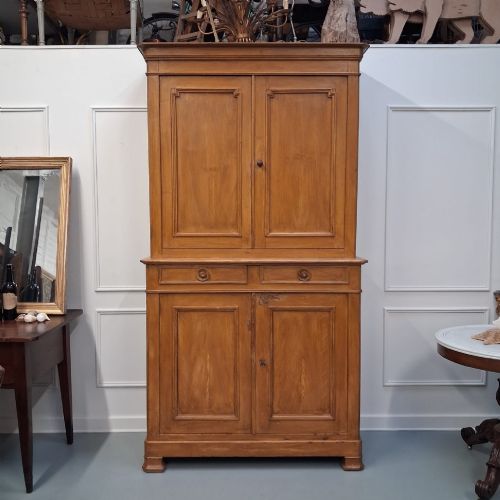
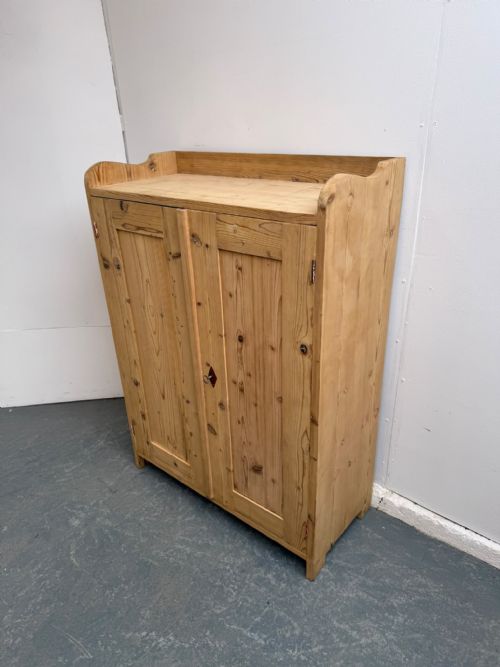
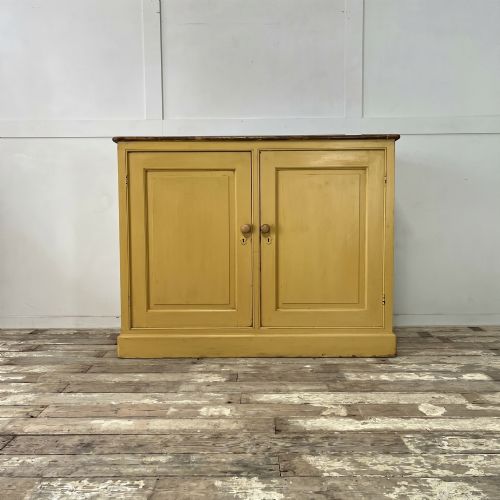
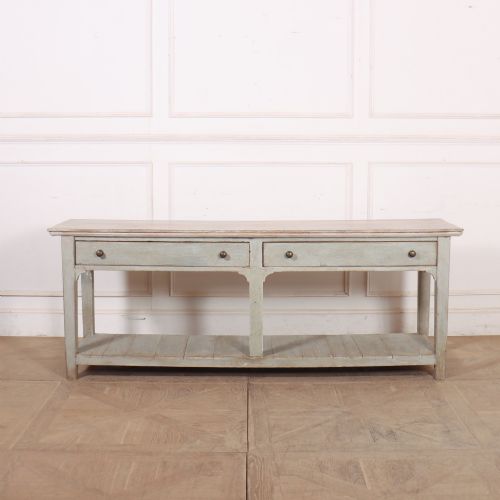
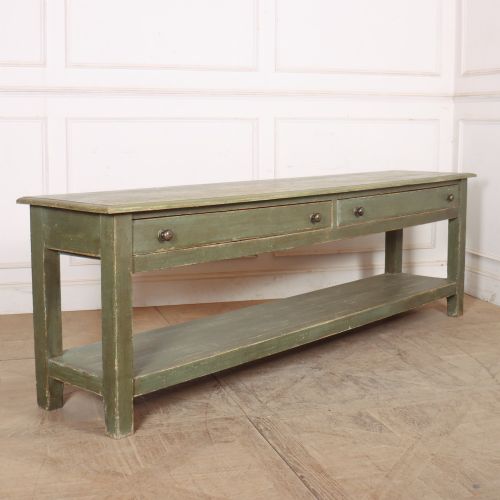
A traditional painted dresser base is a heavy storage unit designed for domestic service, featuring a low countertop surface combined with lower cupboards, drawers, or an open potboard beneath. The examples on this page span from the eighteenth century through the nineteenth century, taking forms such as potboard bases, kitchen cabinets, and housekeepers cupboards.
Most pieces you meet here originate from English, Scottish, and French country houses and farmhouses, often displaying the practical vernacular of their regions. Styles range from simple rustic farmhouse and English country to Jacobean revival and French provincial, capturing a utilitarian aesthetic developed for daily food preparation and storage.
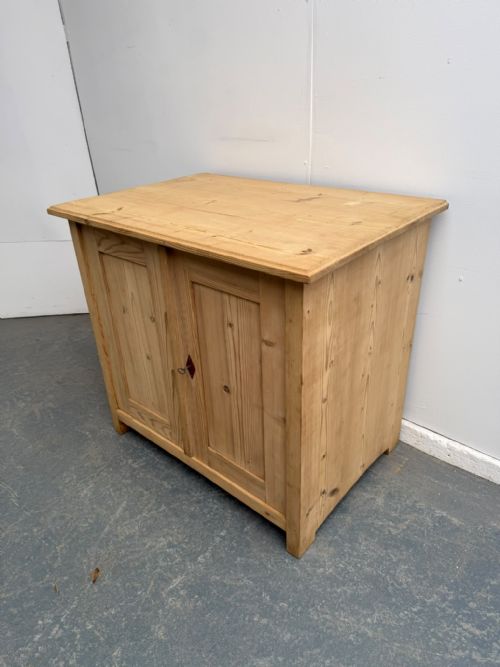
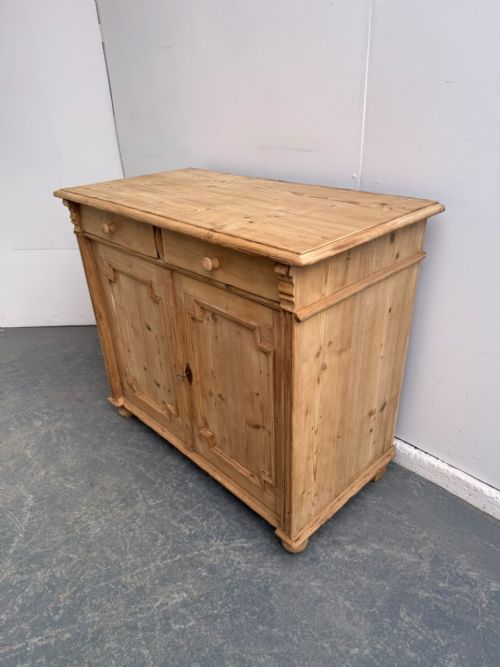
Makers built these pieces primarily in pine and oak, applying layers of paint or leaving timber exposed to decades of wear. You will find configurations including narrow servers, wide low storage cupboards, dog kennel formats, and serving tables that function equally well in modern dining rooms and kitchens.
How they were made
Joiners constructed these bases using sturdy native timbers, predominantly relying on pine and oak for structural stability and longevity. Boards were joined with traditional methods to withstand heavy daily use in busy farmhouse kitchens and housekeepers' larders.
Surfaces were frequently finished with paint, often in original or layered coats that have aged to show distinctive craquelure and patina. Hardware such as brass or metal pulls and hinges completed the utilitarian construction.
Listings feature pine and oak construction across periods from the eighteenth century through the late Victorian era.
What varies in quality
Quality rests in the integrity of the original timber and the retention of authentic painted surfaces rather than modern refinishing. Pieces retaining their original coats of paint or showing honest structural wear command greater interest from collectors.
Proportion and scale dictate the success of a piece, with well-balanced drawer arrangements and sound potboards marking better regional workshop production. The joinery beneath the countertop reveals the care taken by rural cabinetmakers during the eighteenth and nineteenth centuries.
The Traditional Painted Dresser Base Glossary
- Potboard dresser base
- A low kitchen cabinet featuring an open slatted shelf near the floor, historically used for storing drying pots and heavy earthenware.
- Housekeepers cupboard
- A large storage cabinet with deep proportions, traditionally used in large country houses for linen, dry goods, and kitchen supplies.
- Dog kennel dresser
- A distinct form featuring a central open recess flanked by sets of drawers or cupboards beneath the main surface.
- Patina
- The surface sheen and softening of edges acquired by wood and paint through decades of handling, cleaning, and exposure to light.
- Vernacular furniture
- Practical items made by local tradesmen for everyday use, reflecting regional preferences and available materials rather than formal academic styles.
Traditional Painted Dresser Base: Frequently Asked Questions
How do I style a painted dresser base?
A traditional painted dresser base works well as a kitchen island alternative or a sideboard in a dining room. Use the top surface for everyday items or ceramic displays while keeping tableware stored securely below.
Allow the aged paint and timber marks to stand out by keeping surrounding walls neutral. The piece anchors a room naturally without needing excessive decoration.
Are these pieces suitable for modern kitchens?
These bases offer practical counter space and deep storage drawers that suit contemporary kitchen layouts. Their sturdy construction handles daily meal preparation and heavy use just as it did centuries ago.
Check the dimensions of narrow servers or low wide cupboards to ensure proper clearance for your walkways. Many buyers use them alongside modern appliances to introduce textural contrast.
How do I care for original painted wood?
Dust surfaces regularly with a soft, dry cloth and avoid harsh chemical cleaners that might strip historic paint layers. Protect the wooden top from excessive moisture and heat by using boards or mats.
Wax can be applied lightly to unpainted timber elements to nourish the dry wood. Preserving the existing surface character ensures the piece retains its historical integrity.
How can I tell the age of a dresser base?
Examine the construction methods, tool marks on the timber, and the type of fixings used inside drawers and backboards. Hand-cut joints and irregular board widths typically indicate eighteenth or nineteenth-century vernacular production.
Compare the paint layers and wear patterns to understand how the piece evolved over time. Regional styles also offer clues to whether a piece originated in an English country house or a French provincial kitchen.