




Large Country House Sideboard
A large country house sideboard anchors a substantial room with scale and utilitarian authority, spanning oak, mahogany, and painted pine.
Large Country House Sideboard
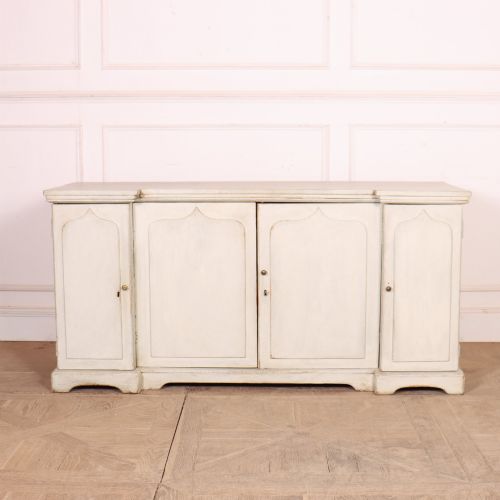
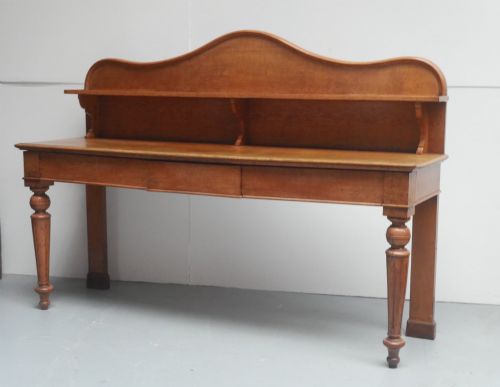
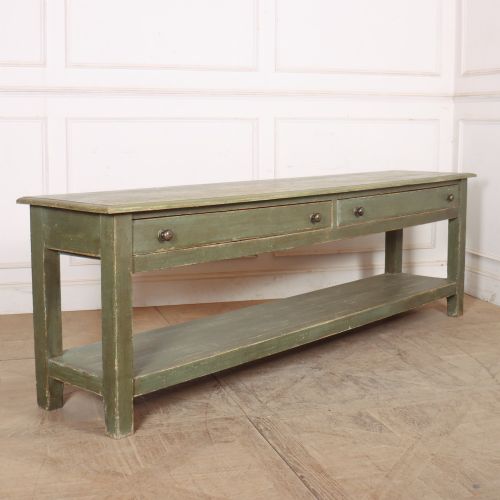
A large country house sideboard comprises heavy-set serving tables, dresser bases, potboard tables, and monumental cupboards intended for estate dining rooms and kitchens. These pieces serve domestic utility with deep timbers, long surfaces, and practical storage configurations.
The versions most frequently met here span the Georgian, Victorian, and nineteenth-century periods, built predominantly in English oak, mahogany, and painted pine. They emerge from provincial workshops and grand estates alike, reflecting the robust requirements of country living.
Buyers seek these forms to anchor large spaces with genuine historical weight. They function as practical serving furniture or display surfaces while carrying the distinct patina of active estate use across centuries.
How they were made
Construction relies heavily on solid timber framing, utilising dense oak, pine, and flame mahogany veneer over sturdy carcases. Cabinetmakers employed traditional joinery techniques to withstand heavy daily demands in estate kitchens and dining rooms.
Surfaces often feature hand-applied paint, clear wax polishing, or glass elements, paired with functional brass hardware. Potboards, open racks, and deep cupboards were integrated directly into the structural framework during initial construction.
Several pieces show the physical marks of estate housekeeping, where centuries of polishing preserved the corners.
What varies in quality
Quality rests upon the selection of timber and the integrity of the original construction, distinguishing sturdy utility pieces from finer architectural furniture. Dense oak boards and well-figured flame mahogany veneer indicate a higher grade of manufacture.
Proportion and surface preservation define the upper tier of these pieces. Original painted surfaces, untouched brass fittings, and balanced scaling elevate a utilitarian workspace into a distinguished example of country house design.
The Large Country House Sideboard Glossary
- Potboard
- An open lower shelf fitted beneath a dresser base or serving table. It was traditionally used for storing heavy pots and earthenware.
- Dresser base
- A low, heavy-set cabinet featuring drawers or cupboards beneath a wide top surface. It formed the foundation for kitchen dressers before plate racks were added.
- Breakfront
- A piece of furniture whose central section projects forward from the flanking wings. This configuration creates architectural depth in larger dining room furniture.
- Flame mahogany veneer
- A thin slice of mahogany timber cut from the fork of the tree to create a distinctive flickering flame pattern. It decorated the drawer fronts and doors of finer sideboard designs.
- Serving table
- A long, un-cupboarded table placed in a dining room to hold dishes before service. These tables often featured potboards or simple stretchers beneath.
Large Country House Sideboard: Frequently Asked Questions
Where were these sideboards used?
These pieces belonged primarily in the working areas of large estates, including kitchens, sculleries, morning rooms, and basement offices. They supported heavy domestic labour and food preparation.
Over time, many migrated into formal dining rooms or entrance halls as interior tastes shifted toward displaying antique utility furniture.
How do I clean the wood?
Maintenance requires simple dusting with a dry, soft cloth and the occasional application of traditional beeswax to nourish dry timber. Avoid modern silicone sprays that damage historic surfaces.
Keep these large wooden pieces away from direct heat sources and strong sunlight to prevent the timber from splitting or warping.
Are plate racks original?
Some dressers retain their original upper plate racks, while others were built strictly as base cabinets or serving tables. Surviving joined racks add considerable height and presence to the overall form.
Examining the construction joints where the rack meets the base helps determine whether the two sections originated together.
How do I date a sideboard?
Dating relies on identifying the primary wood species, construction marks, hardware styles, and overall aesthetic proportions. Oak points toward earlier Georgian periods, while mahogany and painted pine span the Regency and Victorian eras.
Secondary woods used in drawer linings and backboards offer further clues to the regional workshop and manufacturing decade.