




Vintage Green Leather Seat
A vintage green leather seat brings rich texture and enduring comfort to a room, spanning forms from swivel desk chairs to club fenders.
Vintage Green Leather Seat
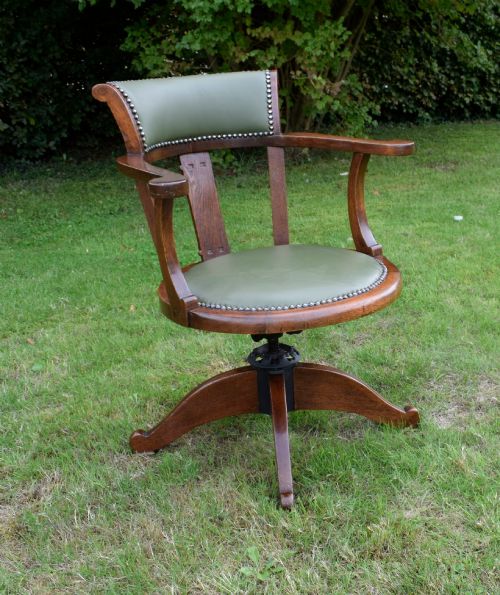
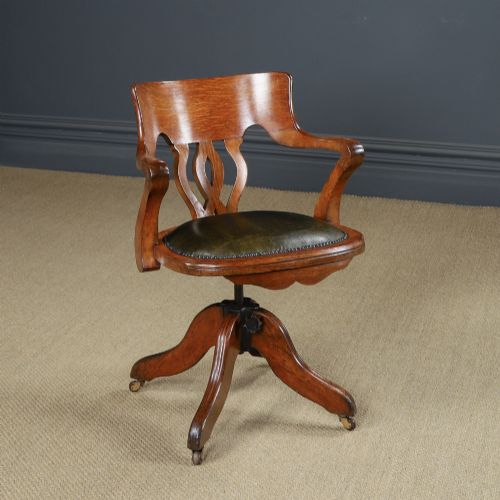
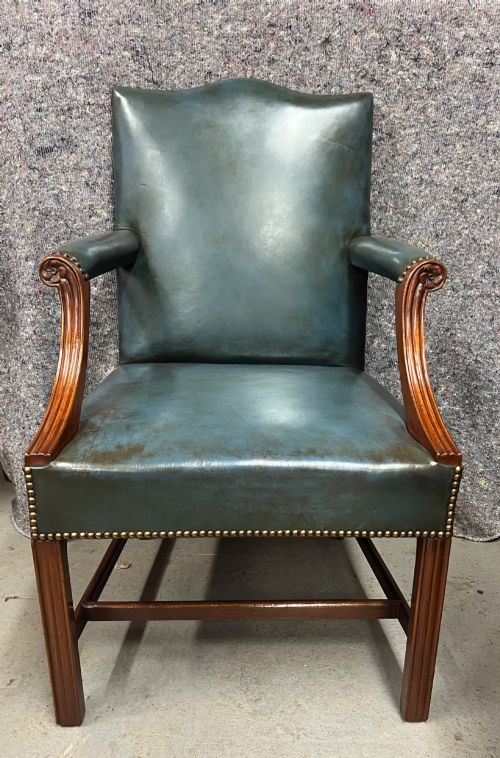
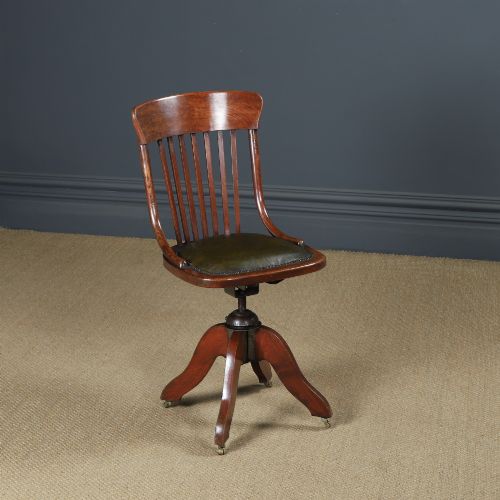
A vintage green leather seat encompasses various practical domestic and office forms found in this selection. Buyers searching for a vintage green leather seat commonly encounter sturdy desk armchairs, library armchairs, club fenders, and upholstered sofas dating from the nineteenth and early twentieth centuries.
The assortment includes specific seating types such as swivel desk chairs, wingback armchairs, and low stools originating across the Victorian, Edwardian, and Regency periods. Pieces range from mahogany and oak office furniture to walnut framed library seating and brass-extended fireplace accessories.
Makers and workshops of the nineteenth and twentieth centuries constructed these chairs and fenders using durable hardwoods and supple hides. The selection reflects diverse historical revivals alongside practical country house furniture designed for daily use.
Materials and Construction
Frames are constructed from solid hardwoods such as mahogany, oak, walnut, and beech, frequently shaped to period styles like Regency, Chippendale, or Arts and Crafts. Joinery relies on traditional methods to ensure structural stability in heavy pieces like swivel desk chairs and library armchairs.
Upholstery employs genuine leather and hide secured over supportive sprung or padded interiors, sometimes finished with button-backed detailing. Metal components such as brass extenders on club fenders and iron mechanisms on swivel chairs provide functional durability.
Listings feature oak, mahogany, walnut, and beech frames upholstered in green leather, spanning the Victorian, Edwardian, and Regency periods.
Craftsmanship and Material Integrity
Quality rests in the selection of timber and the depth of the frame construction, separating standard commercial output from workshop pieces built for libraries and country houses. Heavier framing in oak or mahogany provides better longevity in daily use.
The grade of the leather and the execution of buttoning or stitching dictate the visual refinement of the seating. Superior examples retain patinated hides and robust mechanical swivel actions that operate smoothly without undue looseness.
Howard & Son's·William Birch
The Vintage Green Leather Seat Glossary
- Club fender
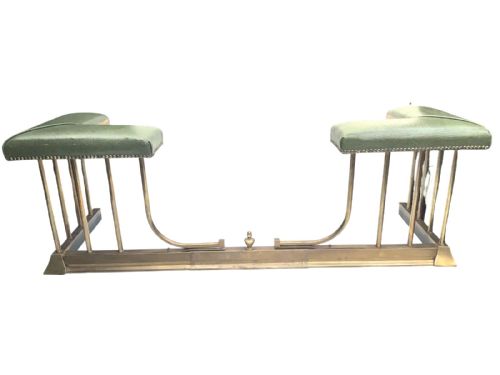
- A low fireside seat with cushioned top rails, commonly upholstered in leather and supported by brass or iron framework. These pieces originated in country houses to provide warm seating close to the hearth.
- Swivel desk chair
- An office seat mounted on a rotating mechanism, often featuring an adjustable height screw and wooden spindle back. They appear frequently in oak and mahogany from the Edwardian and late nineteenth-century periods.
- Bergère
- An enclosed armchair with wooden frames and woven cane sides or backs, frequently adapted with upholstered cushions. This French-influenced style found popularity in English library settings.
- Gainsborough chair
- A wide, open-armed armchair with a padded seat and back, standing on short legs. Eighteenth-century models inspired later Victorian and Edwardian reproductions utilised at desks.
- Button back
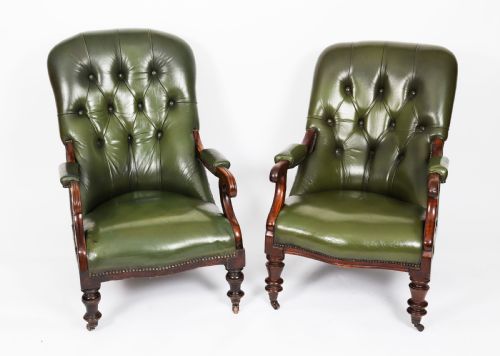
- An upholstery technique where indentations are formed by pulling twine or thread through the padding to secure buttons in a geometric pattern. This method adds structural tension and visual texture to leather sofas and armchairs.
Vintage Green Leather Seat: Frequently Asked Questions
What is a club fender?
A club fender is a low, padded fireside seat built around an open hearth, combining metal framework with upholstered leather top rails. It allowed people to sit close to the fire while keeping drafts away from the floor.
These pieces often incorporate brass or iron uprights and extended corners, serving as both functional seating and fireplace protection in large nineteenth and twentieth-century rooms.
How do I date an office desk chair?
Dating a desk chair involves examining the combination of timber, underframe mechanism, and joinery style. Late nineteenth-century examples often feature solid oak or walnut with simpler turning, while Edwardian and George V models frequently introduced patent swivel mechanisms and castors.
Checking for maker's marks beneath the seat and observing the thickness of the timber helps distinguish between Victorian originals and later revival pieces.
Are these chairs suitable for daily desk work?
Many vintage desk chairs were built for sustained office use, featuring sturdy hardwood frames and ergonomic curved backs. Swivel and revolving models from the early twentieth century offer mobility suited to modern workspaces.
Buyers should check the seat height and mechanical action to ensure comfort during extended periods of sitting at a modern desk.
What distinguishes a Victorian library chair?
Victorian library chairs are characterised by substantial timber frames, deep padding, and durable leather upholstery designed for heavy domestic use. They often feature generous proportions, scroll arms, and turned wooden legs fitted with castors for ease of movement.
Craftsmen built these pieces to withstand frequent handling, resulting in heavy construction that endures in studies and living rooms today.