
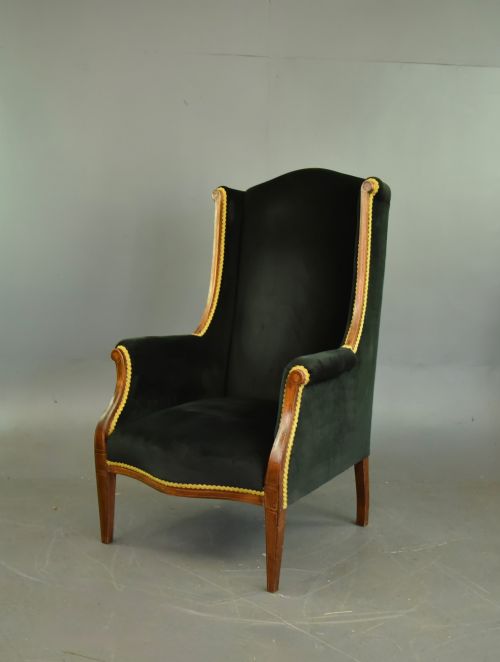
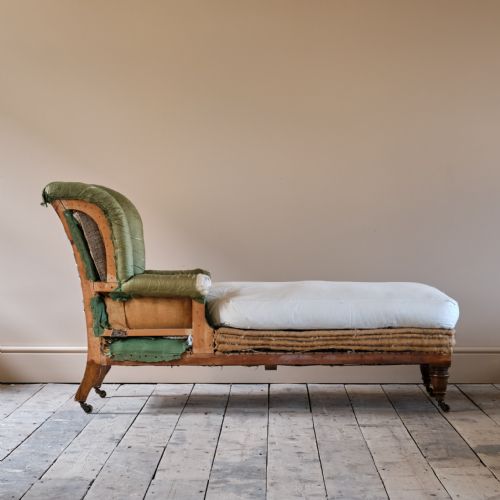


Green Upholstery Lounge Chair
These green upholstery lounge chair pieces range from Regency library seats to deep Howard style armchairs, offering period comfort and traditional craft.
Green Upholstery Lounge Chair
A green upholstery lounge chair spans several distinct historic periods, appearing in forms such as Edwardian wing armchairs, Regency library chairs, and Victorian daybeds. These seats combine substantial frames with textile coverings in various green shades, serving as both functional seating and decorative room focal points.
The selection on this page leans heavily towards traditional British forms, including English country wingbacks and heavy upholstered armchairs alongside continental interpretations like Karl Johan influenced birch chairs. Buyers frequently encounter pieces dating from the nineteenth and early twentieth centuries, reflecting diverse historic revival movements.
Makers and designers of note include Heals and Howard & Son's, whose creations set benchmarks for comfort and structural design in lounge seating. Whether sourced as finished items or pieces requiring re-upholstery, these armchairs and daybeds provide tangible links to past domestic interiors.
How they were made
Makers constructed the structural frames of these lounge chairs using dense timbers such as mahogany, walnut, birch, and hardwood, often shaped with bentwood techniques or inlaid details. These robust wooden skeletons supported deep upholstery systems utilising materials like hessian and traditional stuffing.
Visible woodwork frequently featured brass accents, such as castors or decorative tacks, alongside carved elements like claw and ball legs. The final aesthetic relied heavily on tactile surface coverings including velvet, leather, and various woven fabrics.
The selection spans multiple periods, stretching from Regency and Victorian eras through to Edwardian and 1930s designs.
What varies in quality
Quality in these lounge chairs rests upon the integrity of the underlying timber frame and the sophistication of the original construction, distinguishing standard workshop pieces from high-end productions by firms like Howard & Son's. The balance between timber selection, such as figured walnut or solid mahogany, and the refinement of carved details dictates the standing of an individual piece.
The standard of upholstery and the preservation of original materials also separate everyday examples from superior specimens. Pieces retaining authentic internal stuffing methods alongside high-grade textile coverings hold greater interest for traditionalists than those altered by unsympathetic modern repairs.
Heals·Howard & Son's
The Green Upholstery Lounge Chair Glossary
- Wing arm chair
- An armchair featuring protective side panels designed to shield the sitter from drafts. These elements extend upward from the arms to frame the head.
- Daybed
- An elongated seating form combining elements of a chair and a bed, suitable for reclining during daytime hours. Examples often feature a raised end or backrest.
- Bentwood
- Wood softened through steaming and then bent into curved structural components. This technique allows for organic, flowing lines without traditional joinery.
- Hessian
- A coarse woven fabric typically utilised as a foundational support layer beneath the visible upholstery stuffing. It provides tension and structure inside the chair.
- Claw and ball
- A carved furniture foot depicting a bird taloned foot grasping a spherical object. This decorative motif appears frequently on finer period frames.
Green Upholstery Lounge Chair: Frequently Asked Questions
Are these armchairs comfortable for daily use?
These lounge chairs are built with deep upholstery and supportive internal structures designed specifically for prolonged sitting. Their generous proportions accommodate relaxed postures in modern living spaces.
Comfort levels can vary depending on whether the internal webbing and padding have been historically maintained or recently restored. Buyers seeking daily seating often look for deep styles or those with supportive winged backs.
How do I identify a Victorian armchair?
Victorian armchairs typically feature heavier proportions, darker hardwoods such as walnut or mahogany, and often incorporate elaborate decorative elements like claw and ball feet. They reflect the eclectic revival styles popular during the nineteenth century.
Examining the turning on the wooden legs and the style of the upholstery tacks helps confirm the period. Pieces associated with makers like Howard & Son's display particularly distinctive build quality.
What is a Karl Johan chair?
A Karl Johan chair reflects the Scandinavian empire style popular during the early nineteenth century, characterised by clean lines and pale birch timbers. These pieces bring a distinct continental aesthetic to the category.
They stand apart from heavier British Victorian furniture through their lighter wood tones and restrained classical ornamentation. Such chairs offer a subtle architectural presence in a room.
Can I buy a chair needing re-upholstery?
Several listings specifically offer frames intended for re-upholstery, allowing buyers to select their own fabrics and final finish. This approach suits those wanting to match specific interior colour schemes.
Starting with a solid period frame ensures the finished seat retains historic proportions and structural integrity. Hessian and traditional stuffing can be renewed during this process.