

Mahogany Ball Claw Chairs
Mahogany ball claw chairs bring the robust presence of eighteenth-century seating into modern rooms through substantial timber and characteristic footwork.
Mahogany Ball Claw Chairs
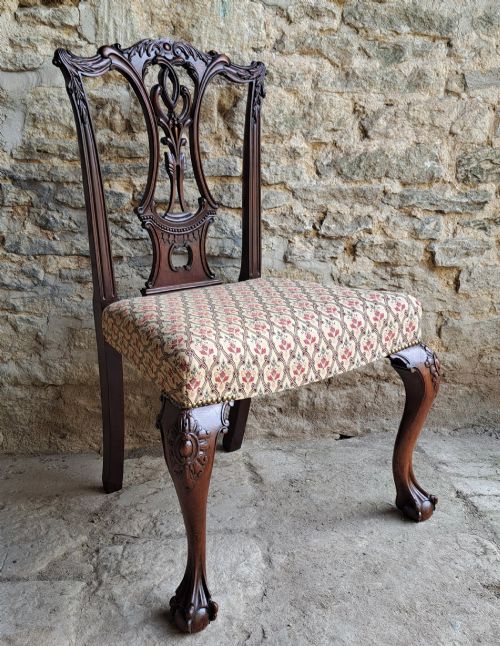
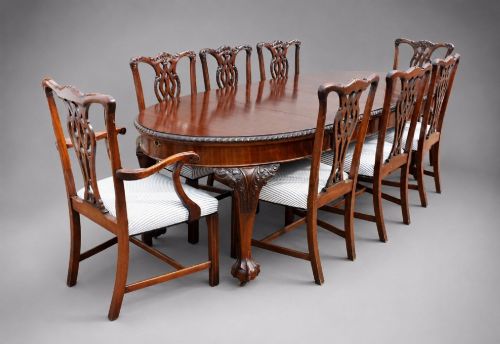
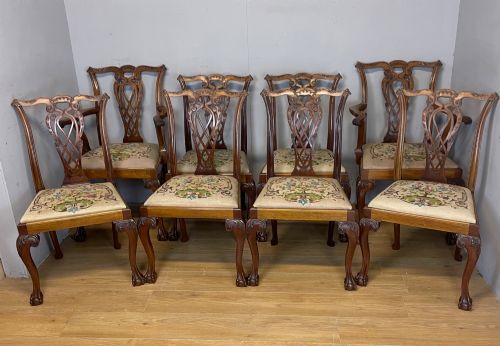
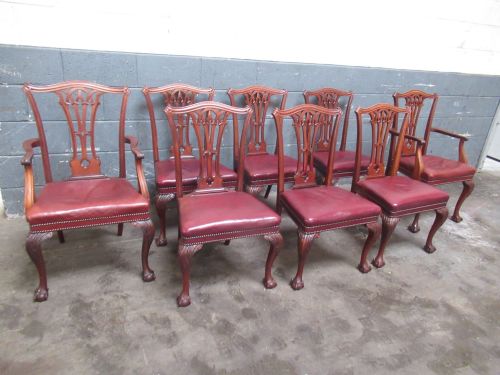
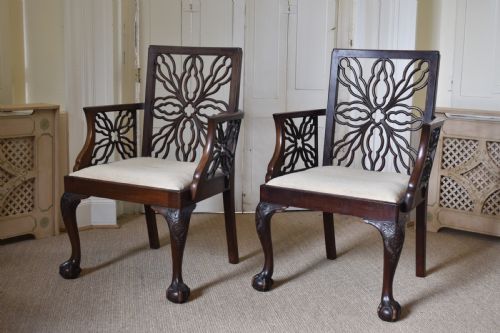
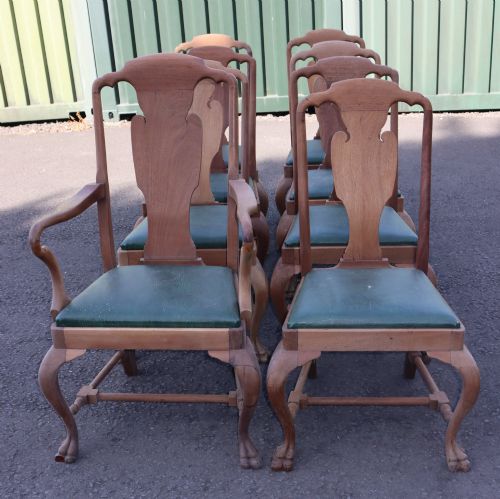
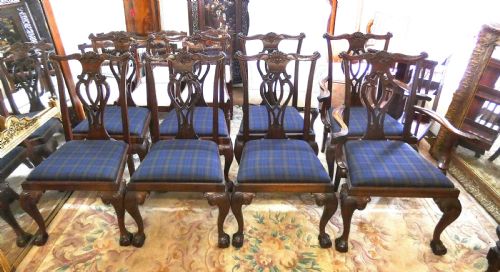
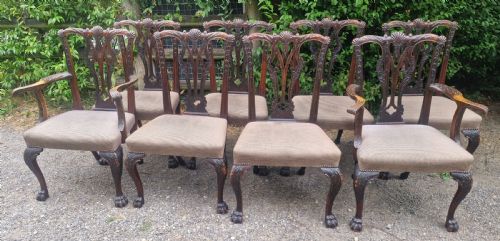
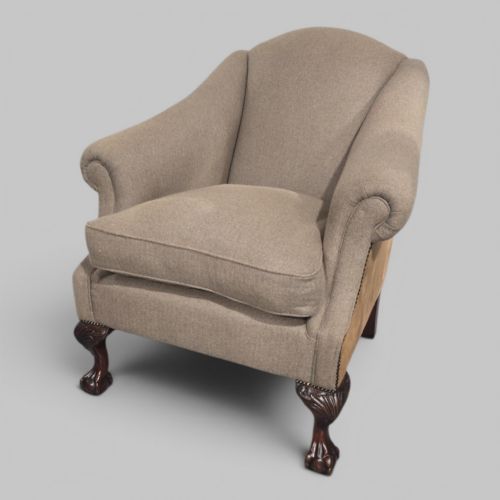
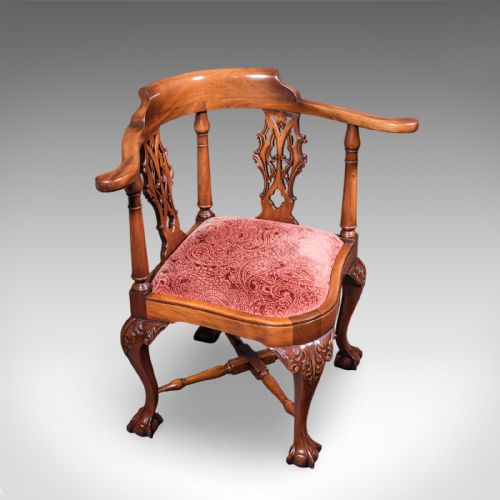
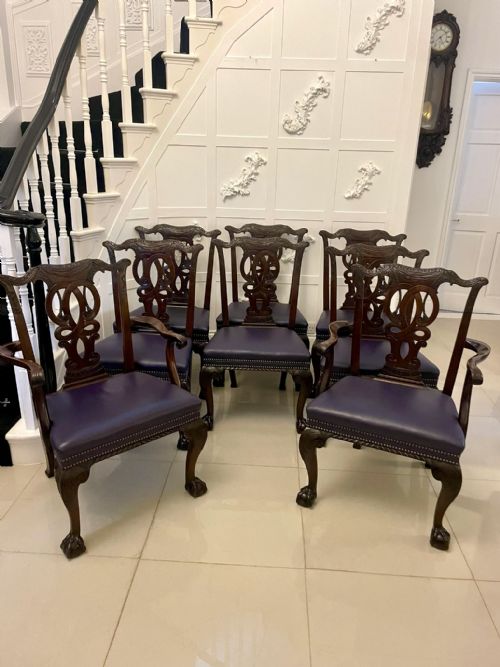
When buyers search for mahogany ball claw chairs, they encounter primarily nineteenth-century and early twentieth-century interpretations of earlier Georgian forms, alongside authentic eighteenth-century pieces. These items span various seating types, including single side chairs, library armchairs, desk chairs, and large dining sets accompanied by extending tables.
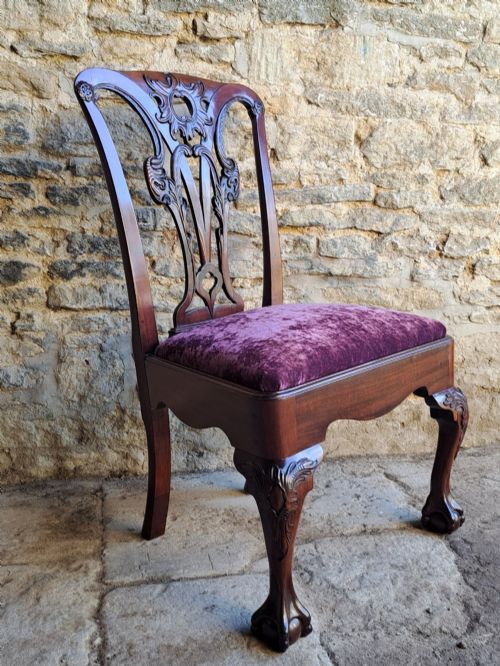
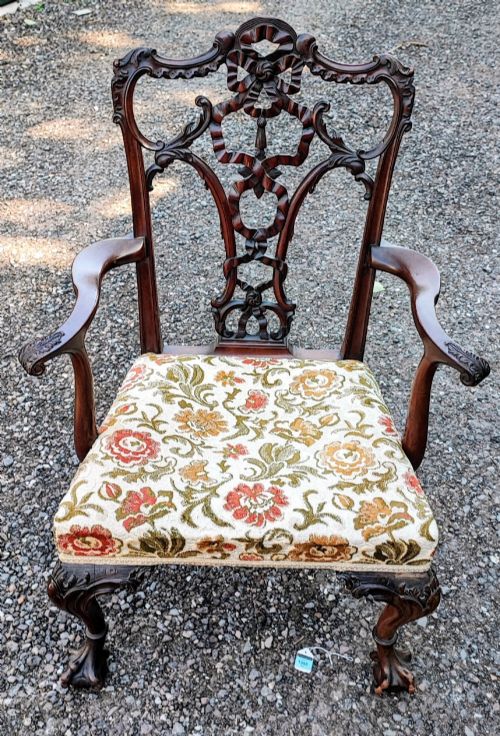
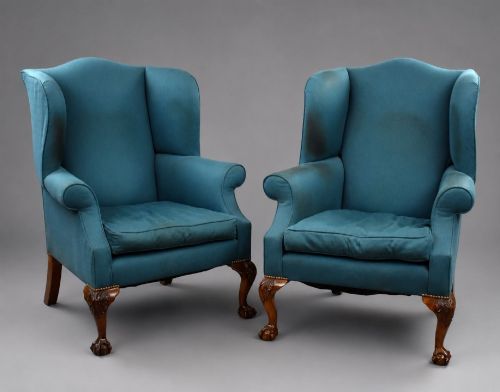
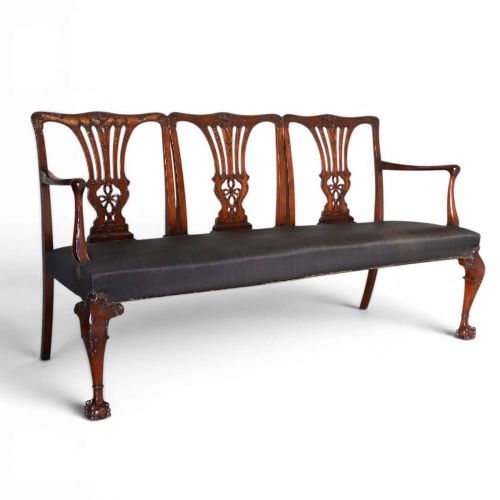
The aesthetic heavily favours Chippendale and George II styles, distinguished by carved splats, hipped cabriole legs, and the defining grip of a bird or beast talon clutching a sphere. Sets of dining chairs frequently appear alongside occasional wingbacks and open armchairs.
The surviving pieces demonstrate a strong nineteenth-century and Edwardian revivalist movement, where workshops reproduced the heavy timber frames and detailed foot carvings of Georgian originals for contemporary homes.
Materials and construction
The physical backbone of these items is dense mahogany, occasionally specified as Cuban timber or red walnut, which provided the structural rigidity required for heavy carving. Workshops shaped the frames to support intricate openwork splats and substantial cabriole legs.
Upholstery materials range from modern fabric and leather to period-appropriate tapestry, brass nailing, and original squab cushions. Seating platforms often relied on webbing and traditional stuffing beneath the outer textile layers.
Claw feet were originally carved by apprentices who practiced their grip until the wooden talons looked ready to scuttle across the parlour floor.
Distinctions in standard
The depth and crispness of the timber carving separate standard examples from finer works, particularly where the talons wrap cleanly around the sphere and the knee of the cabriole leg bears bold acanthus foliage. Weaker pieces display softer, shallower detailing on the splats and feet.
Proportion and timber selection heavily influence the overall character of the piece, with dense grain patterns and well-balanced frames commanding greater attention than plain or awkwardly proportioned alternatives.
Warings
The Mahogany Ball Claw Chairs Glossary
- Cabriole leg
- A furniture leg that bends outward in a convex curve and tapers inward in a concave curve, ending in a ornamental foot. This shape mimics the natural leg of an animal and typifies eighteenth-century design.
- Ball and claw foot
- A carved terminal representing a bird's talon or animal paw gripping a spherical ball. It appears frequently at the base of cabriole legs on revival and period seating.
- Chippendale style
- A decorative design drawn from the patterns of Thomas Chippendale, featuring interlaced ribbon splats, carved scrolls, and robust cabriole supports. It remains a dominant aesthetic in nineteenth-century dining chairs.
- Gainsborough chair
- A wide, low-backed armchair with open padded arms, upholstered seat, and short cabriole legs. These pieces were traditionally utilised at desks or in libraries.
- Splat
- The vertical wooden slat placed centrally in the back of a chair. In these pieces, it is frequently pierced and carved in various revival patterns.
Mahogany Ball Claw Chairs: Frequently Asked Questions
How do I spot a Georgian original?
Authentic eighteenth-century examples exhibit the natural oxidation, shrinkage, and tool marks of early hand-working beneath the timber surface. They generally lack the uniform machine precision found in later revival pieces.
Examination of the frame construction, timber density, and joinery methods helps separate eighteenth-century production from nineteenth-century Chippendale revivals.
Are these chairs suitable for daily dining?
Mahogany dining chairs provide robust timber frames that comfortably withstand regular use when the underlying joinery remains sound. Many sets include carvers and side chairs designed specifically for extended seating around a table.
Buyers should ensure the frame joints are firm and the upholstery platform offers adequate support for everyday sitting.
What is a George II style chair?
George II style furniture references the robust architectural designs popular during the second quarter of the eighteenth century. These items typically feature heavy proportions, bold cabriole legs, and prominent claw feet.
Revival versions from the Victorian and Edwardian eras replicated these heavy forms using denser Victorian mahogany stocks.
How should I care for old mahogany?
Maintaining mahogany requires keeping pieces away from direct heat sources and sudden humidity shifts that can cause timber to split. Regular dusting with a dry cloth preserves the polished surface without the need for heavy chemical polishes.
Leather and fabric upholstery elements benefit from gentle vacuuming and appropriate specialist conditioning depending on the material.