



Vintage Green Easy Chair
A vintage green easy chair brings instant depth and comfort to a room, offering rich upholstery and time-worn timber frames.
Vintage Green Easy Chair
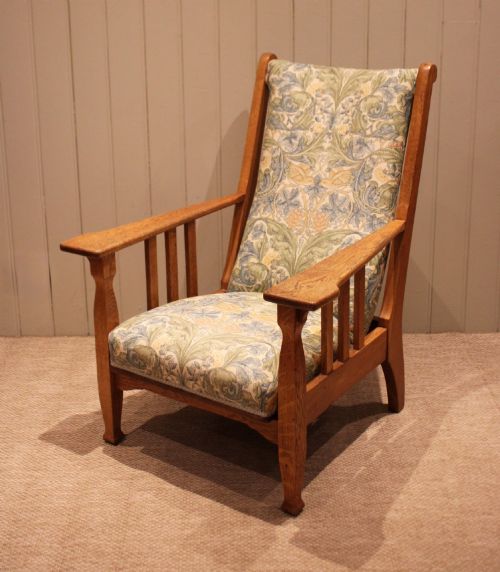
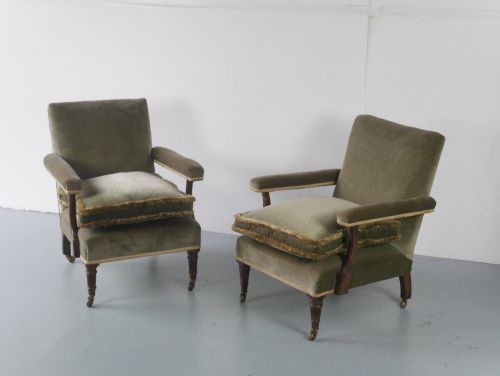
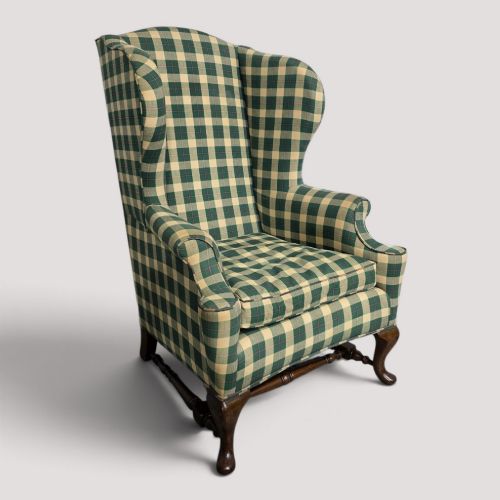
A vintage green easy chair encompasses a range of traditional seating forms, most notably winged armchairs, library chairs, and deep-seated fireside models upholstered in rich green tones. These pieces span from the eighteenth century through to the 1930s, capturing diverse aesthetic movements from Georgian elegance to Art Deco design.
On this page, the most frequent encounters are substantial wingback armchairs upholstered in velvet or leather, often resting on timber frames such as mahogany or walnut. Buyers searching for a vintage green easy chair will find examples ranging from unrestrained period originals to pieces requiring re-upholstery.
Materials and construction
Frames rely upon durable hardwoods like mahogany and walnut, frequently accented with brass details, hessian internal webbing, and traditional joinery methods. These timbers provide the structural integrity necessary for substantial library and wing chairs to survive across centuries.
Upholstery relies heavily on tactile surfaces such as velvet and leather, paired with supportive interior stuffing that gives each armchair its characteristic silhouette and sink-in comfort.
Vintage Green Easy Chair Retail Price Guide 2026
Typical asking prices for vintage green easy chair among the pieces listed under this phrase on Sellingantiques today, from the lower quarter to the upper quarter. They describe what is for sale here now, not the wider market.
Some library chairs quietly conceal swivel mechanisms so readers could effortlessly pivot between towering bookshelves without ever standing up.
Assessing quality and craftsmanship
Quality rests in the precision of the timber frame's carving, the proportions of the arms and wings, and the integrity of foundational materials like brass castors and claw-and-ball feet. Superior examples display refined lines and substantial scale rather than plain utility.
The choice of upholstery fabric and the execution of traditional stitching significantly dictate the overall finish. Pieces retaining original high-grade leather or fine velvet stand apart from standard re-covered iterations.
Heals·Howard And Son's·Robert Daws London
The Vintage Green Easy Chair Glossary
- Wingback
- An armchair featuring protective side panels designed to shield the sitter from drafts near an open hearth. These wings are typical of traditional fireside seating.
- Bentwood
- Wood that has been heated and steamed into curved, flowing structural forms. This technique defines specific twentieth-century seating designs.
- Hessian
- A coarse woven fabric typically utilised as internal foundational support beneath the final upholstery layers. It holds the internal stuffing firmly in place.
- Claw and ball
- A carved furniture foot depicting a bird's talon gripping a spherical object. This decorative detail is frequently found on period mahogany frames.
Vintage Green Easy Chair: Frequently Asked Questions
How do I style a green armchair?
Pair your chair with neutral walls or rich wooden side tables to let the green upholstery anchor the room's palette. Position it near a bookshelf or fireside for an inviting reading corner.
Layer with complementary textiles or subtle patterns to enhance the traditional character of the timber frame.
Are these chairs comfortable for daily use?
Most models offer deep seating and supportive high backs designed specifically for extended periods of reading or relaxing. Winged designs also provide natural head support.
Comfort levels can vary depending on whether the internal webbing and padding have been recently restored or maintained in their original state.
What is a library chair?
A library chair is a specialised seating form designed for reading and writing, often featuring low arms and a sturdy timber frame. They prioritize mobility and sturdy construction.
Many examples include leather upholstery and revolving or wheel-mounted bases for ease of movement across study floors.
How do I date a wing chair?
Dating relies heavily on the stretcher arrangement, leg carving styles such as claw-and-ball feet, and the contour of the wings. Earlier eighteenth-century pieces often display restrained proportions compared to later Victorian revivals.
Examining the secondary timbers hidden beneath the upholstery provides further clues regarding the period of manufacture.