
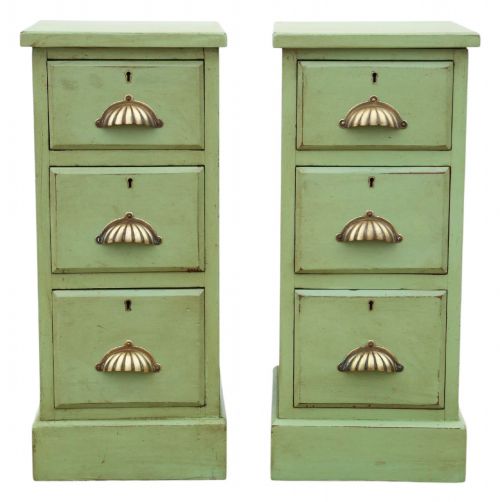


Vintage Green Cabinet Stand
A vintage green cabinet stand brings colour and character to a room, offering practical storage disguised as a striking decorative piece.
Vintage Green Cabinet Stand
When you search for a vintage green cabinet stand, you encounter a diverse group of storage furniture spanning several decades and styles. These pieces combine the utility of a traditional cabinet or washstand with painted finishes that range from Victorian subtlety to Edwardian charm.
Buyers frequently find that these items serve equally well in a hallway, bedroom, or living space as focal points. The fusion of practical cabinetry with painted or lacquered surfaces defines the character of the pieces gathered here.
How they were made
Makers of these items relied principally on solid woods such as oak, walnut, and pine, frequently applying layers of paint, lacquer, or brass fittings to finish the surface. Several pieces incorporate ceramic tiles or glass panels within their timber frames, balancing weight with visual lightness.
Construction techniques visible across the inventory combine traditional joinery with decorative surface treatments, including Chinoiserie lacquer and distressed painted finishes. Hardware components like brass handles and hinges secure doors and drawers while adding metallic contrast to the painted wood.
The listings span multiple decades, incorporating Victorian and Edwardian periods alongside pieces from the early twentieth century.
What varies in quality
The standard of a vintage green cabinet stand depends heavily on the integrity of the timber frame and the execution of the surface finish. Higher quality examples display careful joinery that keeps doors aligned and drawers running smoothly despite age.
Finishes also separate standard examples from finer ones, with layered paintwork, lacquering, or inlaid details showing greater hand skill. The condition of secondary materials like glass, brass hardware, and ceramic tiles further distinguishes the better pieces in the range.
Harrods
The Vintage Green Cabinet Stand Glossary
- Washstand
- A piece of furniture originally designed to hold a basin and pitcher for washing, often fitted with a marble or tile top and small cupboards below. Many now serve as useful hallway or bathroom storage.
- Canterbury
- A low, open-framed stand traditionally used for holding sheet music or books, typically featuring vertical dividers. These items date back to the late eighteenth century and continued in production through the Victorian era.
- Chinoiserie
- A European decorative style influenced by Chinese art, featuring painted or lacquered scenes of figures, landscapes, and flora. This technique is often found on cabinets and screens from the eighteenth century onwards.
- Arts and Crafts
- A design movement spanning the late nineteenth and early twentieth centuries that emphasised handcrafting, simple forms, and natural materials. Furniture from this period prioritises honest construction over heavy ornamentation.
- Inlay
- A decorative technique where pieces of contrasting material, such as lighter wood or metal, are inserted into depressions in the base wood to form patterns. This method enhances the visual depth of cabinets and tables.
Vintage Green Cabinet Stand: Frequently Asked Questions
What is a cabinet on stand?
A cabinet on stand consists of an enclosed storage section raised on a separate frame of legs, creating a lighter visual profile than a floor-standing wardrobe. This form became popular in various styles throughout the nineteenth and twentieth centuries.
Buyers choose these pieces to add height and architectural interest to smaller rooms without overwhelming the floor space with heavy timber.
How do I style a painted cabinet?
A painted cabinet works well as a standalone accent piece in a neutral hallway, bedroom, or living room. The coloured finish allows you to introduce vibrancy to an interior without committing to a fully painted suite of furniture.
Pair the piece with complementary textiles or keep surrounding walls simple to let the painted surface remain the visual focus of the space.
How do I date a vintage cabinet?
Dating a piece involves examining the construction methods, such as dovetail joints in drawers, alongside the materials and decorative style used. Pieces from the Victorian era often feature heavier timber and darker finishes, whereas Edwardian and later items tend to be lighter.
Matching the hardware, such as brass pulls or hinges, to known manufacturing periods provides further clues to the age of the cabinet.
Were these cabinets always green?
Many cabinets received their painted or lacquered green finishes either during their original manufacturing period or through subsequent decorative updates. Styles such as Edwardian Country and Chinoiserie frequently utilised painted surfaces in various shades.
Inspecting the layers of paint can sometimes reveal whether the colour is an original scheme or a later application applied during the twentieth century.