
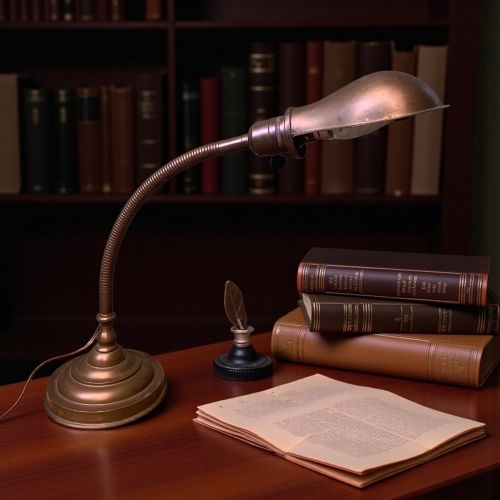


Vintage Gooseneck Table Lamp
These vintage gooseneck table lamp examples combine adjustable metal stems with period character, offering flexible task lighting for desks and reading spaces.
Vintage Gooseneck Table Lamp
A vintage gooseneck table lamp provides adjustable illumination through flexible or articulated metal tubing, directing light precisely where required on a desk or reading table. When exploring this selection, buyers encounter task lighting spanning the Edwardian period, the 1920s, and the 1930s Art Deco era.
The prevailing form on this page is the brass desk lamp or student reading lamp, frequently featuring adjustable angles or swan neck curves. Pieces emerge in brass, bronze, cast iron, and copper, occasionally paired with cranberry glass, porcelain, or shell-shaped bases.
Origins stretch from nineteenth-century French designs to early twentieth-century British and continental workshops. Standard desk lamps and specialised reading fixtures dominate the object types, bridging practical utility and period decorative styles.
Materials and construction
Construction relies heavily on durable metals such as brass, bronze, and cast iron to support the weight of adjustable arms and heavy bases. Makers utilised flexible metal tubing or articulated joints to achieve the characteristic gooseneck movement.
shades and decorative elements incorporate etched glass, porcelain, fabric flex, and specialised shell-shaped metal bases. Many surviving examples retain original wiring methods adapted for modern use or feature period fabric flex.
Even a brass swan neck needs to occasionally stretch its metal.
Assessing quality and finish
Quality rests in the rigidity of the adjustable mechanism and the thickness of the cast metal base, ensuring the lamp stands firm at various angles. Superior pieces display crisp casting detail in bronze or brass components and retain undamaged glass shades or original porcelain elements.
The integrity of the flexible tubing or swan neck joint determines longevity and smooth articulation. Finer examples maintain an unpolished or naturally aged patination across metal surfaces rather than overly buffed finishes.
Hawkins
The Vintage Gooseneck Table Lamp Glossary
- Gooseneck
- A flexible or curved metal tube connecting the lamp base to the shade, allowing the light beam to be redirected at multiple angles. This adjustable stem is the defining feature of the desk lamps in this category.
- Swan neck
- A graceful, curved metal arm reminiscent of a swan's neck, common on early twentieth-century reading lamps. It provides a fixed arched profile rather than a flexible tube.
- Art Deco
- A design style prevalent during the 1920s and 1930s characterised by geometric shapes, streamlined forms, and stylized motifs. Lamps from this period often feature shell-shaped bases and geometric shades.
- Student lamp
- A traditional reading lamp design typically featuring a single burner or bulb on an adjustable vertical or curved brass column. These were originally engineered for intensive desk work and study.
- Patina
- The surface sheen and coloration acquired by metals like brass and bronze through age, handling, and oxidation. Collectors prize an undisturbed patination for its historical depth.
Vintage Gooseneck Table Lamp: Frequently Asked Questions
What is a vintage gooseneck table lamp?
A vintage gooseneck table lamp is a period desk or reading light featuring a flexible or curved metal neck for adjustable illumination. These fixtures date primarily from the Edwardian era through to the 1930s.
Materials commonly include brass, bronze, and cast iron, often paired with glass or porcelain shades to direct task lighting.
How do I date a gooseneck lamp?
Dating relies on stylistic clues such as the geometry of Art Deco bases, Edwardian brass proportions, or nineteenth-century bronze casting techniques. Examining the wiring type and switch mechanism also offers clues to the era of manufacture.
Maker names or patent marks stamped onto the metal base can provide a more precise production timeframe.
Were these lamps used for reading?
Many examples on this page are designated as student reading lamps or desk lamps, engineered specifically for close work. The adjustable arms allowed scholars and office workers to concentrate light directly onto ledgers and books.
Their sturdy cast iron or heavy brass bases ensured stability while the neck was repositioned.
How do I live with a vintage lamp?
Living with these pieces involves integrating historical task lighting into modern workspaces or bedside tables. They provide functional, directional light while adding industrial or period character to an interior.
Ensure older metal desk lamps are checked by a qualified electrician to meet current safety standards before regular daily use.
What materials are most common?
Brass and bronze dominate the surviving selection, valued for their durability and warm metallic tones when polished or patinated. Cast iron frequently appears in heavy bases to prevent tipping during adjustment.
Accents of cranberry glass, etched glass, and porcelain appear on specific Edwardian and Art Deco iterations.