


Antique French Task Lighting
Antique french task lighting brings industrial utility and refined continental design to a desk, using brass, bronze, and chrome.
Antique French Task Lighting
Antique french task lighting comprises desk lamps, table lamps, and reading lamps originating from France across the nineteenth and early twentieth centuries. These pieces combine utilitarian function with distinct decorative styles ranging from industrial designs to Art Deco and Art Nouveau aesthetics.
Makers and designers from these eras produced specific lighting forms such as bouillotte lamps, notary lamps, and adjustable desk lights. Each piece reflects the functional requirements of its period while retaining the characteristic craftsmanship of French workshops.
How antique french task lighting was made
Manufacturers utilised metals such as brass, bronze, gilt bronze, and chrome to construct the primary frames and adjustable arms of these lamps. Metal casting and turning techniques created durable desk fittings designed for daily utility in offices and studies.
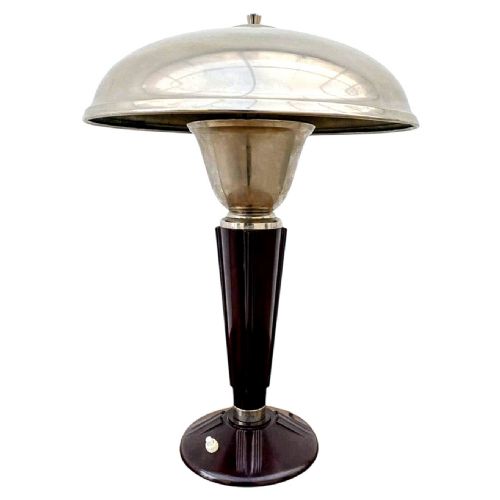
Glass elements including frosted glass and blue glass shades were integrated to soften illumination and direct light accurately over a workspace. Artisans also incorporated bakelite components in later twentieth century designs during the Art Deco period.
Fabric shades and tôle metal components supplemented the rigid metal structures, adding texture and colour control to bouillotte and reading lamps. Metalwork finishes varied from polished chrome to patinated bronze, depending on the prevailing style.
Some nineteenth century writers clearly worked late into the night, judging by the surviving dual chamber stick desk lamps.
What varies in quality
The grade of materials employed in the construction of the frame and shade establishes the primary distinction between standard utility lighting and superior examples. Heavier bronze, gilt bronze, and solid brass castings provide greater stability and durability than lighter sheet metal alternatives.
Precision in the mechanical joints and adjustable mechanisms dictates the tactile experience of positioning the light. Smooth movement in articulating arms and secure fixings demonstrate superior workshop execution.
The integrity of secondary elements such as original bakelite switches, coloured glass shades, and fabric components preserves the authentic character of the piece. Craftsmanship in decorative casting details during the Art Nouveau and Art Deco periods separates basic utility items from designer works.
Eileen Grey·Pirouette·Jumo
The Antique French Task Lighting Glossary
- Bouillotte lamp
- A traditional French table lamp featuring a central shaft, multiple candle arms or a single light source, and an adjustable shade. The shade is typically made of tôle metal and moves up and down on a central rod.
- Notary lamp
- A specialised desk lamp designed for legal and administrative work, often featuring a heavy metal base and an elongated shade to cast light across documents. These pieces frequently utilise gilt bronze or brass.
- Bakelite
- An early form of synthetic plastic utilised extensively in nineteen thirties Art Deco lighting for switches, bases, and structural details. It provides a durable, heat-resistant surface with a distinctive lustrous finish.
- Ormolu
- A technique involving the application of finely ground high-carat gold to a bronze object, creating a rich golden finish. This decorative treatment appears frequently on nineteenth century French desk lamps.
Antique French Task Lighting: Frequently Asked Questions
What is a bouillotte lamp used for?
Bouillotte lamps were originally designed to provide adjustable illumination for card games such as bouillotte, utilising a sliding shade to control the spread of light. Over time, they transitioned into elegant desk and table lamps for reading and writing.
The adjustable metal or tôle shade allows users to direct light downwards onto a specific surface while shielding the eyes. They remain popular choices for studies and living spaces requiring focused illumination.
How do I date an antique french desk lamp?
Dating relies on identifying the prevailing artistic style, such as Art Nouveau curves, Art Deco geometric lines, or nineteenth century classical revival forms. Materials also offer clear chronological markers, with chrome and bakelite pointing towards the early twentieth century.
Examining construction methods, maker signatures, and the type of wiring or fittings can provide further clues. Comparing the form against documented pieces from periods like Napoleon III or the nineteen twenties helps narrow down the origin.
Where should I place a notary lamp?
Notary lamps suit home offices, studies, and libraries where focused task lighting is required for reading or desk work. Their weighted bases and adjustable shades make them practical for positioning directly beside paperwork or computer setups.
Stylistically, these bronze and brass fixtures complement traditional wooden desks as well as contemporary workspaces. Their compact footprints allow them to sit comfortably on smaller surfaces without dominating the room.
Are these lamps compatible with modern bulbs?
Most antique lamps require professional rewiring or adapter fitting to meet current electrical standards and accept standard contemporary bulbs. It is advisable to consult a qualified electrician to check the internal wiring before regular use.
Choosing low-heat LED bulbs that mimic the warm glow of period lighting helps protect delicate vintage shades and components. Proper wiring ensures safe operation while preserving the original aesthetic of the metal and glass fittings.