


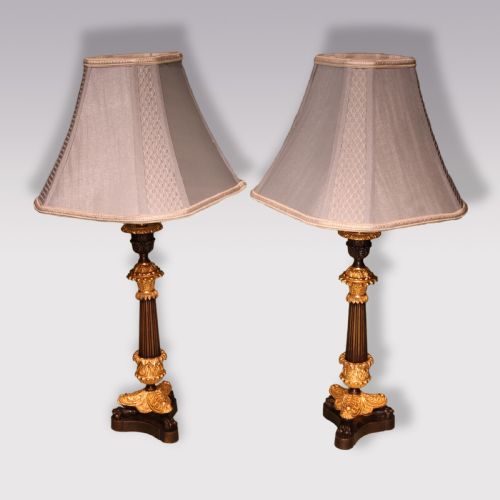
Patinated Brass Desk Light
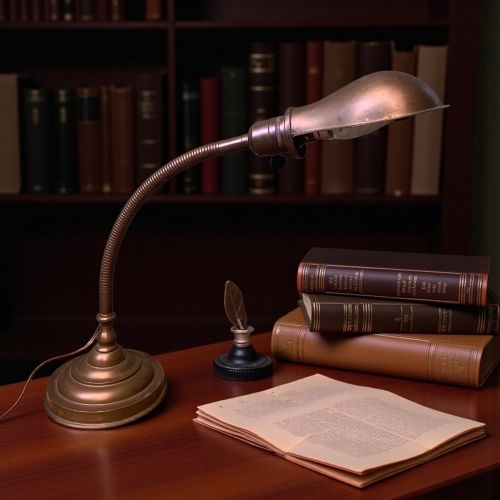
These patinated brass desk light examples bring grounded metalwork and directional task illumination to a workspace.
Patinated Brass Desk Light
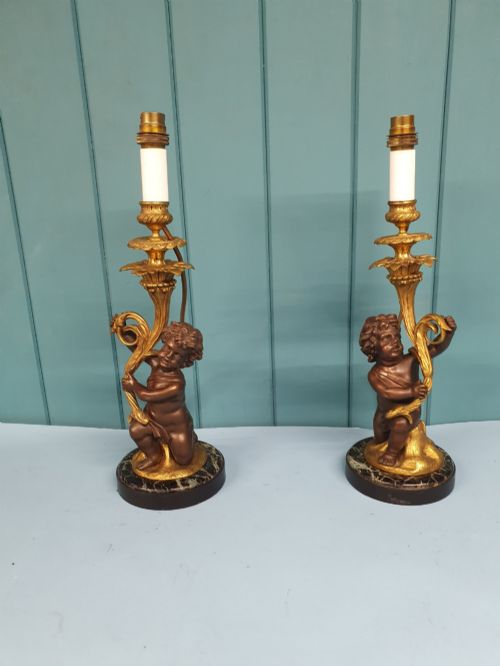
A patinated brass desk light provides focused illumination while introducing aged metallic tones to a working surface. Buyers seeking a patinated brass desk light will find various forms here, ranging from 19th Century classical columns to later modernist iterations.
The selections span multiple historical periods, notably the 19th Century, Edwardian era, and the 1920s to 1930s. Forms include table lamps, lamp bases, and ship lanterns, drawing on styles such as French Empire, Regency, and Amsterdam School.
Brass is frequently combined with bronze, copper, and marble to create substantial task lighting. These pieces merge functional utility with distinct period aesthetics suitable for traditional and modern interiors.
How they were made
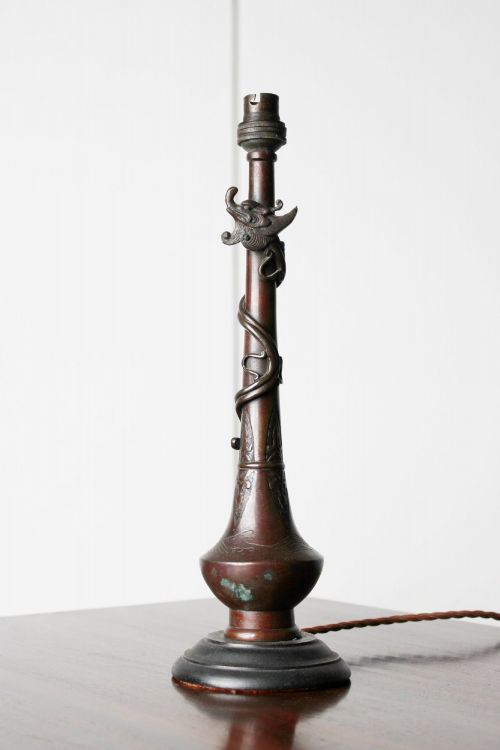
These lamps rely primarily on cast and repoussé brass, bronze, and ormolu. Metalworkers utilised traditional casting and surface patination techniques to achieve darkened, aged finishes.
Secondary elements incorporate glass, fabric shades, and green marble effects to complement the metallic structures. Surface treatments create the distinctive aged tones characteristic of these historical light fixtures.
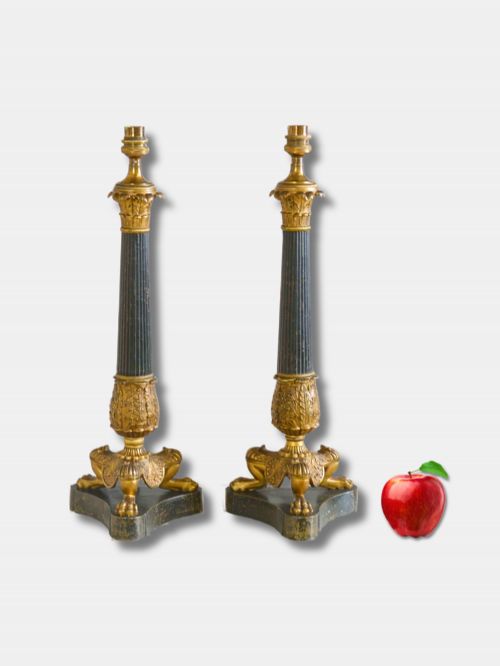
Some desk lights include heavy lion paw feet, ensuring your workspace illumination stands its ground with royal confidence.
What varies in quality
Quality rests in the precision of the metal casting and the depth of the applied patination. Finer examples display crisp detailing in architectural columns, figural mounts, and repoussé work.
The choice of secondary materials, such as heavy marble bases or cast bronze mounts, dictates the physical weight and stability of each lamp. Structural integrity and period-appropriate assembly distinguish superior pieces from standard production.
The Patinated Brass Desk Light Glossary
- Patination
- The natural or artificial ageing of a metallic surface that produces a darkened, oxidized finish. This process highlights the texture and contours of the brass or bronze underneath.
- Ormolu
- Gilded bronze produced by applying a mercury and gold amalgam to a bronze base. It creates a rich, bright golden surface finish seen on decorative mounts.
- Repoussé
- A metalworking technique where a malleable sheet of brass or copper is hammered from the reverse side to form a raised design. It provides intricate textural decoration on lamp bodies.
- Amsterdam School
- An early 20th-century architectural and design movement known for expressive forms and traditional materials. Pieces from this tradition often feature bold silhouettes and patinated metal surfaces.
Patinated Brass Desk Light: Frequently Asked Questions
How do I clean a patinated brass desk light?
Dust the metal gently with a soft, dry cloth to preserve the aged surface finish. Avoid abrasive polishes that strip away the historical patina.
Keep the fixture away from excessive moisture to prevent further oxidation or damage to internal wiring components.
Are these desk lights safely rewired for modern use?
Many historical lamps feature updated wiring to meet contemporary electrical standards while retaining their original exterior components. It is advisable to consult a qualified electrician to check older fittings before regular use.
Inspect the plug, cord, and lamp holder periodically to ensure safe operation on your desk.
What periods do these lamps represent?
The selection spans from 19th Century classical designs through Edwardian models to 1930s modernist pieces. Each era contributes distinct stylistic elements such as Empire columns or Bauhaus influences.
Reviewing the listed date ranges helps identify the specific historical context of an individual light.
How do I identify French Empire style lamps?
French Empire pieces typically incorporate neoclassical motifs, such as classical columns, bronze mounts, and ormolu detailing. These designs reflect the formal aesthetic of early 19th-century European interiors.
Look for symmetrical forms and rich metallic contrasts that characterise this specific decorative tradition.