

Vintage Gold Wall Fixtures
These vintage gold wall fixtures bring warmth and decorative focus to an interior, drawing the eye with gilt surfaces and period forms.

Vintage Gold Wall Fixtures
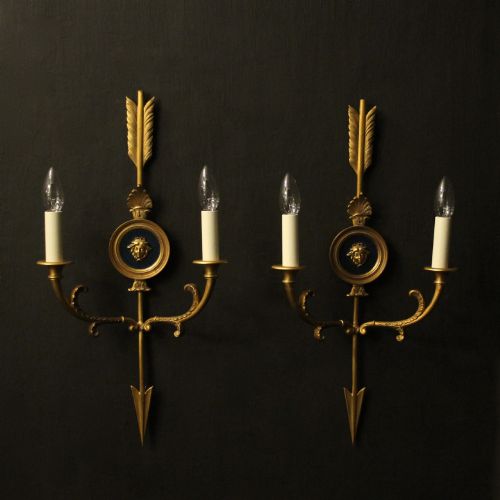
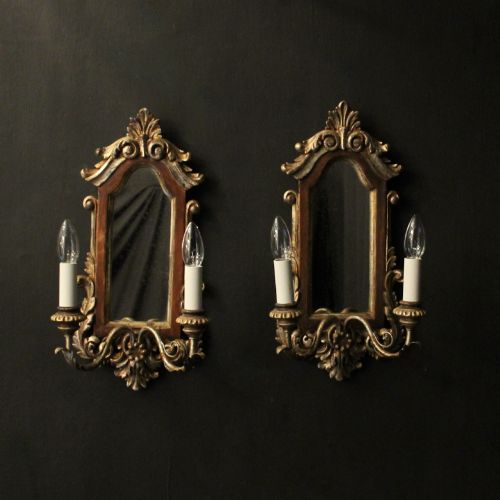
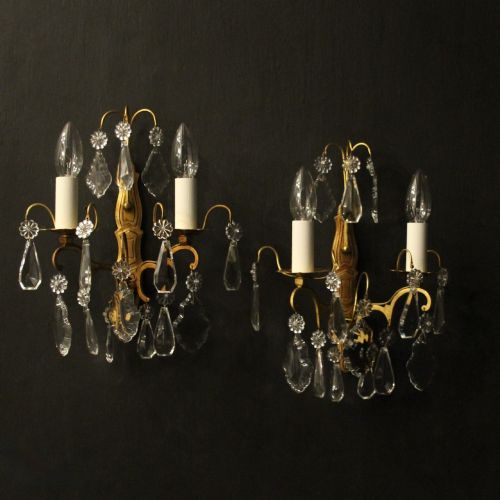
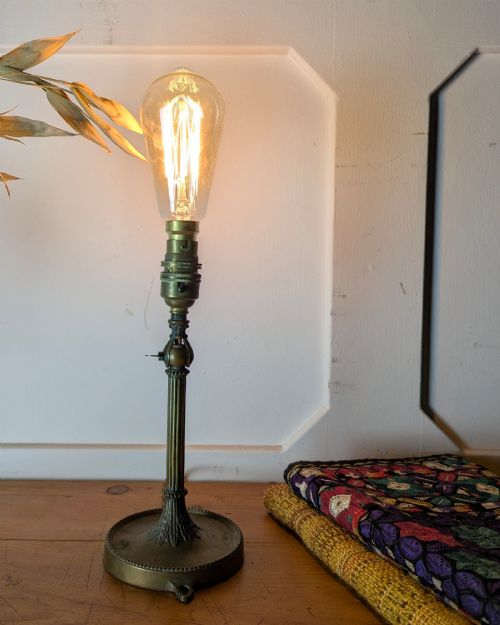
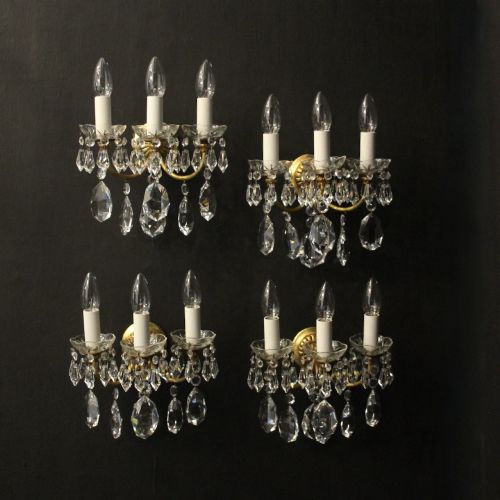
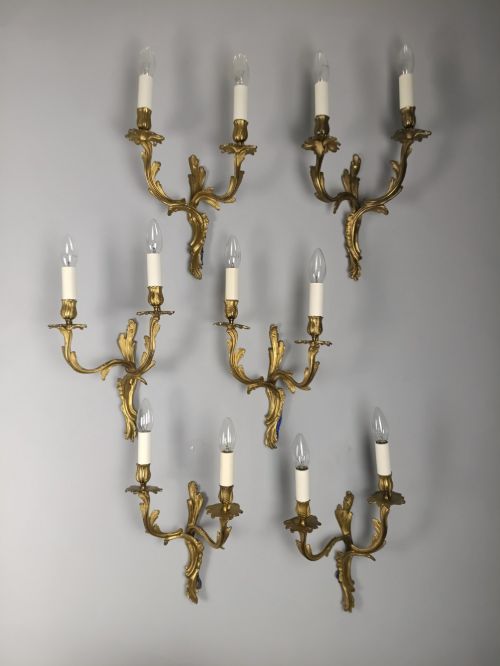
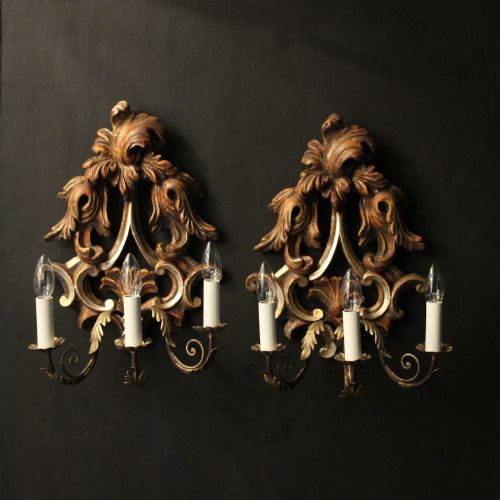
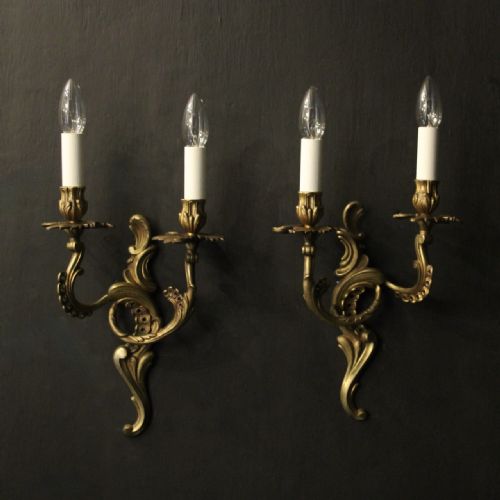
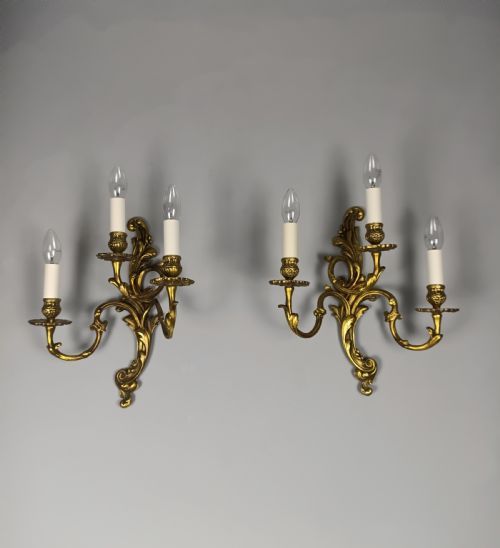
When searching for vintage gold wall fixtures, buyers encounter illuminating wall lights, sconces, girandoles, and light fittings originating primarily from the nineteenth and twentieth centuries. These pieces span French, Florentine, and English workshops, taking forms from simple twin-arm designs to multi-branched crystal arrangements.
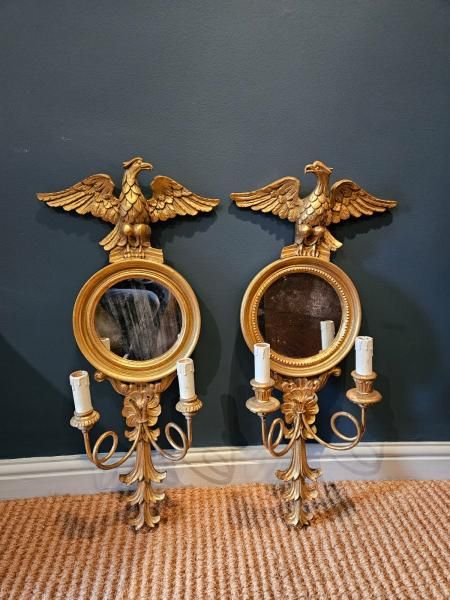
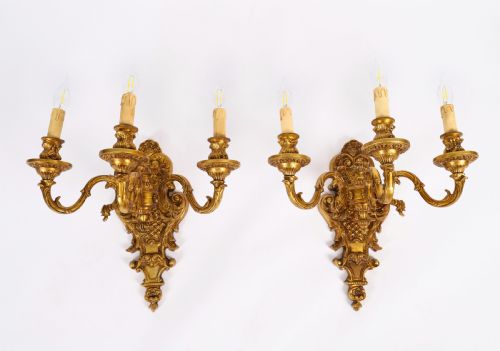
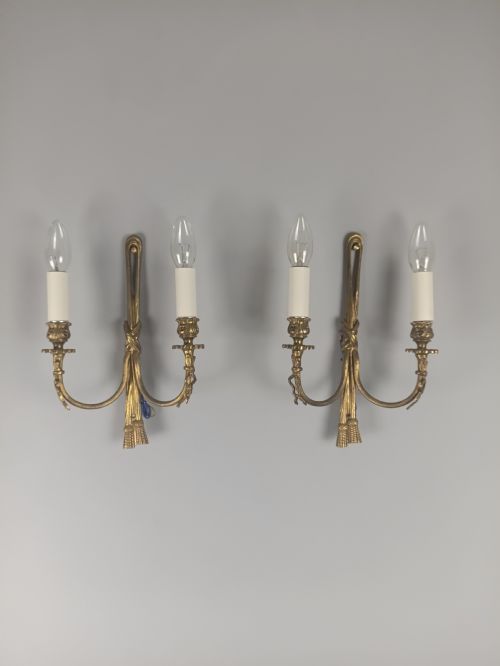
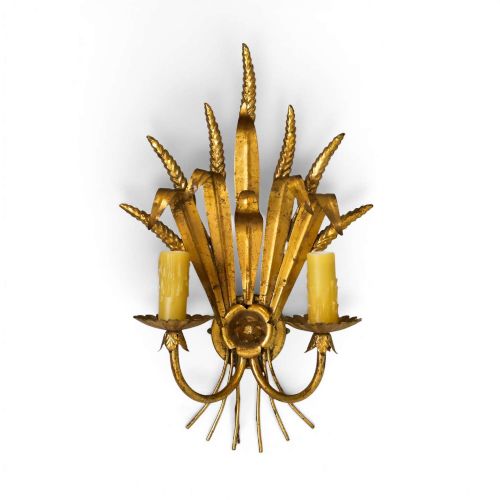
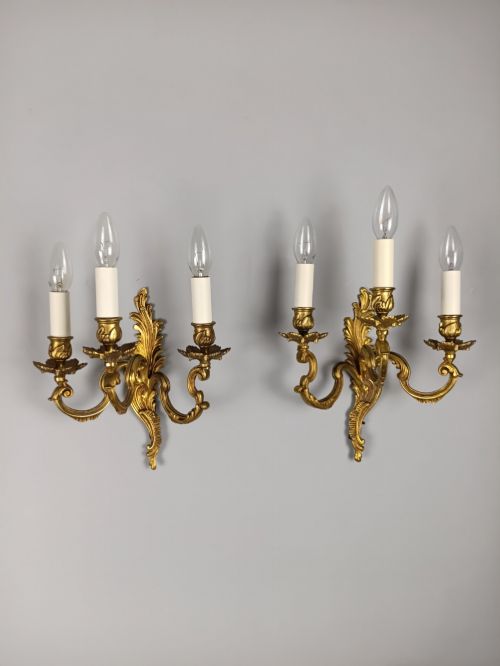
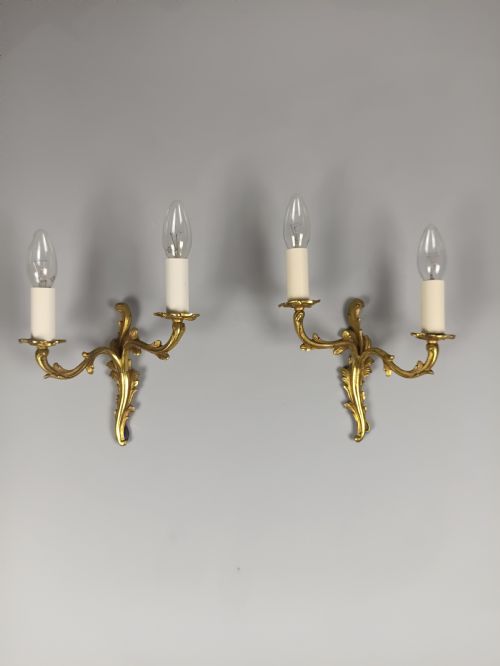
The version most commonly met on this page is the French twin-arm or triple-arm wall light in gilded brass, bronze, or ormolu, often produced in the decades around nineteen thirty. Alongside these, Florentine giltwood girandoles and English brass iterations appear frequently, reflecting periods from Victorian and Edwardian reigns through mid-century modernism.
These fixtures serve practical illumination alongside distinct decorative presence, frequently featuring stylistic motifs such as Rococo curves, Neoclassical symmetry, ribbons, ram's head masks, and cherubs. Their construction ranges from compact pairs to sets of four or six matching pieces.
Materials and Construction
Makers utilised cast bronze, brass, and carved wood as foundations, applying finishes of gilding, ormolu, and toleware to achieve the characteristic golden surface. Metal components were cast, chased, and mounted with crystal drops, porcelain flowers, or mirrored backs to enhance light reflection.
Wooden girandoles and wall lights employed carved giltwood shaped into elaborate scrolls, leaves, and frames, while bronze and brass fixtures relied on detailed metalwork. Assembly involved mechanical joints and threaded fittings to secure multiple arms and candle-style or electric lamp holders.
The listings span periods from the Victorian era through the nineteen fifties, encompassing brass, crystal, giltwood, and gilt bronze.
Judging Quality
The distinction between tiers rests upon the crispness of the casting and the depth of the hand-carved or chased detail. Finely executed ormolu and bronze display sharp relief in acanthus leaves and animal masks, whereas simpler brass and metal castings show softer contours.
Surface finish defines the visual impact, separating thick layers of period gilding and patinated ormolu from flat or later painted treatments. The integration of high-grade materials like cut crystal droplets and hand-formed porcelain flowers elevates a piece above standard utilitarian lighting.
The Vintage Gold Wall Fixtures Glossary
- Girandole
- A branched wall light or sconce, frequently incorporating a mirror backplate to reflect and multiply the illumination. These pieces often feature carved giltwood frames.
- Ormolu
- Finely ground high-carat gold mercury-gilded onto a bronze base, producing a rich metallic lustre seen on French antique mounts. This technique was widely employed in nineteenth-century workshops.
- Toleware
- Enamelled or lacquered sheet metal painted to resemble various decorative finishes. It appears on certain early twentieth-century Italian and French light fittings.
- Sconce
- A wall-mounted lighting fixture designed to hold candles or electric lamps. These range from single-arm brackets to elaborate multi-branched fittings.
Vintage Gold Wall Fixtures: Frequently Asked Questions
How do I install vintage wall lights?
Many vintage wall fixtures are rewired for modern electrical standards prior to sale, allowing direct mounting to standard wall junction boxes by a qualified electrician. It remains important to verify the weight of cast bronze or carved wood pieces to ensure adequate wall support.
Hardware placement depends on the height of the room and the intended purpose, whether flanking a mirror or illuminating a hallway. Professional installation ensures both safety and correct alignment of paired fixtures.
Were these fixtures electric originally?
Earlier examples from the Victorian era and the turn of the twentieth century were designed primarily for candles, later being adapted for electricity as domestic wiring became standard. Mid-century pieces were typically manufactured from the outset for electric bulbs.
Conversion methods vary, with some pieces retaining dummy candle tubes to preserve their original aesthetic while housing internal wiring. This evolution means many fixtures bridge the gap between historic candle sconces and functional modern lighting.
How do I clean gilded brass surfaces?
Maintenance requires gentle dusting with a soft, dry cloth to prevent the accumulation of grime on delicate gilt surfaces and crystal drops. Abrasive cleaners and metal polishes should be avoided, as they strip away thin layers of gold leaf or original ormolu patination.
For intricate areas around chased bronze leaves or carved wood, a soft artist brush helps remove particles without disturbing the finish. Regular, careful upkeep preserves the visual depth of the gold.
How can I tell French styles apart?
French lighting styles are identified through their decorative vocabulary, such as the asymmetric C-scrolls and foliage characteristic of Rococo designs. Later periods, such as the Louis XVI style, introduce strict symmetry, straight fluted lines, and classical motifs like ribbons and ram's head masks.
Material choices also aid attribution, with French makers frequently employing cast ormolu and mercury gilding. Comparing the weight and crispness of the metalwork helps distinguish between regional interpretations.