

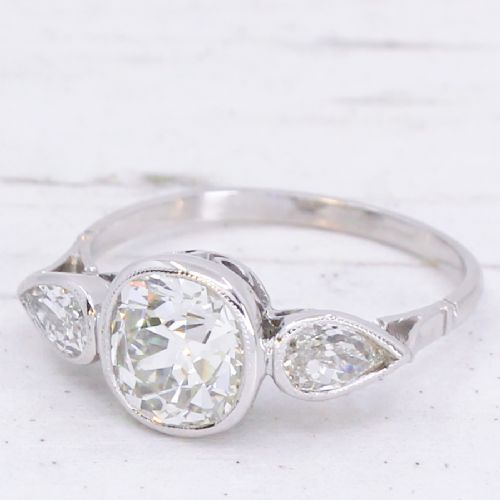
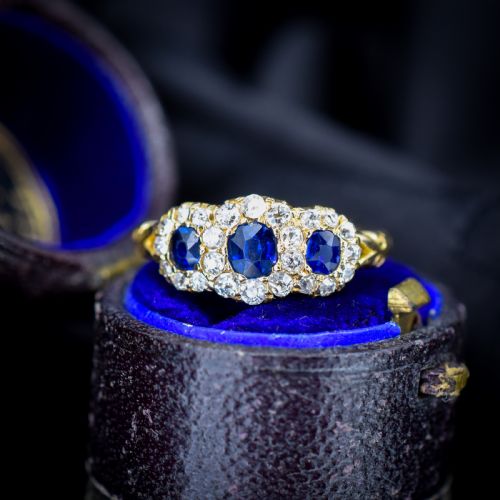
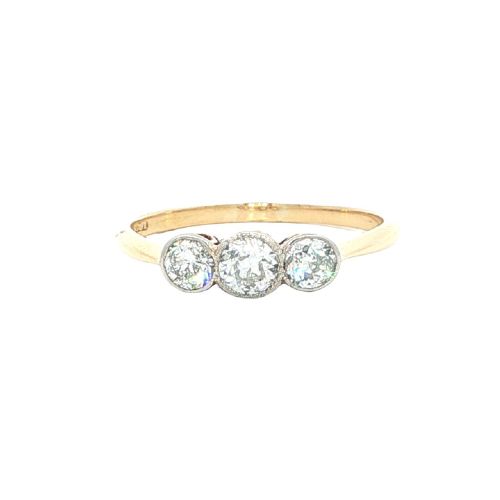
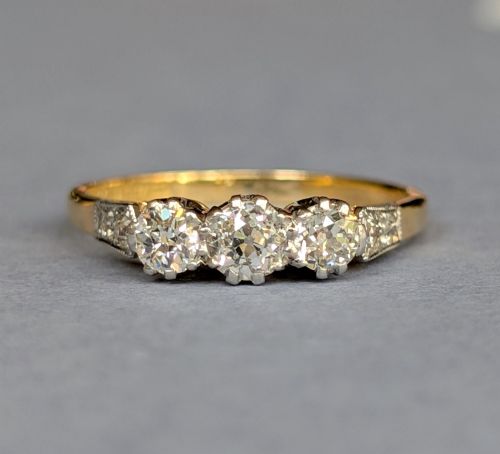
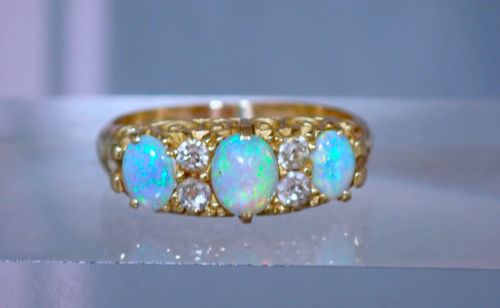
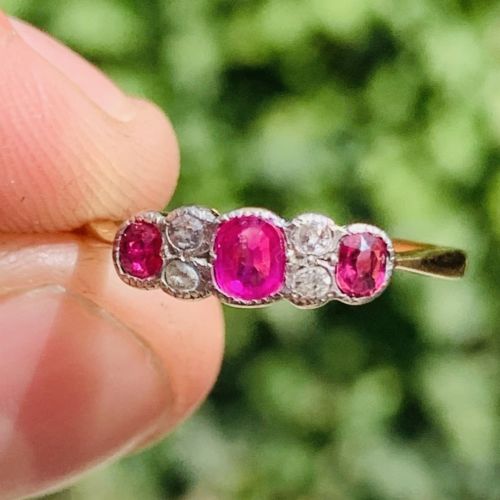
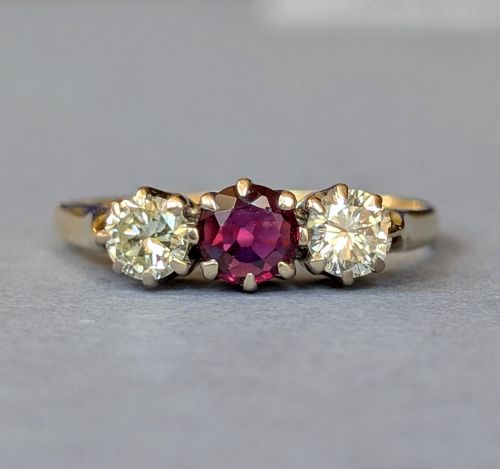
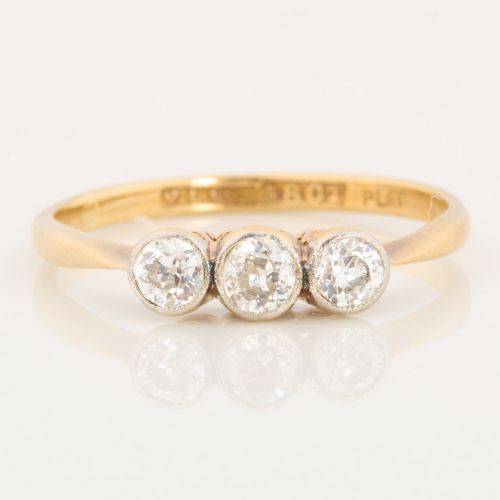
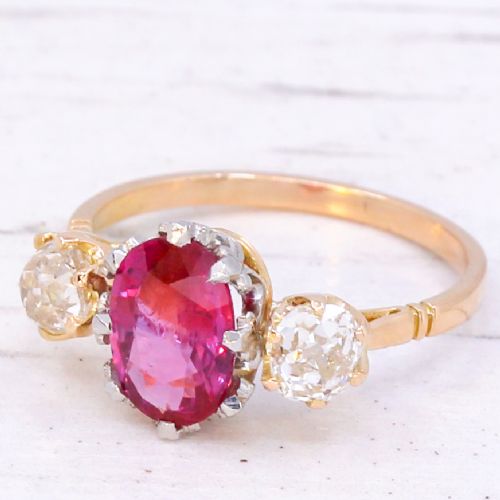
Vintage Gold Trilogy Ring
A vintage gold trilogy ring carries three stones symbolising past, present and future, making it a meaningful choice for modern wearers.
Vintage Gold Trilogy Ring
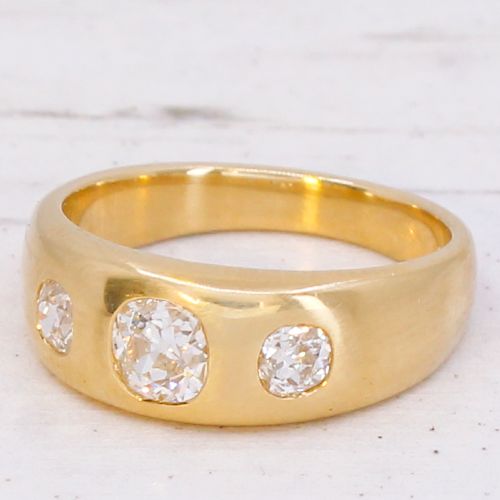
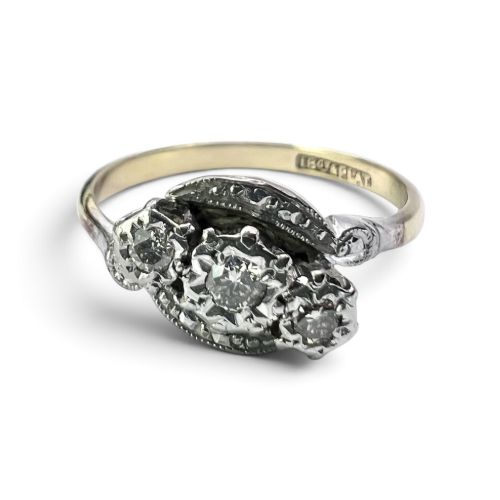
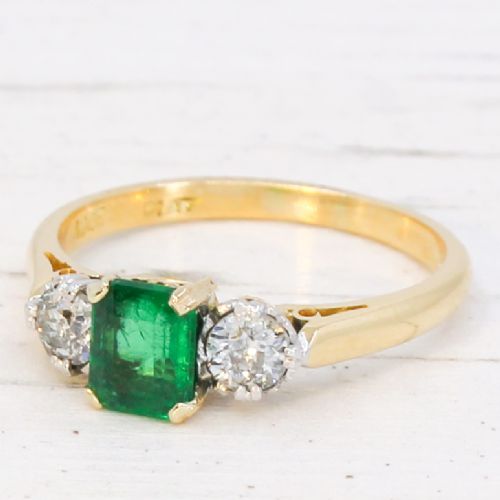
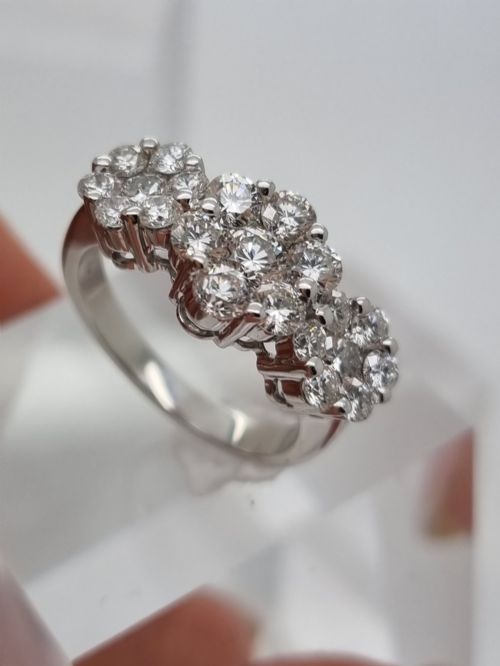
The pieces on this page range from late nineteenth-century yellow gold designs to twentieth-century platinum-topped and white gold settings. Buyers encounter both traditional claw mounts and low-profile gypsy settings, reflecting the practical and aesthetic shifts of each era.
Materials and construction methods
The framework relies primarily on 18ct yellow or white gold, frequently paired with platinum sections to secure white stones against tarnishing and wear. Gold and silver combinations also appear in earlier pieces.
Gemstones are shaped by hand-cut techniques of the past, including old mine cuts, old European cuts and rose cuts. These stones display softer facets and deeper pavilions compared to modern machine-cut equivalents.
Vintage Gold Trilogy Ring Retail Price Guide 2026
Typical asking prices for vintage gold trilogy ring among the pieces listed under this phrase on Sellingantiques today, from the lower quarter to the upper quarter. They describe what is for sale here now, not the wider market.
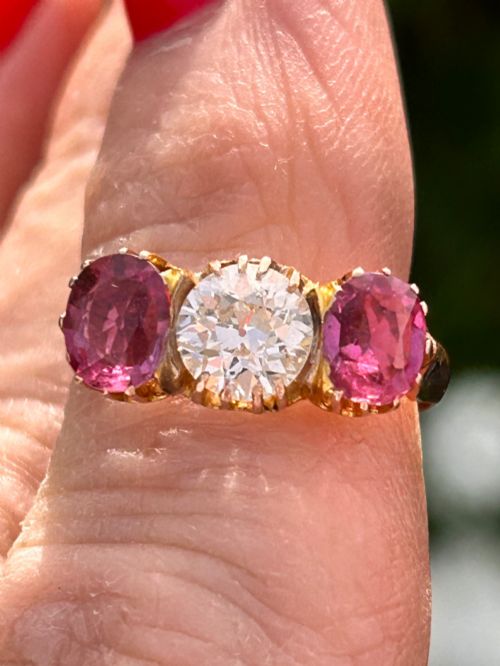
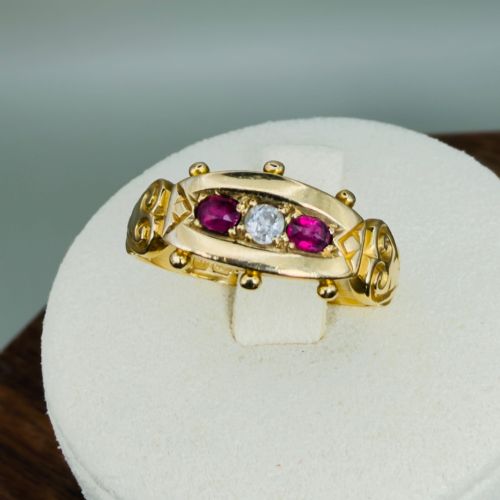
The archive demonstrates enduring favour for diamond and ruby combinations, alongside sapphire, emerald and opal three-stone layouts.
Distinctions in construction and stone selection
Quality rests on the integrity of the setting and the matching of the central gem to its side stones in colour, depth and proportion. Hand-forged claw work that remains tight and secure indicates superior original craftsmanship.
The choice of centre stone dictates the overall character, with unheated rubies, natural opals and clean old-cut diamonds commanding greater interest. The preservation of original hallmarks and minimal past resizing also influence the standing of each piece.
The Vintage Gold Trilogy Ring Glossary
- Trilogy ring
- A ring set with three stones, traditionally representing the past, present and future. This layout appears across Victorian, Edwardian and Art Deco periods.
- Old cut
- A hand-faceted diamond cut dating from the nineteenth and early twentieth centuries, characterised by a smaller table and a high crown. These stones produce a warm candlelight sparkle rather than sharp modern brilliance.
- Gypsy setting
- A mounting style where the gemstone is flush-set directly into the thick metal band, leaving the surface smooth. This technique protects the girdle of the stone and proved popular in late Victorian designs.
- Platinum-topped
- A method where a thin layer of platinum is fused to the upper face of a gold band, allowing white metal to frame the diamonds while retaining a warm gold shank below.
- Paste
- Hand-cut and polished coloured glass used as an affordable gem substitute in historic jewellery. It exhibits high refractive index and weight similar to mined stones.
Vintage Gold Trilogy Ring: Frequently Asked Questions
How do I care for a vintage opal ring?
Opals contain natural water content and require gentle handling to prevent drying out or cracking. Avoid exposing antique opal rings to harsh chemicals, ultrasonic cleaners or sudden temperature changes.
Remove the ring before swimming, washing dishes or engaging in heavy manual work to protect the softer stone and its setting.
Are old cut diamonds different from modern ones?
Old cut diamonds are shaped by hand rather than by automated laser technology. They feature smaller tables, larger culets and steeper crown angles that catch low ambient light.
This historic cutting style gives each stone an individual character and a softer, warmer visual presence on the hand.
Can these rings be resized?
Most gold and platinum rings can be adjusted by a skilled jeweller who understands antique settings. The feasibility depends on the band thickness and whether engravings or channel-set stones run along the shoulders.
Consult a specialist workshop to ensure the structural integrity of the prongs and hallmarks remains intact during any alteration.