
Vintage Gold Emerald Jewellery
Vintage gold emerald jewellery brings together the rich green of beryl and warm precious metal across decades of design.
Vintage Gold Emerald Jewellery
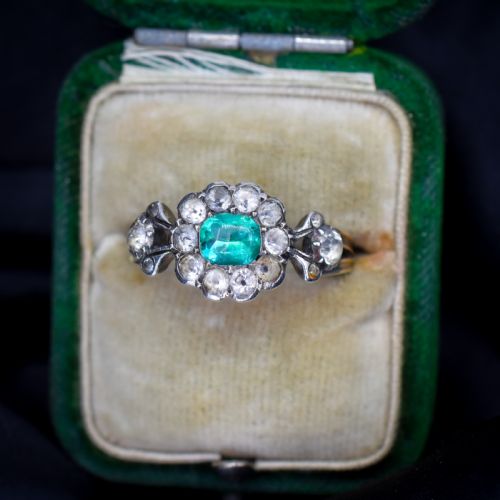
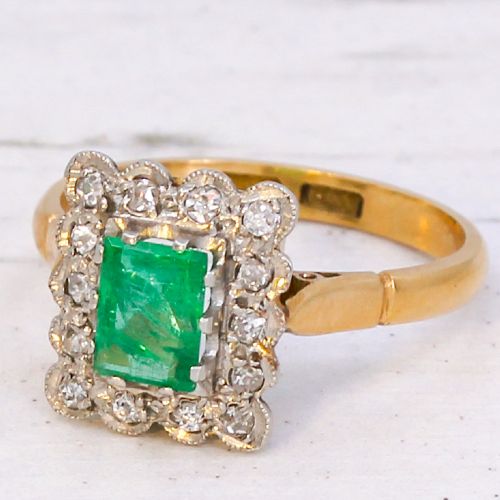
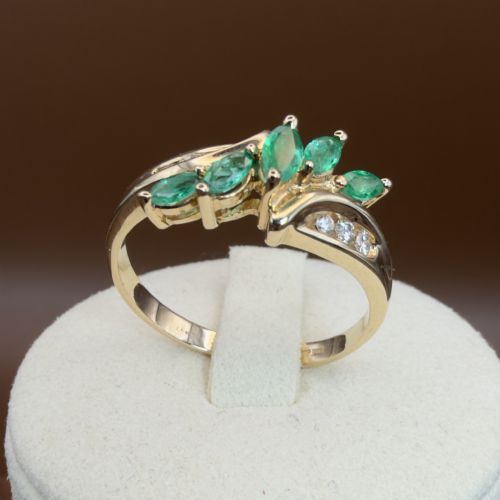
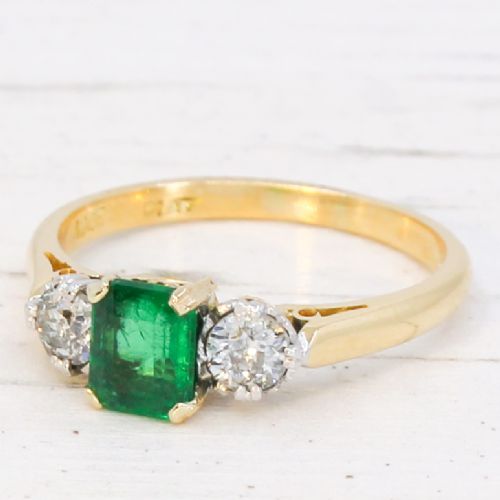
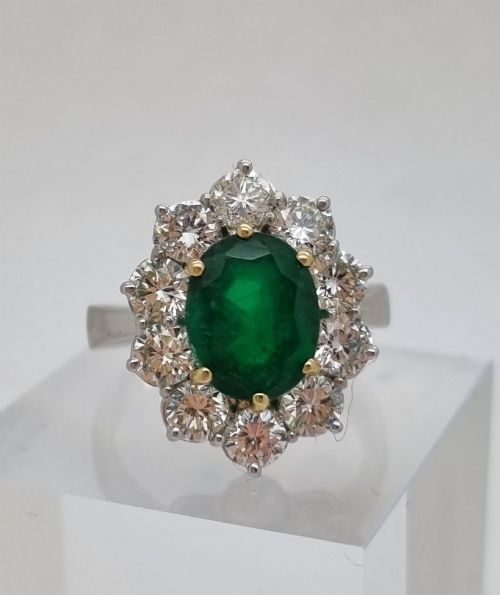
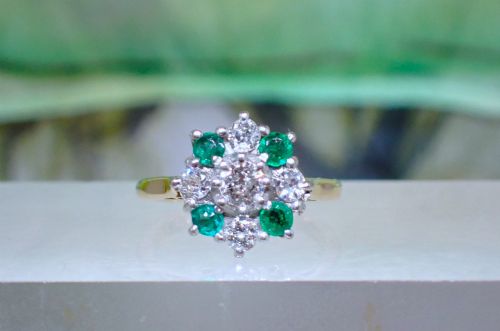
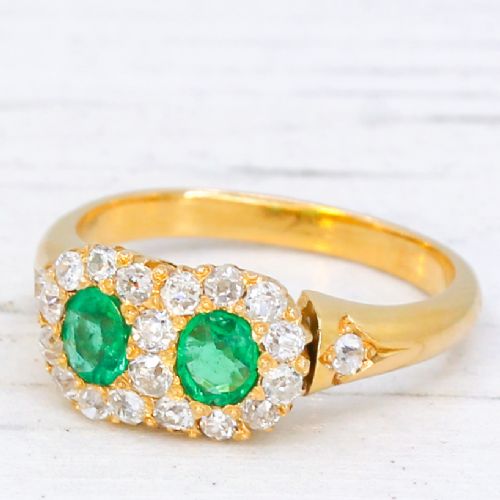
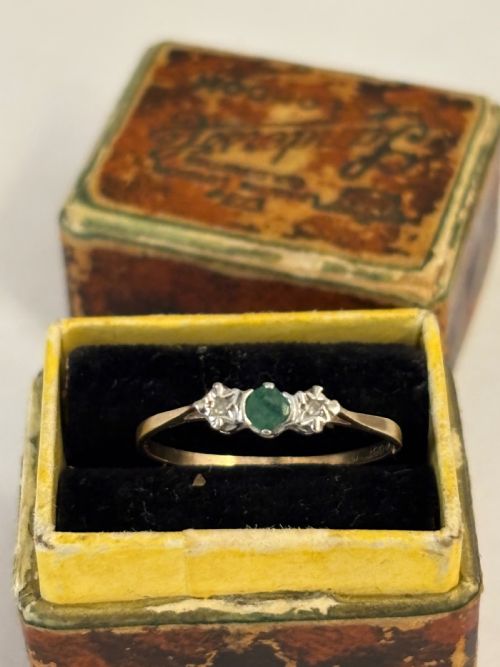
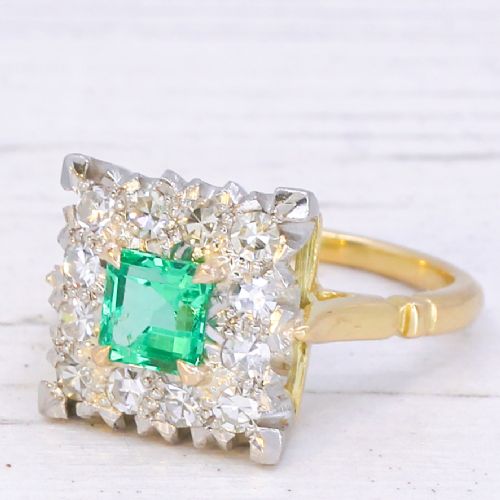
Vintage gold emerald jewellery encompasses rings, earrings, pendants, and brooches created across the twentieth century, with a strong representation of mid-century and art deco aesthetics. Buyers exploring this category encounter cluster rings, three-stone designs, and drop pendants that pair vibrant emeralds with diamonds in yellow, white, or standard gold settings.
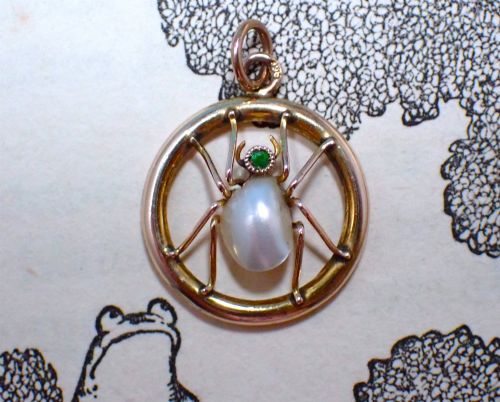
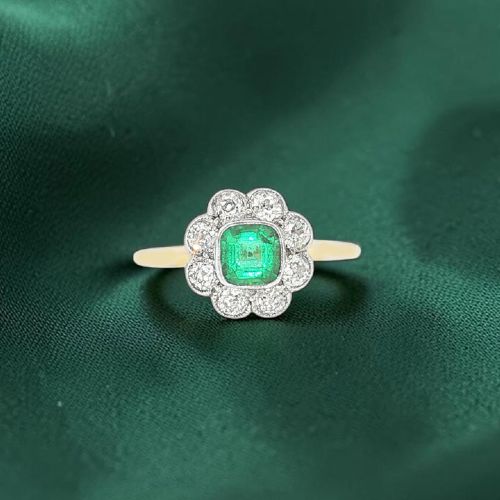
The pieces available span from Edwardian and nineteen-twenties creations to nineteen-fifties and later mid-century items, reflecting shifting stylistic preferences over decades. Cluster rings featuring central emeralds surrounded by old-cut or brilliant diamonds form a significant portion of the selection, alongside pendants incorporating pearls and platinum details.
How they were made
Goldsmiths utilised nine-carat and eighteen-carat yellow and white gold, alongside platinum, to construct secure prong and bezel settings for emeralds and diamonds. These metals provide the structural strength needed to hold faceted and cabochon stones while maintaining the distinct colour profiles of each historical period.
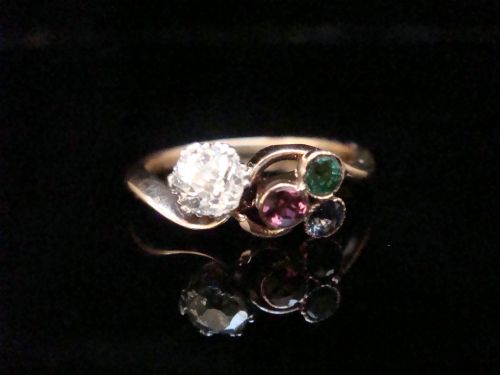
Craftsmen combined emeralds with supporting gemstones such as diamonds, pearls, and sapphires, utilising cluster configurations to maximise the visual impact of the central green stones. Techniques ranged from delicate Edwardian piercing and millegrain work to the bolder, geometric lines typical of art deco and retro modern design.
What varies in quality
Quality in these pieces depends heavily on the origin and treatment clarity of the emerald, with Colombian stones often commanding attention for their depth of colour and certification status. The presence of minor oil or no oil treatments distinguishes stones that retain their natural clarity without extensive artificial fracture filling.
The standard of metalwork and the matching of secondary diamonds also dictate the overall calibre of a piece, separating standard production from finer workshop output. Robust settings, well-matched diamond cuts, and substantial gold weight indicate higher craftsmanship across both art deco and mid-century examples.
The Vintage Gold Emerald Jewellery Glossary
- Cluster ring
- A ring design featuring a prominent central gemstone encircled by a group of smaller stones, typically diamonds.
- Old cut
- A traditional diamond facet arrangement characterised by a high crown, small table, and open culet, common in antique and early twentieth-century jewellery.
- Millegrain
- A decorative jewellery technique involving a line of tiny metal beads along the edges of a setting.
- Beryl
- The mineral family that includes emerald, aquamarine, and morganite, sharing a hexagonal crystal structure.
Vintage Gold Emerald Jewellery: Frequently Asked Questions
How do I care for vintage emerald jewellery?
Emeralds are softer than diamonds and contain natural inclusions, meaning they require gentle cleaning with warm soapy water rather than ultrasonic cleaners. Avoid exposing these pieces to harsh chemicals, sudden temperature changes, or heavy impacts to preserve the integrity of the stone and setting.
Store each item separately in a soft pouch to prevent the gold and gemstones from scratching against one another. Regular checks by a professional jeweller ensure that the claws holding the emeralds remain secure over time.
What is the difference between art deco and mid-century styles?
Art deco design, prominent in the nineteen-twenties and nineteen-thirties, relies on strict geometric symmetry, sharp lines, and strong contrasts between white metals and colourful gemstones. Pieces from this era often feature intricate millegrain detailing and structured architectural motifs.
Mid-century design, spanning the nineteen-fifties and nineteen-sixties, introduces more organic curves, heavier yellow gold construction, and bold cluster formations. These later items focus on generous stone sizes and volumetric presence rather than flat geometric patterns.
Are emerald treatments important?
Most emeralds undergo traditional clarity enhancement using colourless oil or resin to fill minute surface-breaking fissures and improve transparency. Gemological laboratories grade these treatments from none to minor, moderate, or significant.
Stones with negligible or no oil treatments are less common and generally hold higher appeal for collectors. Documentation accompanying a piece typically details the extent of any clarity enhancement found in the emerald.
How can I tell the period of a piece?
Stylistic markers offer the first clue to a piece's age, such as the millegrain work and delicate wire motifs of Edwardian items or the clean geometric symmetry of art deco settings. Examining the specific cut of the diamonds, such as old cuts versus modern brilliants, also helps narrow down the decades.
Hallmarks stamped inside the gold band provide official stamps regarding the metal purity and assay office, though laser hallmarks indicate modern interventions. Combining stylistic analysis with metal testing builds a clear picture of when the jewellery was manufactured.