



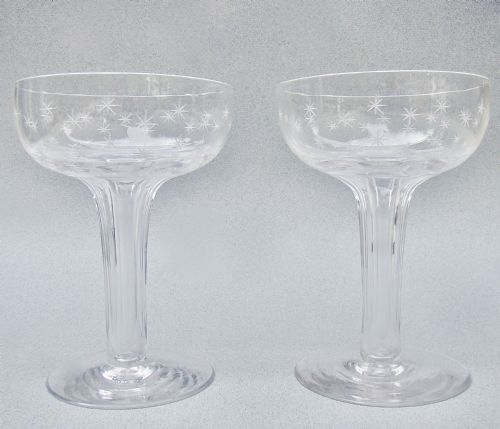

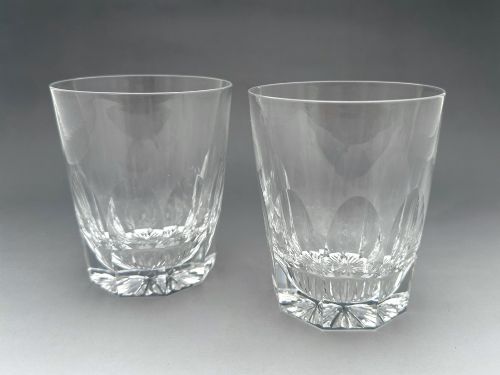
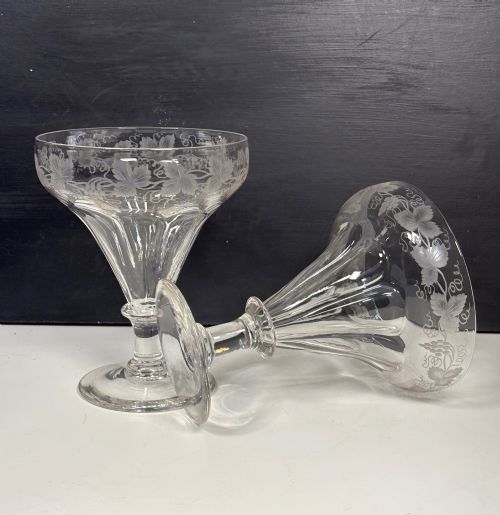
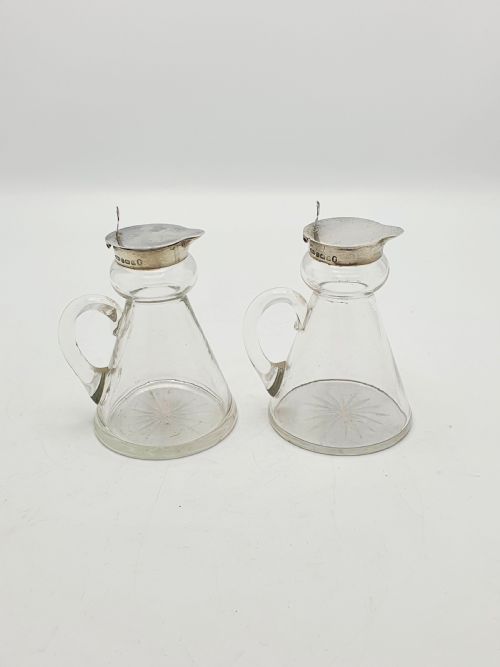


Vintage Glassware Pair
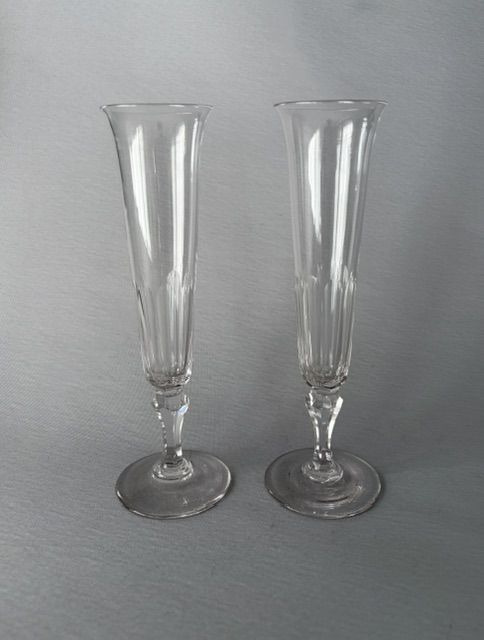
A vintage glassware pair brings symmetry to a table, offering matching sets of period decanters, flutes, and wine glasses shaped by decades past.
Vintage Glassware Pair
A vintage glassware pair bridges utilitarian function and decorative display, originating from periods spanning the Georgian era through to the early twentieth century. Buyers seeking this category encounter matching sets designed for dining, drinking, and interior display.
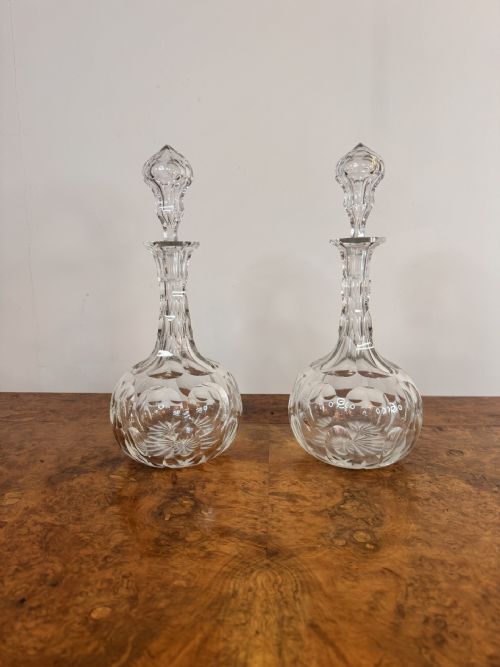
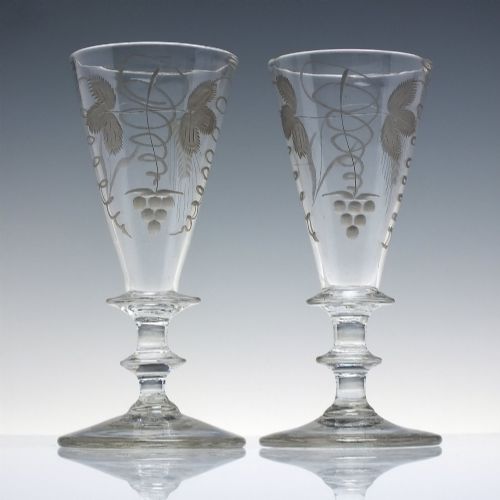
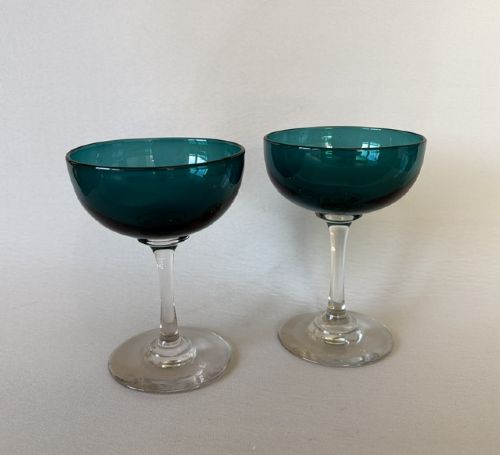
The selections on this page lean heavily towards nineteenth-century Victorian forms, particularly green wine glasses, ruby tumblers, and cut lead crystal decanters. Alongside these sit Edwardian table wares and earlier Georgian engraved ale glasses.
Forms vary from practical spirit decanters and whiskey tumblers to specialised vessels like champagne coupes, hock glasses, and apothecary jars. Each matched set demonstrates the historical pairing of domestic containers created to serve drinks in symmetrical pairs.
Lead crystal, cutting, and engraving
Production relies on glass and lead crystal formed through blowing, optical blowing, and moulding techniques. Artisans shaped molten material into heavy decanters, delicate wine stems, and thick-walled beakers.
Decoration involves wheel engraving, star-etching, acid cutting, and enamel application. Overlay techniques appear on cranberry and red glass over clear crystal, allowing craftsmen to cut through coloured layers to reveal contrasting designs.
Additional elements integrate materials such as sterling silver mounts, pewter collars, and applied gold leaf. These metal components secure stoppers, rims, and handles on decanters and jugs.
Vintage Glassware Pair Retail Price Guide 2026
Typical asking prices for vintage glassware pair among the pieces listed under this phrase on Sellingantiques today, from the lower quarter to the upper quarter. They describe what is for sale here now, not the wider market.
Pairs of matching glass ganging bells remind modern buyers of a time when servants were summoned across the dining table with a clear, resonant ring.
Clarity, depth of engraving, and matching
The standard of a matched pair depends upon the purity of the metal and the precision of the glassblower's hand. Heavier lead crystal holds sharper facet cuts, while thinner blown vessels display an even distribution of weight without heavy distortion.
Decorative work separates standard production from exceptional artistry. Crisp, deeply wheel-engraved foliage and precise acid-etched cameo patterns require skilled execution that retains clarity across both individual pieces of the set.
Consistency between the two items dictates the success of a pair. Matching height, weight, colour saturation, and tonal ring confirm that both objects originate from the same workshop production.
James Powell·Stevens and Williams·Theresienthal·Moser Crystal·Baccarat·Rene Lalique·Salviati·Otto Prutscher
The Vintage Glassware Pair Glossary
- Champagne coupe
- A shallow-bowled stemmed glass designed originally for sparkling wine. These pieces often feature engraved decoration or coloured crystal overlays.
- Decanter
- A vessel intended for holding and serving wine or spirits. They typically include matched stoppers and may bear engraved labels such as brandy or whisky.
- Hock glass
- A traditional tall-stemmed wine glass suited to white wine. They frequently appear in coloured lead glass with enamelled or cut motifs.
- Lead crystal
- Glass containing lead oxide to increase weight, refractive index, and clarity. This material allows for deeper facets when cut.
- Overlay
- A manufacturing technique involving a layer of coloured glass cased over a clear crystal base. Artisans cut through the outer stratum to create contrasting patterns.
- Tincture bottle
- A small glass jar or apothecary container used for storing medicinal liquids. Georgian and Victorian examples often feature ground glass stoppers.
Vintage Glassware Pair: Frequently Asked Questions
Can I use these glasses daily?
Most antique stemware and decanters function well for occasional dining and entertaining if handled with care. The thicker lead crystal tumblers and ale glasses withstand regular use better than thin-walled Victorian wine stems.
Hand-washing remains essential for all period pieces to protect fragile stems, engraved motifs, and historical metal fittings from modern dishwasher heat.
How do I identify Victorian glass?
Victorian pieces often display rich colours like cranberry, emerald green, and ruby red, frequently combined with heavy wheel engraving or star-cut bases. Pontil marks on the underside indicate hand-blown production before the widespread adoption of automated moulding.
Comparing weight, design motifs, and stylistic traits against documented nineteenth-century forms helps distinguish Victorian manufacture from later reproductions.
What is an engraved noggin?
A spirit noggin is a small, heavy-bottomed glass decanter or measure typically fitted with a silver handle and rim. These vessels were designed for individual servings of whiskey or spirits in domestic settings.
Many examples include hallmarks on their silver mounts that confirm their exact date of production and assay office origin.