





Vintage Glass Urn
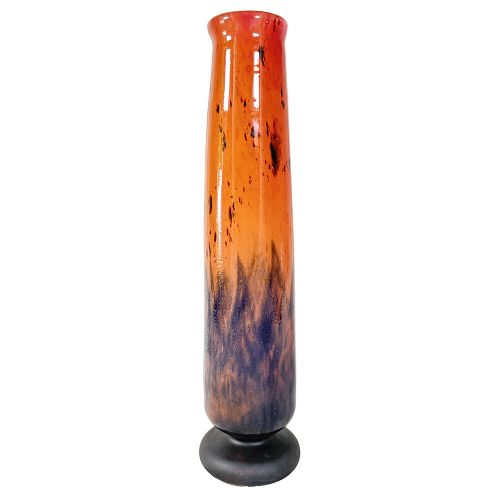
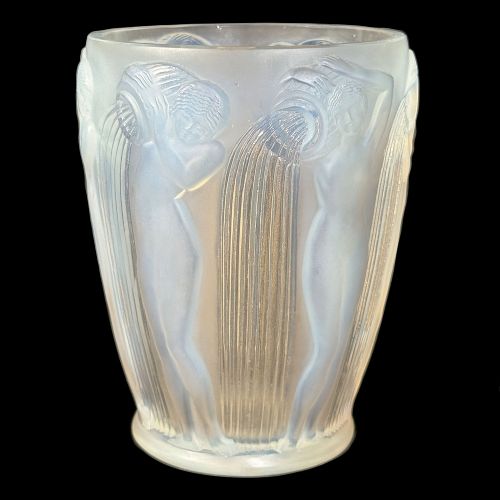
A vintage glass urn brings sculptural weight and light into a room, drawing the eye through deep colour and moulded relief.
Vintage Glass Urn
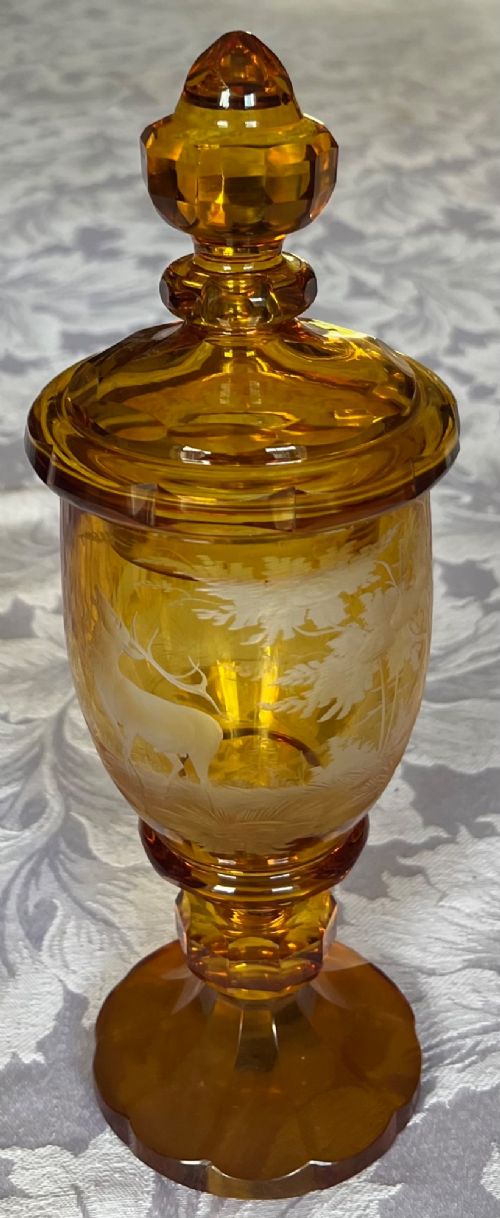
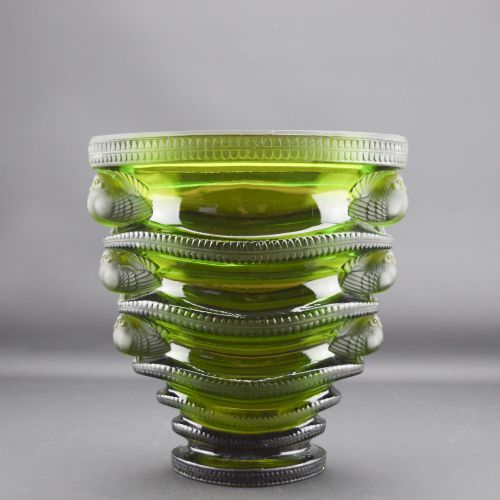
These items originate from various European centres, including English, French, Belgian, and Bohemian workshops, reflecting distinct stylistic shifts from floral Art Nouveau curves to geometric Art Deco lines. Many take inspiration from classical campana shapes or traditional pedestal forms while utilising modern twentieth-century moulding techniques.
Makers and designers from the early twentieth century shaped much of the material seen here, producing heavy pressed glass, cameo pieces, and iridescent surfaces designed to catch the ambient light. While some function as covered jars or lamps, others serve entirely decorative roles as centrepieces or mantel ornaments.
How they were made
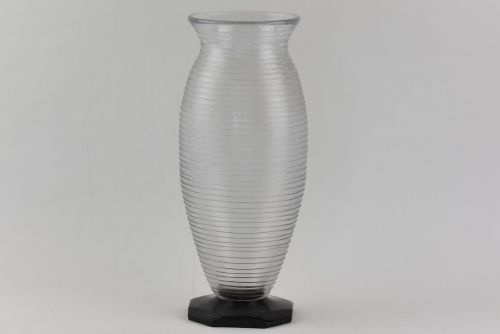
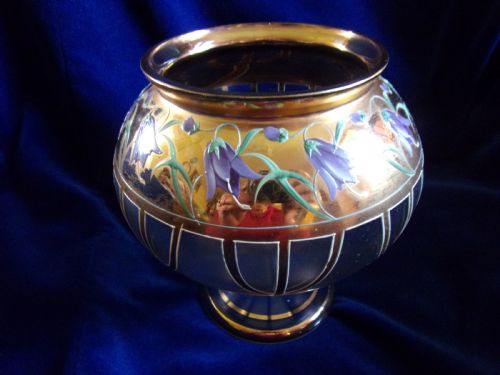
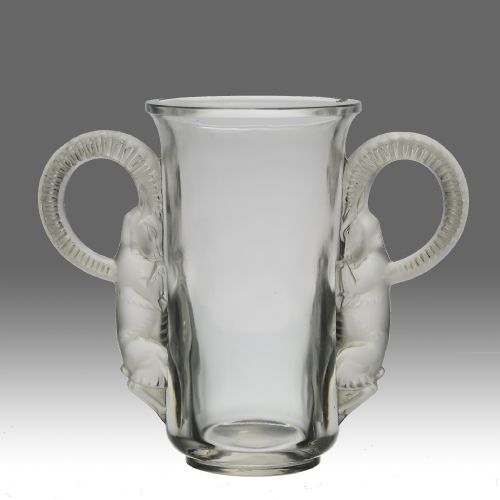
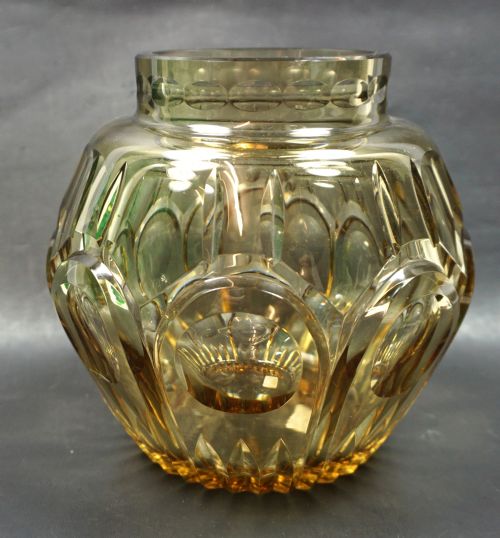
Makers relied on glass-blowing, moulding, and pressing techniques, often combining clear bases with frosted or enamelled relief details to create depth. Heavy lead crystal and cut glass required meticulous wheel-cutting and polishing by hand to achieve sharp facets and crisp geometric patterns.
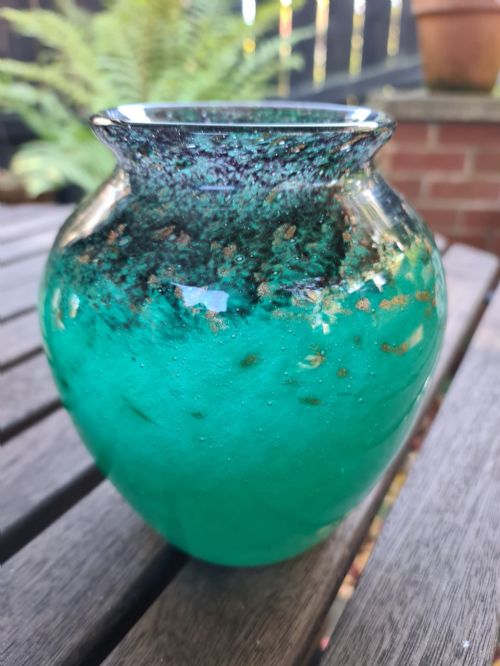
Specialised surface treatments such as acid-etching, cameo layering, and applied metalwork defined the aesthetic of the Art Nouveau and Art Deco periods. Workshops introduced metallic oxides to molten glass to produce deep cobalt blues, vibrant amethysts, and opalescent tones.
Some vessels incorporated subsidiary materials like brass mounts, pewter overlays, or alabaster bases to support the substantial weight of the glass body.
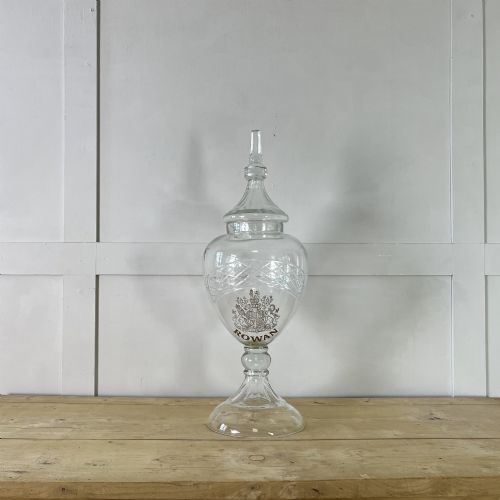
Object forms span from heavy table lamps and apothecary jars to pedestal bowls and classical vases.
What varies in quality
The distinction between standard production and exceptional work lies in the crispness of the moulding, the depth of the wheel-cut facets, and the deliberate balance of the vessel. Superior pieces display smooth, hand-finished rims, precise signatures or marks, and a heavy, resonant glass body free of distracting interior bubbles.
Design complexity also divides the range, separating simple pressed vessels from intricately layered cameo glass or acid-etched specimens that require multiple stages of heating and carving. The quality of supplementary materials, such as finely chased pewter overlays or solid brass fittings, completes the standard of the piece.
Rene Lalique·Daum·Thomas Webb and Sons·Val St Lambert·Le Verre Francais
The Vintage Glass Urn Glossary
- Opalescent glass
- A type of glass that appears milky-blue or white in transmitted light and warm amber or orange in reflected light. This optical effect was widely utilised by interwar French glassmakers.
- Cameo glass
- A multi-layered art glass produced by carving or acid-etching away top layers of coloured glass to reveal a contrasting background colour beneath. This technique demands immense precision from the artisan.
- Campana urn
- A bell-shaped classical vessel form with a wide mouth and a tapered base, frequently adapted into decorative lamp bases and heavy table ornaments during the nineteenth and twentieth centuries.
- Cut glass
- Glass decorated entirely by hand on a rotating abrasive wheel to create deep geometric incisions and faceted patterns. The process leaves sharp, clean edges and a brilliant refractive quality.
Vintage Glass Urn: Frequently Asked Questions
How do I clean a vintage glass urn safely?
Wash the glass by hand using lukewarm water and a mild detergent, supporting the heavy base at all times. Avoid sudden temperature changes to prevent cracking the material.
Dry the vessel immediately with a soft, lint-free cloth to prevent water spots, particularly on cut or frosted surfaces that trap moisture.
Can I use my glass urn for flowers?
Many of these vessels function well as vases, provided the interior opening is wide enough and the base is stable enough to hold water and stems securely.
Take care with antique pieces that feature delicate enameled or gilded details on the interior rim, as prolonged exposure to moisture can damage surface decorations.
How can I tell Art Deco glass from Art Nouveau?
Art Nouveau pieces feature flowing, organic lines inspired by nature, often incorporating iridescent finishes, applied snakes, or sinuous floral motifs.
Art Deco items rely on strict symmetry, geometric patterns, stylised animal figures, and heavy frosted or opalescent relief mouldings.
Why are some glass urns heavy?
Substantial weight usually indicates a high lead content in the crystal or thick-walled pressing techniques favoured by twentieth-century makers to achieve deep relief decoration.
This heft provided structural stability for large decorative vessels and table lamps, preventing accidental tipping on heavy furniture.