




Fluted Glass Vases
These fluted glass vases bring vertical elegance and rich colour to a room, spanning Victorian production through to Art Deco forms.
Fluted Glass Vases
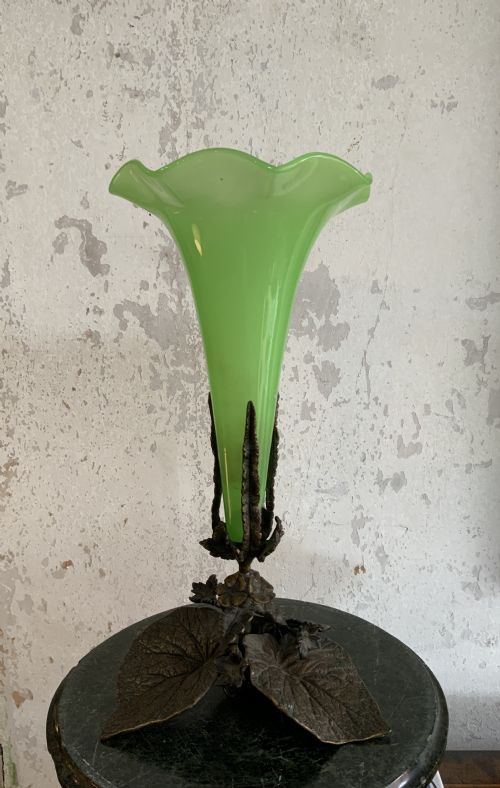
When you search for fluted glass vases, you encounter pieces designed to hold single stems or grand displays, utilising vertical lines to catch the light. The items seen here range from small celery vessels and tall trumpet shapes to elaborate epergnes and centrepieces.
Victorian and Edwardian examples dominate the selection, alongside items from the 1930s and German Historismus or French workshops. You will find both single display pieces and matched pairs, often incorporating bases of silver plate, brass, or bronze.
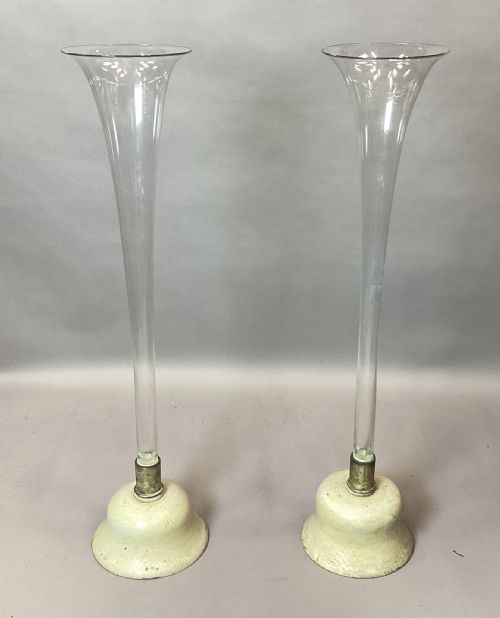
The forms extend from simple ribbed cylinders to expansive floor vases reaching significant heights, showing how makers manipulated molten material to create dramatic fluting.
How they were made
The manufacture relies on clear glass, crystal, and coloured variations such as cranberry and uranium glass, sometimes combined with metal mounts in silver, brass, and bronze. Makers achieved the characteristic fluting through mould-blowing or careful hand-manipulation while the glass was hot.
Decoration often involved applied trails, white cane work, or cut crystal facets that emphasise the optical qualities of the material. Metal components were cast or plated to support taller vessels and epergnes securely.
Some trumpet vases stand forty inches tall, demanding sturdy furniture and careful positioning away from swinging elbows.
What varies in quality
Quality rests in the crispness of the fluting and the weight of the metal components, distinguishing ambitious studio or factory work from standard output. The depth of colour in cranberry and uranium pieces, alongside the precision of cut crystal facets, determines the visual impact.
Integration between glass vessels and their metal mounts, whether bronze, brass, or silver plate, separates standard decorative objects from superior examples of period craftsmanship.
The Fluted Glass Vases Glossary
- Epergne
- A tabletop centrepiece featuring a central vase surrounded by smaller hanging or attached vessels. These multi-part items were popular dining table decorations during the Victorian period.
- Cranberry glass
- A transparent pink-red glass coloured by the addition of gold chloride during manufacture. It appears frequently in Victorian and Edwardian tablewares.
- Uranium glass
- Glass containing a small percentage of uranium dioxide, which glows brightly under ultraviolet light. It typically exhibits a distinctive yellow-green hue.
- Trumpet vase
- A vessel characterised by a narrow base that flares outward toward the rim in the shape of a musical horn. Such forms were often executed in tall floor-standing sizes.
Fluted Glass Vases: Frequently Asked Questions
What is an epergne?
An epergne is a decorative centrepiece featuring a main vessel with smaller attached or hanging vases branching out from a central stem. These pieces were traditionally used on dining tables for fruit, flowers, or sweetmeats.
They frequently combine coloured glass components with metal mounts in silver plate, brass, or bronze to create complex, multi-tiered displays.
How do I identify cranberry glass?
Cranberry glass is recognised by its distinct transparent pinkish-red shade, achieved by adding gold to the molten mixture during production. It appears often in Victorian tableware and ornamental vases.
The intensity of the colour can vary from a pale rose to a deep crimson depending on the specific batch and age of the piece.
How should I clean antique glass vases?
Antique glass requires gentle cleaning with warm water and mild soap, avoiding harsh scrubbing or abrasive materials that might damage the surface. Metal mounts should be kept dry and cleaned separately according to their specific alloy.
Take particular care with pieces featuring delicate applied trails or delicate silver bases to prevent accidental breakage.
What period are most of these pieces from?
The selection spans the nineteenth and early twentieth centuries, with a strong representation of Victorian and Edwardian examples. You will also find items dating from the 1930s and various European design movements.
Production periods can often be inferred from the combination of glass colours, mounting metals, and decorative techniques like cut crystal or cane work.