


Vintage Glass Table Clock
These pieces combine timekeeping with transparent materials, bringing mechanical movement and light together on a desk or mantelpiece.
Vintage Glass Table Clock
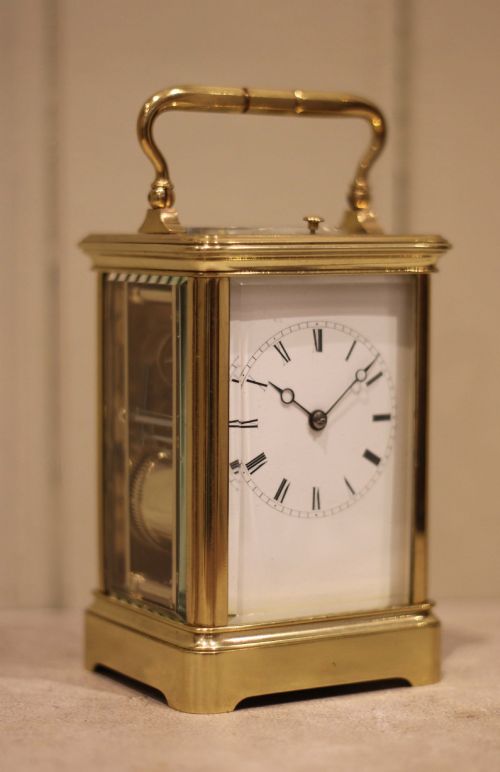
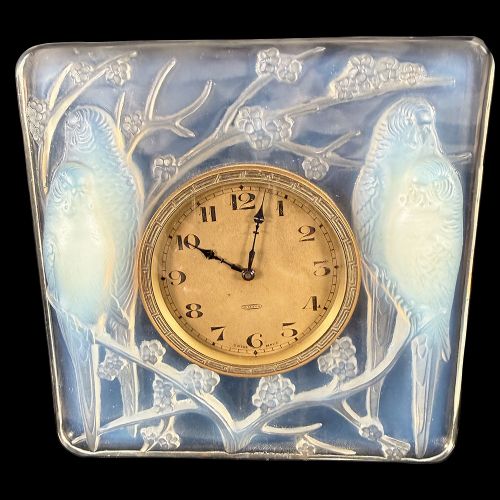
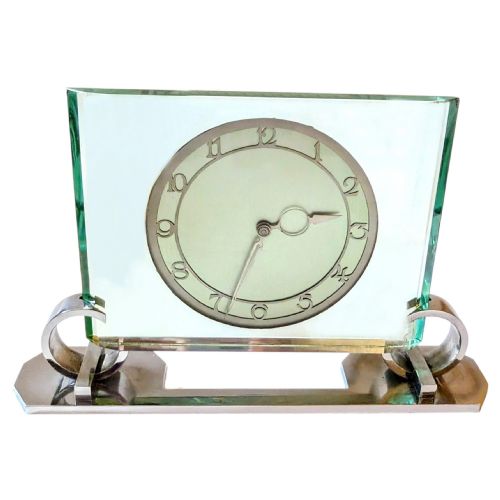
A vintage glass table clock brings together transparent panels, heavy brass frames and mechanical movements designed to sit on desks, mantels and tables. When searching this phrase, a buyer encounters everything from French four-glass mantel designs to Art Deco opalescent glass models and English carriage clocks.
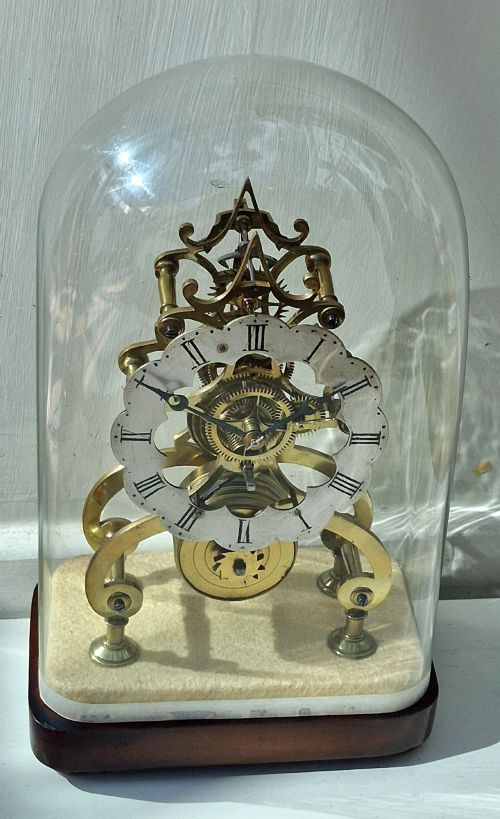
The selection ranges from Victorian architectural pieces to mid-century modern timepieces. Many incorporate visible gears, mercury pendulums or skeleton movements behind protective glass panels, allowing the interior mechanics to remain in full view.
How they were made
Heavy brass, gilt bronze and chrome-plated metal form the structural chassis and bezels that house the transparent glass panels. Glassmakers utilised moulding, blowing and bevelling techniques to produce clear, opalescent, peach mirror and uranium glass cases.
Clockmakers fitted mechanical movements driven by springs, pendulums, fusee chains or electric mechanisms such as Bulle and Atmos systems. Enamel and painted dials with delicate numerals were then mounted behind bevelled crystal glass doors or domes.
Listings span periods from Victorian and eighteen-sixties designs to nineteen-thirties Art Deco and mid-century modern pieces.
What varies in quality
The weight and thickness of the brass casting and the precision of the bevelled glass plates separate standard production models from high-end workshop pieces. Intricate engraving on the movement backplates and gilt brass cases indicates superior craftsmanship.
The sophistication of the movement itself dictates the grade of the piece, with jewelled escapements, striking mechanisms and repeating complications representing more advanced manufacturing than basic time-only clocks.
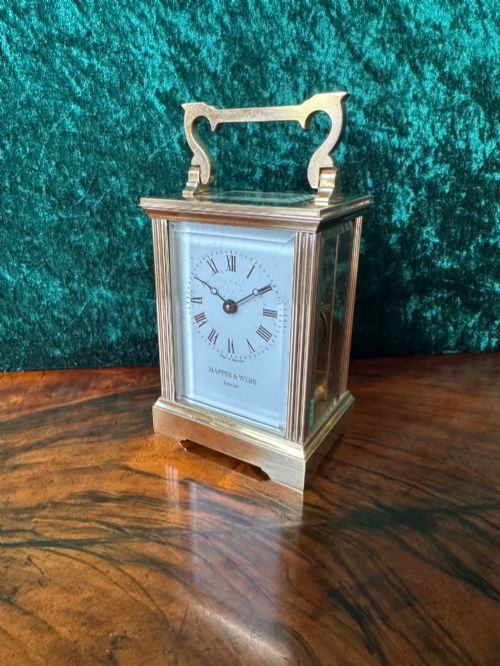
Mappin and Web·Smiths Clockmakers·Richard Winter of Chieveley·Maurice Marcel Moulin Favre-Bulle·Drocourt·Jaeger LeCoultre·Samuel Marti et Cie
The Vintage Glass Table Clock Glossary
- Four glass clock
- A mantel clock housed within four glass panels, allowing an unobstructed view of the movement from all sides. These typically feature brass or gilt frames and mercury pendulums.
- Skeleton clock
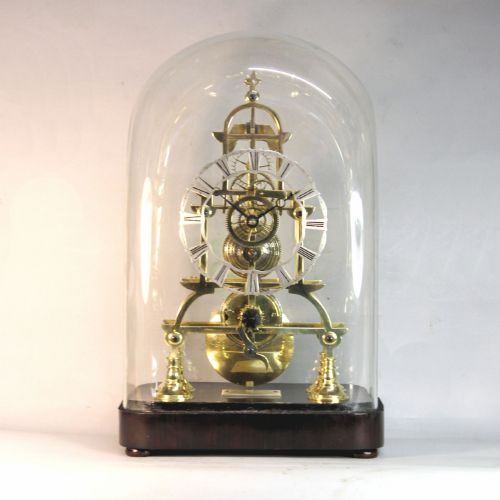
- A timepiece designed with an open frame that exposes the gear train and escapement to view. They are often protected beneath a glass dome.
- Carriage clock
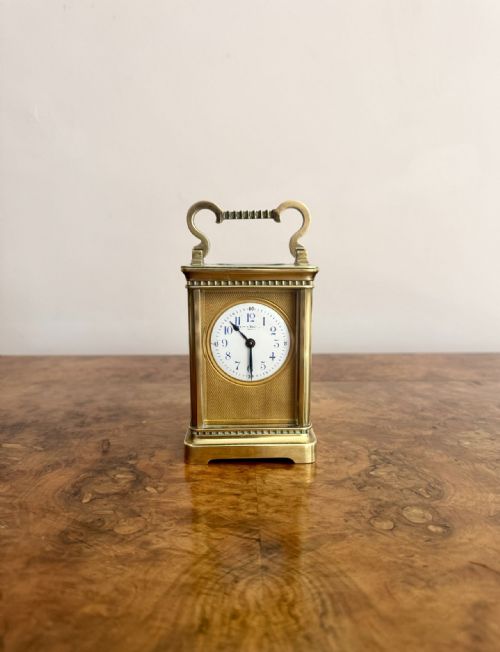
- A portable spring-driven clock originally designed for travelling officers during the nineteenth century. They feature glass panels set into brass cases and folding top handles.
- Crystal regulator
- A mantel clock with glass panels on the front, back and sides, housing a compensating pendulum. Samuel Marti et Cie produced notable examples.
- Opalescent glass
- Glass containing ingredients that create a milky, semi-translucent appearance with shifting blue or amber tones. R Lalique utilised this material for decorative clock cases.
Vintage Glass Table Clock: Frequently Asked Questions
How do I wind a mechanical glass table clock?
Most mechanical models utilise a small key inserted into winding holes on the dial or backplate to tension the mainspring.
Care should be taken not to overwind the mechanism, stopping as soon as resistance is felt.
Where should I place a glass table clock?
Position the piece on a stable, level surface away from direct sunlight, moisture and heavy vibrations.
Mantelpieces, desks and secure cabinets provide suitable environments where the transparent panels can catch the light.
How do Atmos clocks work?
Atmos clocks operate via a sealed expansion chamber containing a gas and liquid mixture that responds to temperature changes.
This continuous thermal fluctuation winds the mainspring, allowing the clock to run indefinitely without manual intervention.
How do I identify an Art Deco glass clock?
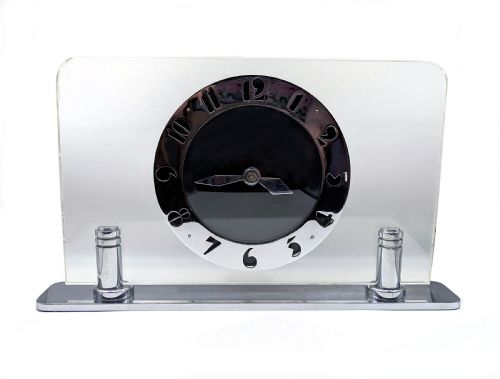
Art Deco pieces typically display geometric forms, modernist numerals, chrome or opaline glass cases, and specific signatures from the interwar period.
Smiths and Lalique produced distinctive variations of these designs during the nineteen-thirties.