
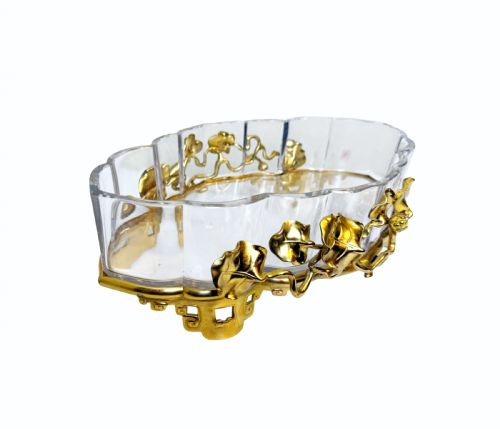
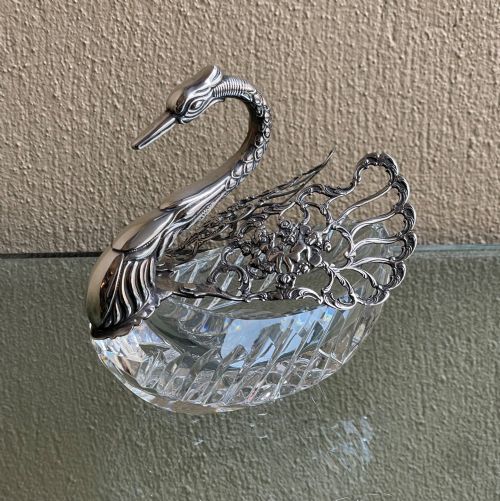


Vintage Glass Table Bowl
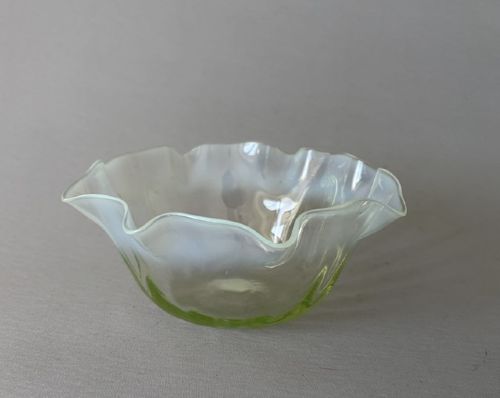
A vintage glass table bowl brings substance to a room, combining heavy crystal or coloured glass with precious metal mounts from the nineteenth and twentieth centuries.
Vintage Glass Table Bowl
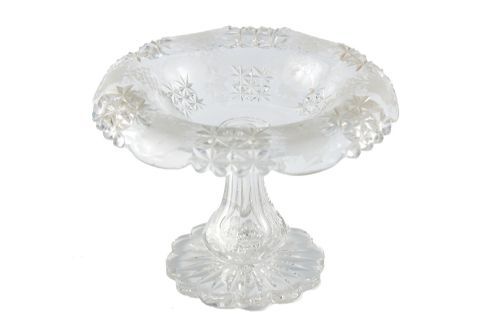
A vintage glass table bowl encompasses everything from heavy Edwardian cut crystal fruit vessels to delicate Art Deco powder boxes and large Victorian centrepieces.
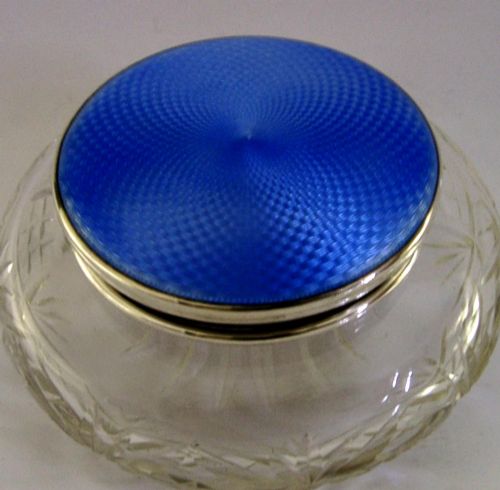
The most common examples on this page pair moulded or cut glass with silver plate or sterling silver mounts, functioning as centrepieces, trinket jars, and bon bon dishes.
Origins span English, French, German, and Belgian workshops, shifting through styles like Art Nouveau, Neoclassical, and Mid-Century Modern across various decades.
Materials and construction
Pieces combine heavy lead crystal or plain glass with mounts in sterling silver, silver plate, gilt bronze, and occasionally enamel or tortoiseshell.
Glass bodies are shaped through cutting, moulding, or over-crystal layering, then fitted with pierced metal frames, hinged lids, or cast handles.
Object forms range from large dining table centrepieces down to tiny dressing table vanity jars and powder boxes.
Distinguishing quality
Quality rests on the crispness of the glass cutting, the weight of the metal mount, and the precision of any enamel work or gilding.
Finer examples show integrated design between the glass insert and its metal frame, whilst lesser pieces rely on standard commercial blanks with simple stamped fittings.
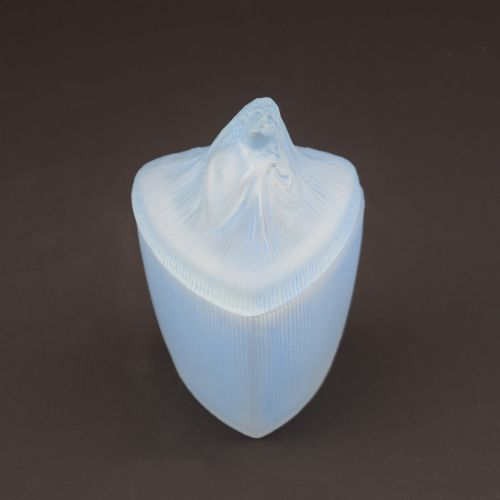
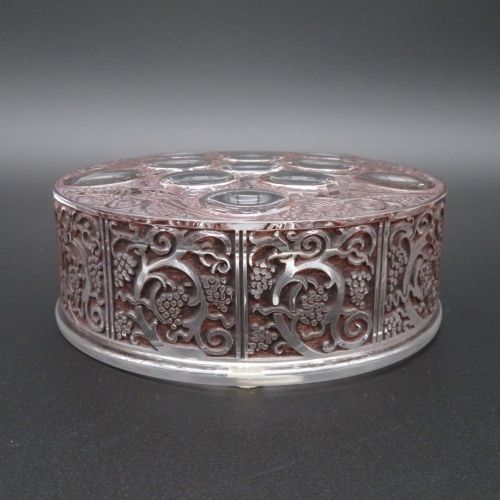
Rene Lalique·Val St Lambert·St Louis glassworks·Monart Glass
The Vintage Glass Table Bowl Glossary
- Centrepiece
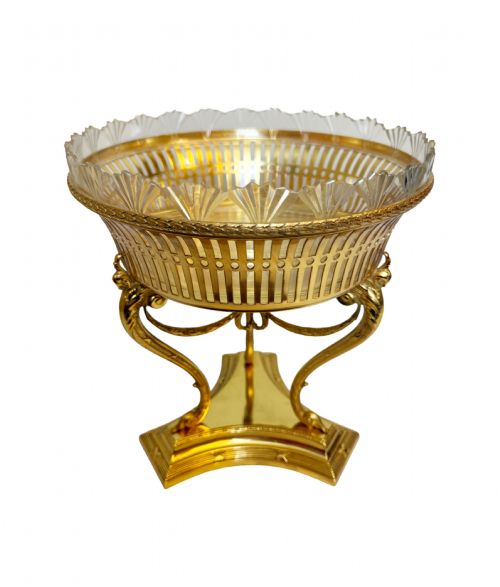
- A large decorative vessel designed to sit in the middle of a dining table or sideboard. These often feature elaborate metal frames holding large glass bowls.
- Cut Glass
- Glass decorated by grinding facets or patterns into the surface using a wheel. This technique creates high reflectivity and weight in Victorian and Edwardian pieces.
- Cobalt Glass
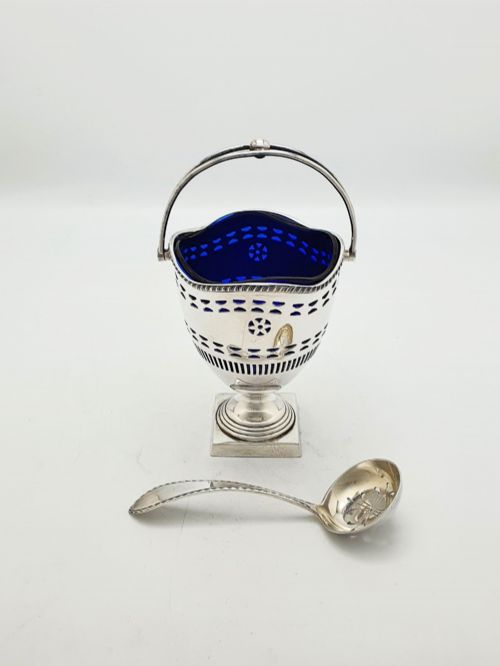
- Deep blue glass coloured with cobalt oxide, frequently used for liners in pierced silver sugar bowls and condiment dishes.
- Dressing Table Jar
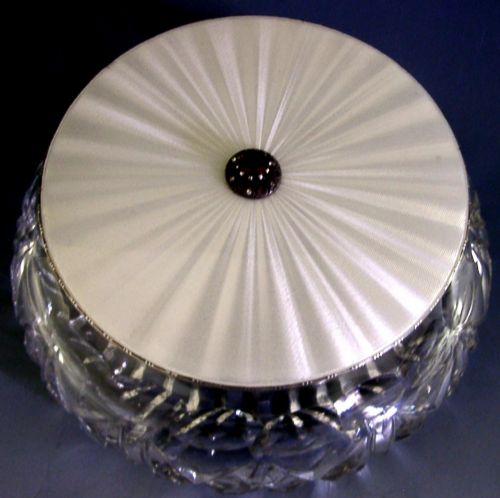
- A small lidded container used for powders or pins, typically topped with silver, enamel, or tortoiseshell.
- Silver Plate
- A base metal coated with a thin layer of silver, commonly used for the frames and handles of nineteenth-century table vessels.
Vintage Glass Table Bowl: Frequently Asked Questions
How were these glass bowls used originally?
Many served practical roles on dining tables for fruit, sugar, or finger rinsing between courses. Smaller versions sat on dressing tables to hold powder, pins, and trinkets.
Larger items acted purely as decorative centrepieces, sometimes fitted with gilt bronze frames to anchor floral arrangements or stand alone on sideboards.
How do I clean a silver mounted glass bowl?
Remove the glass insert from its metal frame whenever possible before cleaning to protect adhesives and delicate joins. Wash the glass in warm soapy water and use a gentle silver cloth on the metal mounts.
Avoid submerging pieces that feature enamel, tortoiseshell, or weighted bases in water.
How can I tell an Edwardian bowl from a Victorian one?
Victorian pieces tend to feature heavy, deep-relief cutting and ornate silver-plated mounts inspired by Rococo or Neoclassical revivals. Edwardian examples often lean towards lighter, crisper cut crystal paired with bright sterling silver.
Art Nouveau and Art Deco pieces from later decades introduce organic motifs or geometric symmetry.
Are coloured glass liners original?
Coloured glass liners, particularly cobalt blue or cranberry, are typically original to pierced silver baskets and frames from the nineteenth and early twentieth centuries. The contrast between the bright metal and the vibrant glass was a deliberate aesthetic choice of the period.
Snug fits and matching wear patterns confirm original pairings.