


Vintage Glass Salt Cellars
Vintage glass salt cellars bring colour and texture to the dining table, serving both practical display and traditional table settings.
Vintage Glass Salt Cellars
Vintage glass salt cellars encompass open vessels and small dishes designed to hold salt at the dining table, often appearing alongside condiment sets and cruets. These pieces emerge from periods spanning the Victorian era through the Edwardian years and into the Art Deco epoch.
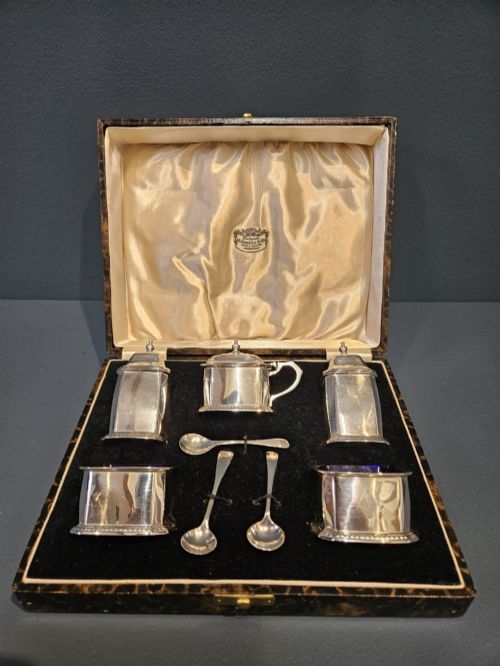
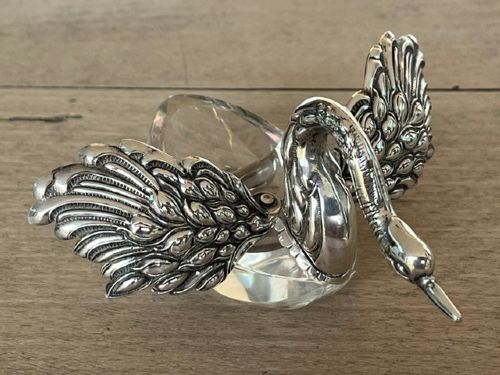
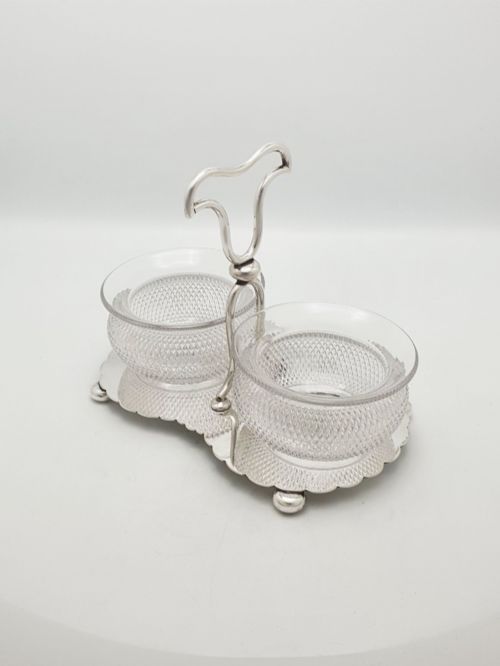
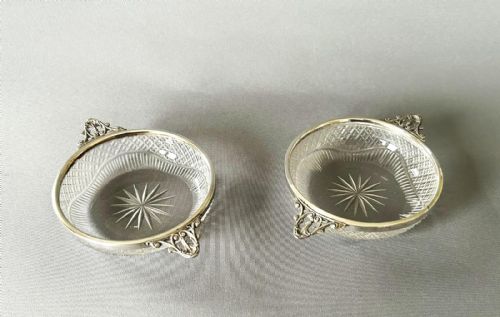
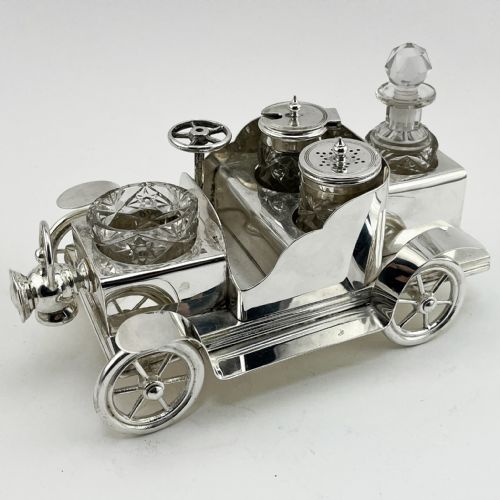
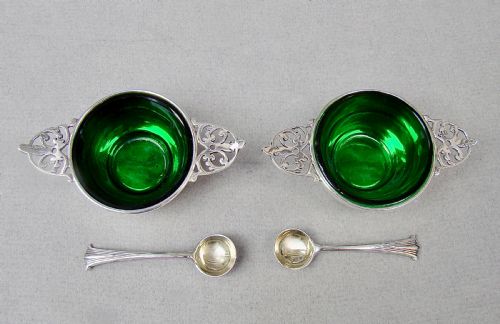
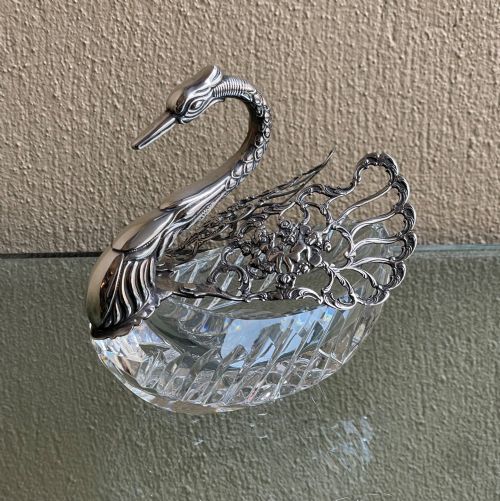
Buyers most frequently encounter pressed, cut, or coloured glass vessels paired with metal mounts, frames, or liners in silver plate and sterling silver. Forms range from simple open table salts to novelty designs shaped like swans, shells, and cars.
The selection includes matched pairs and larger sets accompanied by original stands or spoons. Origins span English workshops, French glassmakers, and Scandinavian studios.
How they were made
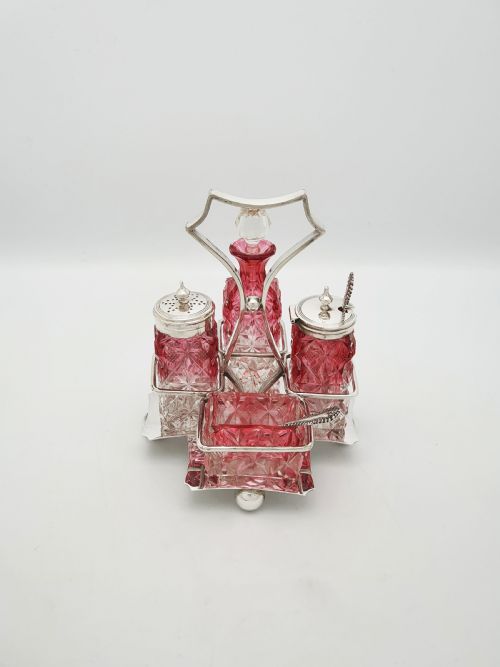
Maker utilise glassblowing, moulding, and cutting techniques to form the vessels, often adding flashed colour or enamelling to the surface. Cranberry glass, cobalt blue liners, and green opaline shell dishes demonstrate the variety of coloration achieved through mineral oxides.
Metal components such as rims, stands, and movable wings involve sterling silver or silver plate, frequently bearing hallmarks or registration marks that record the date of manufacture and maker.
Swan salt cellars with movable wings let the bird spread its plumage across the dinner table.
What varies in quality
The standard of execution depends on the depth and crispness of the cut glass facets or the precision of the moulded glass pattern. Heavy lead crystal and thick-walled opaline glass indicate a higher grade of manufacture than thin, lightweight press-moulded pieces.
The quality of accompanying silver or silver-plated mounts, frames, and figural details influences the overall standard. Intricate chasing, substantial gauge metal, and intact enamel work elevate individual pieces above standard commercial production.
Josiah Williams & Co
The Vintage Glass Salt Cellars Glossary
- Open salt
- A small open vessel designed to hold salt, used before the invention of the free-flowing shaker. Diners would pinch salt from the dish using their fingers or a tiny salt spoon.
- Cruet set
- A matched collection of bottles, jars, or open vessels held in a stand for condiments such as oil, vinegar, mustard, and salt. These sets sat at the centre of the dining table.
- Cranberry glass
- A rich pinkish-red glass produced by adding gold chloride to the molten batch. It appears frequently in Victorian tablewares and cruet inserts.
- Opaline glass
- An opaque or translucent glass with a milky appearance, often tinted in shades of green or blue. Nineteenth-century French makers utilised this material for decorative dishes formed as shells.
- Silver plate
- A base metal, such as copper or Britannia metal, coated with a thin layer of silver. This technique provided the appearance of solid silver at a lower cost for everyday dining items.
Vintage Glass Salt Cellars: Frequently Asked Questions
How did people use open salt cellars?
Diners used open salt cellars by taking a pinch of salt with their fingers or a small salt spoon and sprinkling it over their food.
These small dishes sat near each place setting or were shared between guests in larger dining arrangements.
What is a cruet set?
A cruet set is a matched collection of condiment containers held together in a metal stand. They typically held bottles for oil and vinegar alongside lidded pots and open salt cellars.
These stands were placed on the dining table so guests could season their food during the meal.
How do I identify Edwardian salt cellars?
Edwardian salt cellars often feature light, elegant designs influenced by eighteenth-century revivals. They frequently combine clear cut glass with silver-plated rims or sterling silver frames.
Maker marks, registration numbers, and hallmarks stamped onto the metal mounts help confirm the manufacturing period.
Can I use vintage salt cellars daily?
Vintage salt cellars function well for everyday dining, holding salt, herbs, or small condiments on the table. Care should be taken with pieces featuring delicate enamel or antique silver plate.
Hand washing prevents damage to the glass and preserves the metal surfaces over time.