


Vintage Glass Inkpot
These vintage glass inkpot pieces sit squarely on the desk as heavy, functional vessels from eras past, offering tactile charm for any writer.
Vintage Glass Inkpot
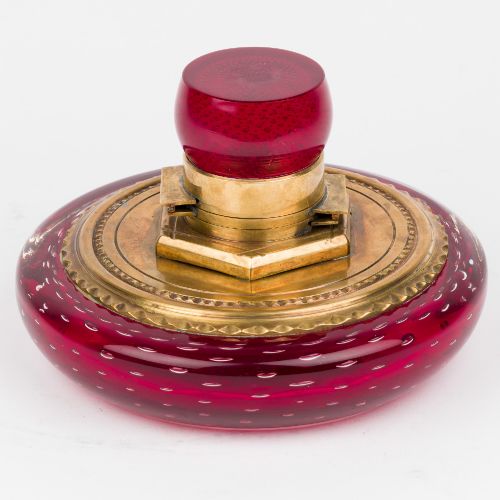
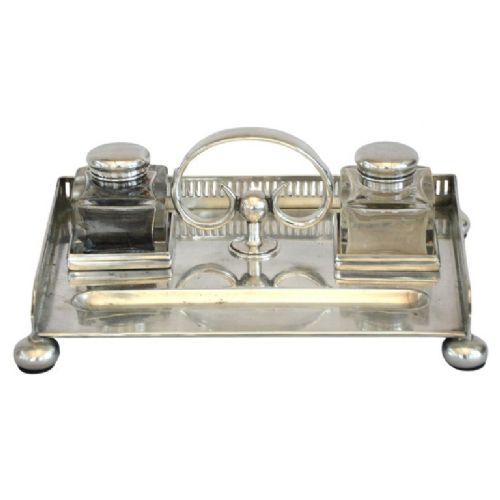
A vintage glass inkpot takes various forms across the periods represented, ranging from simple desk accessories to elaborate inkstands housing multiple pots. Buyers searching this phrase encounter heavy cut crystal bodies, pressed glass reservoirs, and fitted vessels designed to hold ink securely.
The objects frequently combine glass with other materials such as brass, silver plate, sterling silver, and cast gilded bronze. Many pieces originate from the Victorian and Edwardian eras, alongside later Art Nouveau and Art Deco designs that incorporate decorative elements like figural mounts and mahogany bases.
How they were made
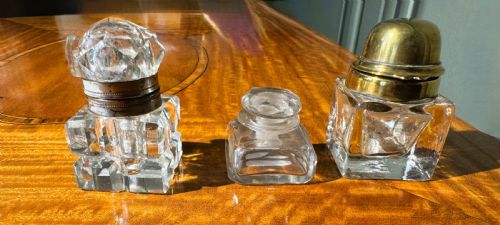
Makers utilised heavy glass and crystal, often shaping the vessels through deep facet cutting or blowing iridescent glass reminiscent of Kralik and Loetz. The glass body provided weight and stability for daily desk use.
Metal mounts, hinged lids, and collars in brass, silver plate, and sterling silver were fitted securely to the glass necks. Some pieces incorporated cast bronze figures, such as chicks and owls with glass eyes, mounted directly to wooden or metal stands.
Several desk accessories stare back with glassy intent, featuring brass owls and gilded bronze chicks fitted with genuine glass eyes.
What varies in quality
Quality rests upon the weight and clarity of the glass, the depth and precision of the facet cutting, and the artistic ambition of the metal mounts. Superior pieces display crisp cutting and high-grade silver or bronze components.
The integration between the glass reservoir and its metal collar demonstrates the standard of manufacture. Finer examples retain their original matching ink pots and hallmarked precious metal lids without replacement parts.
Walker And Hall·Tiffany And Co·Kralik·Loetz
The Vintage Glass Inkpot Glossary
- Inkstand
- A complete desk set holding one or more ink pots alongside space for pens and nibs. These stands often incorporate silver plate or brass bases.
- Facet cut
- A method of grinding flat planes into the glass surface to catch and refract light. This technique defines many heavier crystal pieces.
- Sterling silver
- A silver alloy containing 92.15 percent pure silver by mass, frequently used for the hinged lids and collars of desk inkwells.
- Iridescent glass
- Glass treated with metallic salts to produce a shimmering, rainbow-like surface sheen. This finish is typical of Art Nouveau pieces.
- Grand Tour
- A cultural journey undertaken by wealthy Europeans that influenced the collection of ornamental brass and glass souvenirs.
Vintage Glass Inkpot: Frequently Asked Questions
What is a vintage glass inkpot used for?
These vessels were designed to hold ink on a desk for dip pens and fountain pens before the widespread adoption of ballpoint writing instruments.
Today they function as decorative desktop objects, paperweights, or small containers for modern stationery supplies.
How do I date a glass inkwell?
Dating relies on stylistic clues like Art Nouveau iridescence or Art Deco geometry, alongside hallmarks on silver lids and mounts.
Material combinations, such as Victorian brass work or Edwardian sterling silver, also help narrow down the period of manufacture.
Are original glass inserts common?
Many desk stands originally held matching glass pots, though replacements occurred frequently over decades of use.
Finding a piece with its original glass ink pot intact adds considerably to the integrity of the desk set.
How should I clean a vintage inkwell?
Gentle washing with warm soapy water removes residual dried ink from the glass interior without damaging the material.
Metal mounts and silver lids require careful polishing appropriate for their specific composition to avoid abrasive wear.