

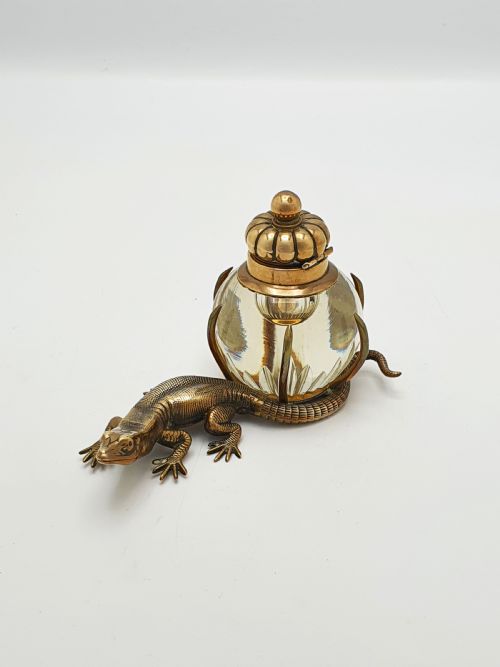


Brass Glass Inkstand
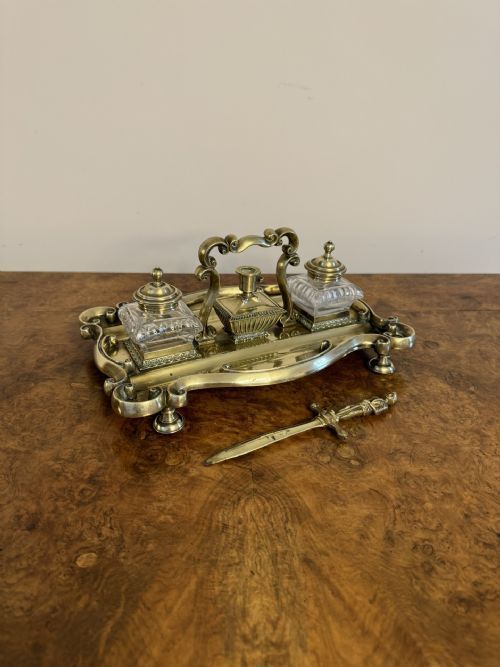
A brass glass inkstand brings a functional Victorian writing desk to life with heavy metal mounts and thick cut glass.

Brass Glass Inkstand
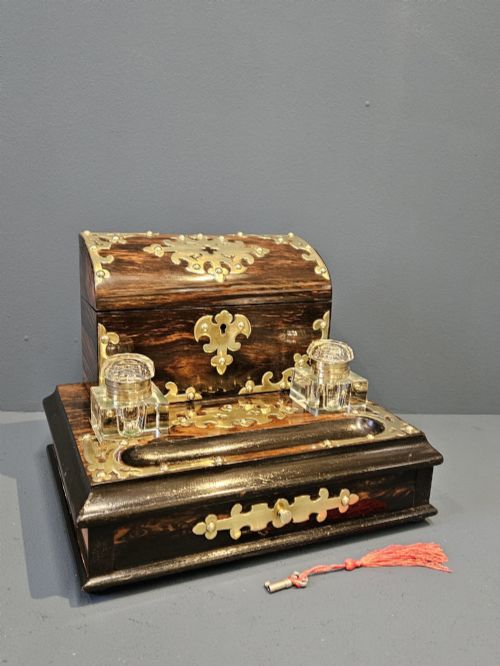
A brass glass inkstand combines metal framework with glass receptacles designed to hold liquid ink on a writing surface. These pieces range from simple wooden bases fitted with a single glass ink pot to elaborate multi-piece desk sets holding pens, stamps and matching inkwells.
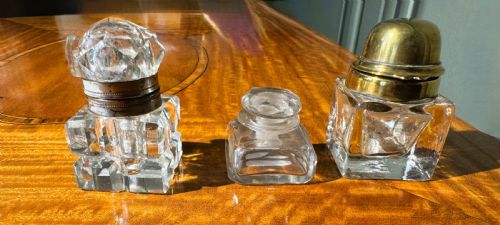
Most examples seen here belong to the Victorian era and the nineteenth century, utilising heavy cast brass alongside cut or moulded glass. Buyers encounter both standalone glass ink pots and comprehensive desk tidies incorporating wooden trays.
The form developed to serve the daily correspondence needs of nineteenth-century households and offices. Surviving pieces frequently retain their original glass inserts, which distinguishes a complete desk accessory from a later pairing.
How they were made
Foundries cast brass components using traditional sand-moulding techniques before finishing the surfaces by hand with chisels and polish. These metal mounts provide structural housing and decorative borders for the central glass ink reservoirs.
Makers shaped the glass elements through cutting, pressing or blowing to create heavy vessels capable of withstanding daily dipping of steel-nib pens. Cut-glass ink pots feature deep geometric facets that catch light on the desktop.
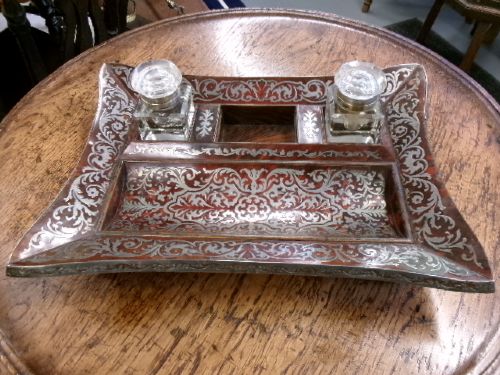
Cabinetmakers constructed wooden trays from timbers like oak, walnut, coromandel and rosewood, often incorporating brass stringing and mother-of-pearl inlay. Metal mounts secure the glass bottles firmly within these wooden bases.
Current listings feature desk accessories spanning from the eighteenth-century Georgian period through to the Art Deco era, incorporating oak, walnut, coromandel and cut glass.
What varies in quality
Quality rests in the weight of the cast brass and the depth of the glass cutting. Finer pieces display crisp hand-chiselling on the metal mounts and heavy, clear crystal vessels without internal flaws.
The integrity of the ensemble separates standard utility items from exceptional desk accessories. Superior examples retain matching glass ink pots with original lids, rather than mismatched replacements gathered over time.
Material selection for the base also dictates the tier of the piece. Dense exotic woods like coromandel and rosewood with precise brass inlay indicate high-end nineteenth-century production.
James Cartland and Sons·Kralik·Loetz·Moser
The Brass Glass Inkstand Glossary
- Standish
- A portable desk stand or tray fitted with inkwells, pen holders and sometimes sanders or wafer boxes. It served as the central writing accessory in a nineteenth-century study.
- Cut glass
- Glass decorated by grinding facets or patterns into the surface using a wheel. This technique creates sharp geometric edges and high optical clarity.
- Ormolu
- Gilded bronze mounted onto decorative objects or furniture. The technique involves applying a gold-mercury amalgam to cast bronze.
- Boulle work
- A style of marquetry using brass and tortoiseshell inlaid in contrasting patterns. It appears frequently on luxury French desk stands of the mid-nineteenth century.
- Desk tidy
- A compartmentalised tray or stand designed to hold stationery, envelopes and writing implements. These pieces keep the desktop organised.
Brass Glass Inkstand: Frequently Asked Questions
How do I date a brass glass inkstand?
Dating relies on the combination of materials, fastening methods and decorative styles present in the piece. Victorian examples often feature heavy cast brass and deep cut glass, while later Edwardian versions display lighter mounts.
Examining the screws, hinge types and glass manufacturing marks helps narrow the period of production. Original glass inserts match the collar dimensions of the brass frame precisely.
Were these used in homes or offices?
These accessories served both domestic writing desks and professional offices during the nineteenth century. Wealthy households placed them in libraries and drawing rooms for personal correspondence.
Larger double-inkwell stands accommodated the heavier demands of business writing and ledger maintenance. Portable versions allowed users to transport writing materials between rooms.
How do I clean the brass mounts?
Cleaning requires gentle dusting with a soft, dry cloth to preserve the historic surface patina. Harsh metal polishes strip away the aged appearance that collectors value.
If the brass requires deeper attention, non-abrasive cleaners applied sparingly will remove accumulated grime without damaging the surrounding glass or wood.
Why do some inkwells have hinged lids?
Hinged metal lids prevented ink from evaporating too quickly and kept dust out of the reservoir. A tight-fitting lid also reduced the risk of accidental spills on valuable stationery.
Many lids incorporated cork or glass stoppers underneath to create an airtight seal inside the glass well.