




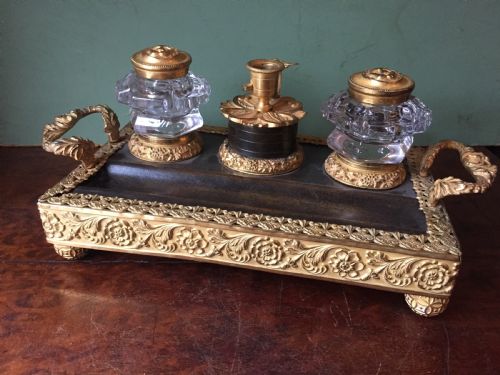
Brass Mounted Glass Inkwell
A brass mounted glass inkwell sits heavy on the mahogany, ready to hold ink for a proper hand.
Brass Mounted Glass Inkwell
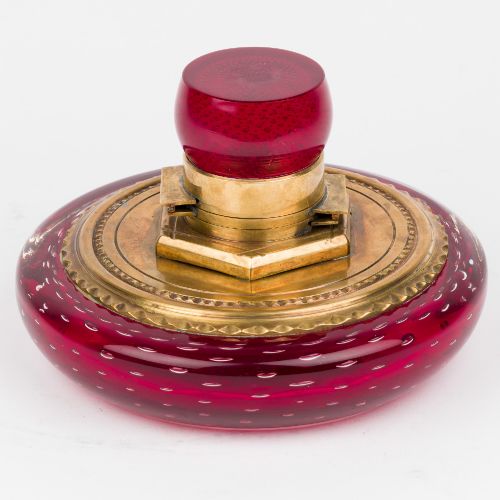
A brass mounted glass inkwell combines heavy glass reservoirs with durable metal mounts, serving as a sturdy desktop fixture for writing instruments. These pieces range from simple single vessels to elaborate double-sided desk sets designed for the Victorian study.
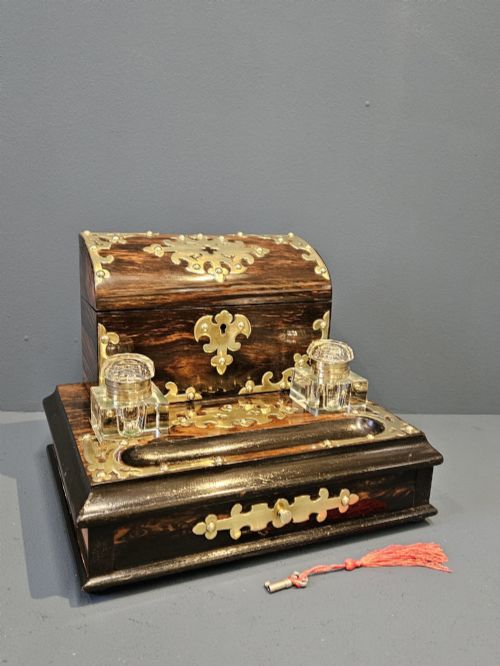
The selections here span from the eighteenth century through to the nineteenth century, taking in Victorian Gothic Revival, Napoleon III, and Art Nouveau styles. Collectors encounter various forms, including fitted wooden boxes in coromandel and walnut alongside standalone desk accessories.
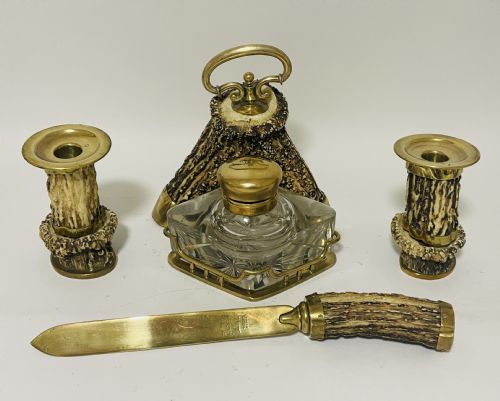
Most examples originate from the Victorian period, utilising timber foundations such as oak and burr walnut alongside tortoiseshell and mother of pearl details. Buyers find both compact standalone vessels and larger inkstands fitted with horns and antlers.
Materials and construction
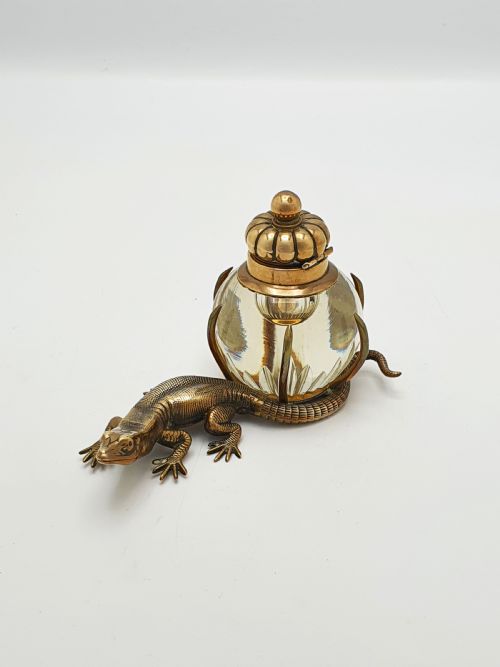
Makers shaped heavy cut glass into reservoirs to withstand the weight of metal lids and collars, often pairing the glass with cast brass or ormolu mounts. The metal fittings secure the glass vessels firmly to wooden bases or leather trays.
Carcasses of coromandel, walnut, and oak provide the structural support for larger desk stands, sometimes inlaid with brass or tortoiseshell. Artisans combined these timber boxes with mother of pearl and bone details to finish the exterior surfaces.
Distinctions in quality
The refinement of the metal casting and the depth of the cut glass separate standard items from superior productions. Heavier ormolu mounts and crisper chasing on the brass indicate greater workshop skill.
The choice of foundation timber dictates the tier of the piece, with dense exotic woods like coromandel and burr walnut marking out better desk stands than plain domestic oak. Integrated details such as antlers and tortoiseshell inlay elevate the ambition of the design.
The Brass Mounted Glass Inkwell Glossary
- Ormolu
- Gilded bronze used for decorative mounts and fittings. It provides a bright golden surface that does not tarnish easily.
- Coromandel
- A dense, dark brown timber with contrasting black stripes imported from Asia. Cabinetmakers favoured it for luxury nineteenth-century boxes.
- Inkstand
- A complete desk tray or stand holding one or more inkwells along with space for pens and sand. It forms a central station on a writing table.
- Napoleon III style
- A nineteenth-century French revival style drawing heavily on Louis XIV, Louis XV, and Louis XVI designs. It often incorporates rich veneers and intricate brass inlay.
- Victorian Gothic Revival
- An architectural and decorative style inspired by medieval forms. It utilises pointed arches, heavy timbers, and dark wrought or cast metalwork.
Brass Mounted Glass Inkwell: Frequently Asked Questions
How were nineteenth-century desk stands used?
These stands held ink for correspondence and record keeping before the invention of the fountain pen. The heavy glass prevented the ink from tipping over during daily writing.
Larger desk sets often included compartments for spare nibs, stamps, and blotting paper to keep the writing surface tidy.
How do I date a glass and brass inkwell?
Dating relies on the style of the mounts, the cut of the glass, and the primary wood of the base. Victorian pieces frequently utilise heavy cast brass or ormolu alongside exotic timbers like coromandel.
Earlier eighteenth-century examples show simpler joinery and different proportions compared to elaborate late nineteenth-century productions.
Are these inkwells suitable for modern use?
Many of these pieces function well on a modern desk for holding fountain pen ink or small office supplies. The glass reservoirs lift out easily for cleaning and refilling.
Care should be taken with antique hinges and delicate wooden bases to preserve their condition during daily handling.