




Vintage Glass Flush Light
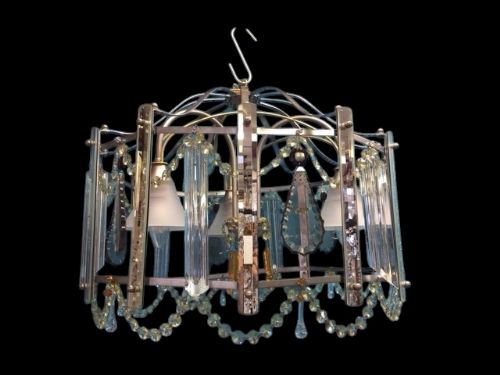
These vintage glass flush light fixtures sit tight to the ceiling, combining heavy metal mounts with moulded or cut glass to illuminate a room with period charm.
Vintage Glass Flush Light
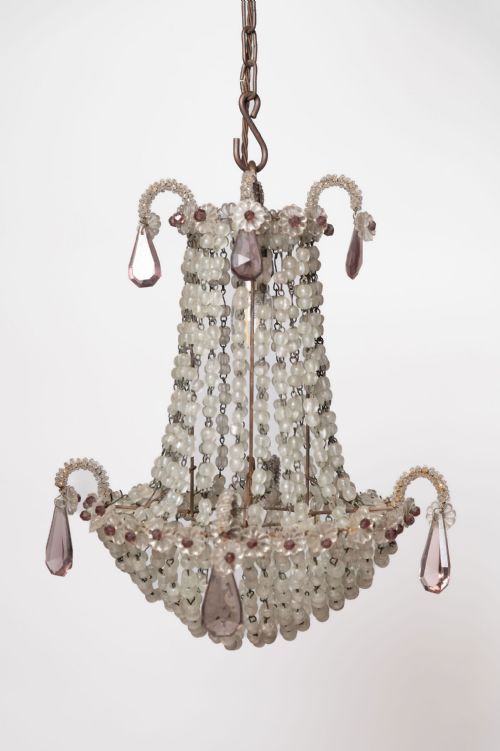
A vintage glass flush light brings together compact ceiling lighting and decorative glass from periods spanning the Victorian era through to the 1930s. Buyers searching this phrase typically encounter pressed satin glass shades, bag chandeliers, and low-profile plafonniers that mount directly against the plaster.
The forms range from geometric Art Deco ceiling lights to French neoclassical and empire styles, alongside simple opaline dish lights. Most examples date from the 1920s and 1930s, reflecting the prevalent use of pressed and frosted glass in domestic interiors of those decades.
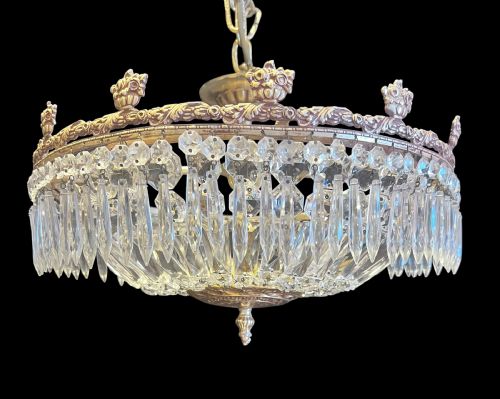
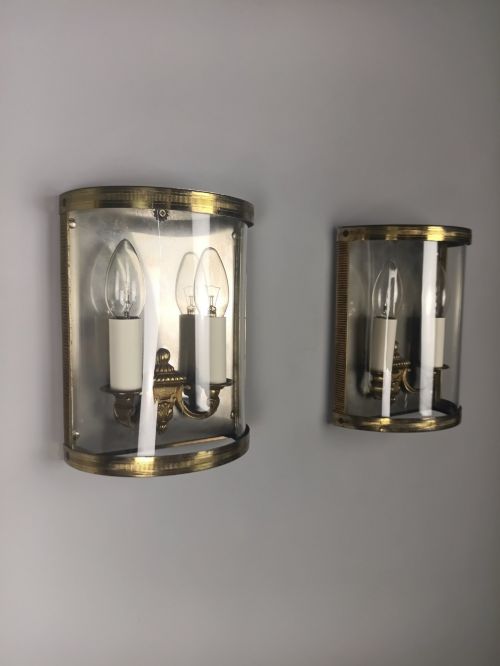
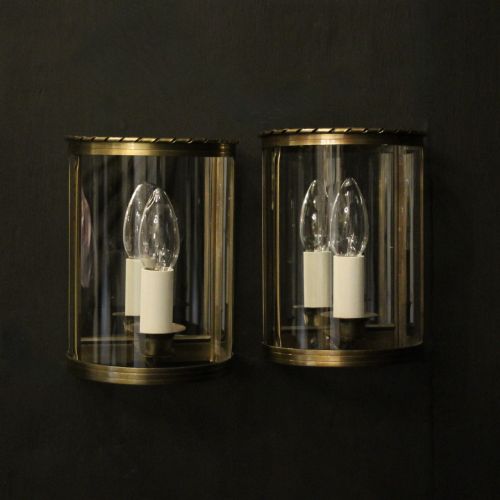
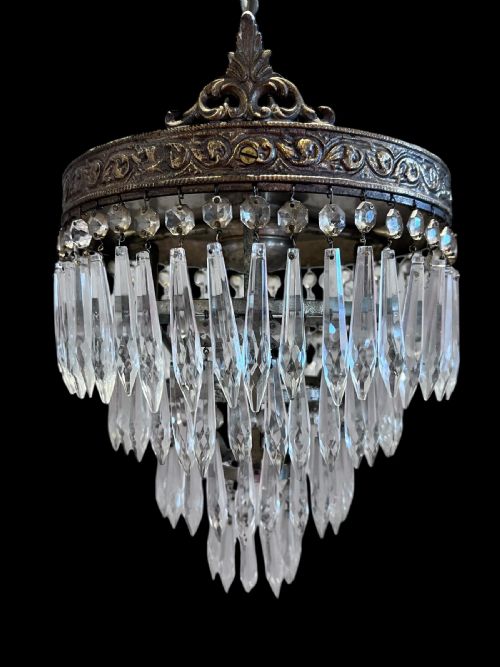
Objects vary from simple single-light bowls to multi-tiered crystal assemblies and specialised wall sconces. The selection draws heavily on continental workshops, particularly French and Italian makers who utilised moulded crystal and bronze mounts.
Materials and construction methods
Makers built these fittings using combinations of brass, gilt brass, chrome, copper, and bronze for the structural mounts and frames. Glass elements appear as cut crystal, pressed satin glass, opaline, and frosted panels secured directly into metal galleries.
Techniques relied on traditional foundry casting for the metal components, paired with mould-blown or pressed techniques for the glass shades. Beadwork and crystal drops were hand-wired onto brass frames, while etched details were worked directly onto the surface of domes and plafonniers.
Listings feature brass, bronze, and copper frames paired with opaline, cut crystal, and pressed satin glass across Victorian and 1930s periods.
Distinctions in quality
The standard of a fitting rests upon the weight of the metal armature and the clarity of the glass. Heavier cast bronze or ormolu mounts hold their shape and support intricate glass better than pressed thin copper or light brass.
Superior pieces display crisp moulding in pressed glass shades and precise hand-cutting in crystal beads and bag fixtures. The integration between the metal collar and the glass body shows whether a piece was built as a cohesive design or assembled from generic parts.
René Lalique·Jean Gauthier
The Vintage Glass Flush Light Glossary
- Plafonnier
- A ceiling light fixture that sits flush or semi-flush against the plaster surface. These typically feature a glass bowl held by a metal mount.
- Slip shade
- A moulded glass panel that slots into a metal frame to form a bowl-shaped or geometric ceiling light. They are characteristic of the Art Deco period.
- Bag chandelier
- A light fitting where numerous crystal beads are strung from a top ring to a lower central point, forming a tapering bag shape. They are often mounted flush to the ceiling.
- Opaline
- A milky, semi-translucent glass developed in the nineteenth century. It diffuses light softly and appears frequently in dish-form ceiling lights.
- Ormolu
- Gilt bronze mounted onto furniture or light fittings. It provides a rich golden finish that resists tarnishing over decades.
Vintage Glass Flush Light: Frequently Asked Questions
How do I install a flush light?
These fixtures require direct wiring into the ceiling mains via a mounting bracket that supports the weight of the glass and metal body. Professional installation by a qualified electrician ensures the fitting secures safely to ceiling joists.
Because vintage units lack modern standardised backing plates, an installer may need to adapt the existing vintage brass canopy to fit contemporary electrical boxes while preserving the original hardware.
What rooms suit a flush ceiling light?
Low-ceilinged rooms benefit most from these fittings because the tight profile leaves adequate headroom where a hanging pendant or large chandelier would hang too low. Hallways, bedrooms, and cloakrooms are traditional placements.
Larger multi-tiered or dome-shaped pieces work effectively in living spaces or dining rooms where a broad spread of diffused illumination is required without a hanging drop.
How do I clean vintage glass shades?
Remove the glass shade from the metal mount whenever the design permits, washing it gently in warm soapy water using a mild detergent. Avoid harsh scouring pads that can scratch delicate pressed or frosted surfaces.
Metal frames and brass mounts should be wiped with a dry or slightly damp cloth to preserve their patina, avoiding abrasive metal polishes unless the finish is modern plating.
Are replacement bulbs easy to find?
Standard modern LED or incandescent bulbs fit most vintage sockets, provided the bulb dimensions do not exceed the interior clearance of the glass shade. Edison-style screw fittings or bayonet caps correspond to the original wiring standards.
Care should be taken with enclosed glass domes to select wattage ratings that do not generate excessive heat within the sealed shade space.