
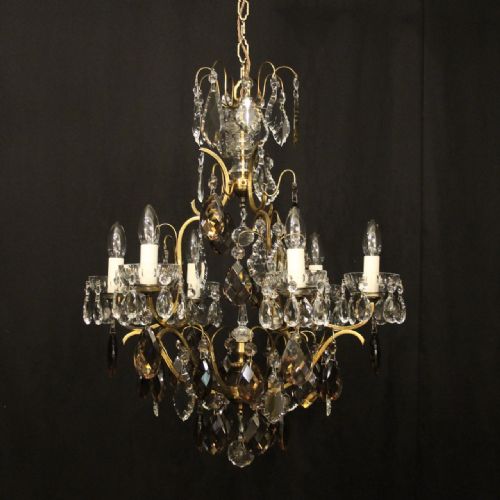


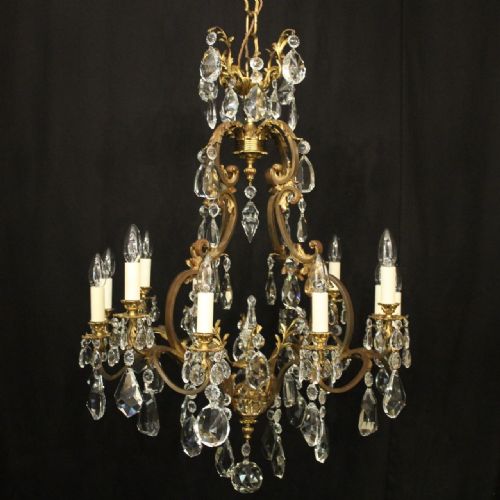
Classic Drop Chandelier
These classic drop chandelier designs bring glittering height and period candlelight to a room, drawing the eye upwards through tiers of glass and crystal.
Classic Drop Chandelier
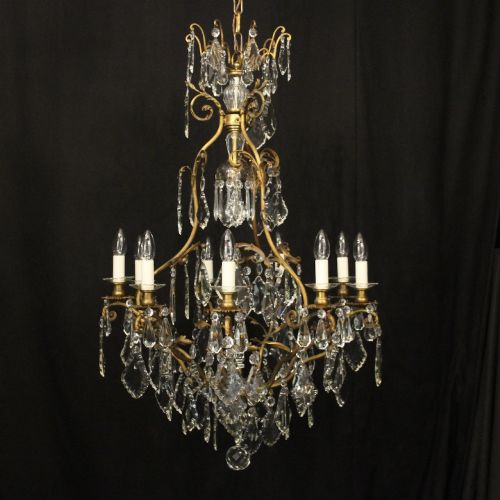
A classic drop chandelier offers a focal point for high ceilings, drawing upon centuries of decorative lighting tradition. When searching for a classic drop chandelier, buyers encounter pieces spanning from the eighteenth century through to the early twentieth century.
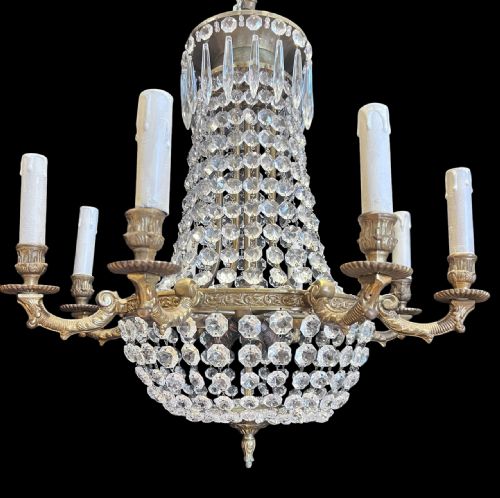
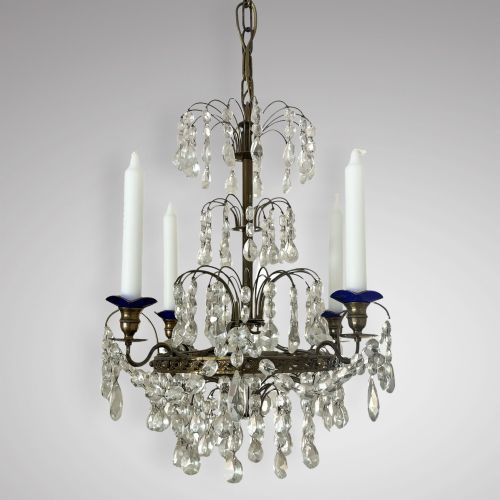
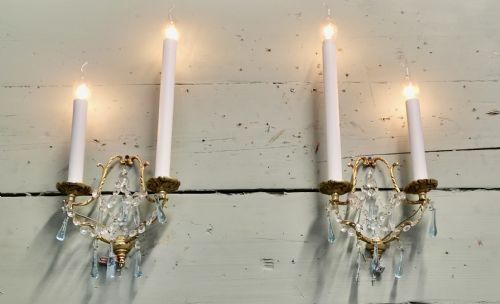
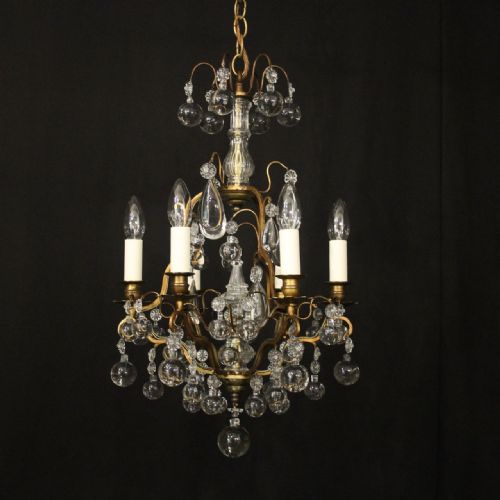
The selections here showcase distinct regional styles, notably French Empire and Italian Maria Theresa forms, alongside Swedish Gustavian and Rococo Revival influences. These fixtures appear primarily as substantial ceiling light fittings, augmented by occasional wall sconces and smaller bag tent designs.
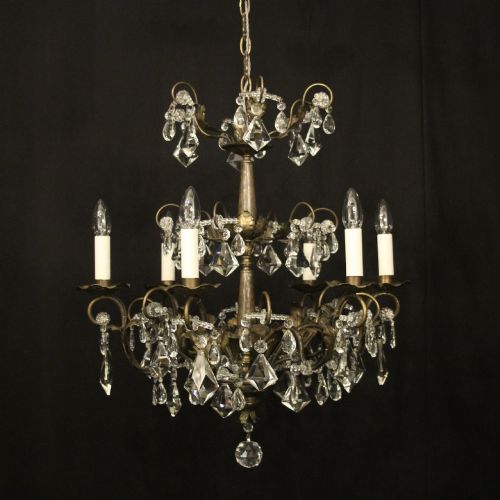
Makers and manufacturers during these periods utilised diverse configurations, ranging from single light fixtures up to grand multi-armed arrangements holding fifteen lights. The proportions vary from compact twelve-inch bag chandeliers to multi-tiered architectural centerpieces.
Materials and construction methods
These lighting fixtures rely on combinations of brass, bronze, gilt metal, and silvered metal to form the structural frames and arms. Metal components are frequently gilded or cast to support the weight of the hanging glass elements.
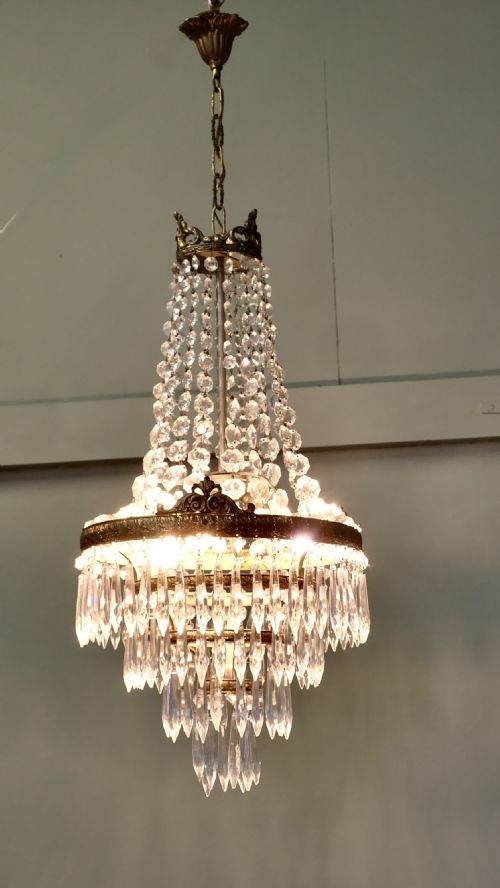
Cut glass and crystal glass form the signature drops, beads, and tent structures that refract the illumination. Artisans suspended these elements from the metal armatures using wire links and pins, creating cascading waterfall and tent profiles.
Assessing quality and craftsmanship
The standard of a piece rests upon the clarity and cutting of the crystal and glass drops. Finer examples feature hand-cut facets that catch and disperse light sharply, whereas simpler variants use moulded glass components.
Metalwork execution distinguishes finer workshops from standard production. Cast bronze and heavily gilded brass frames with detailed chasing indicate superior craftsmanship compared to plain stamped metal alternatives.
The Classic Drop Chandelier Glossary
- Tent and waterfall
- A specific configuration where upper glass beads form a conical tent shape that flows down into a cascading waterfall of crystal drops. This style gained particular prominence during the Empire period.
- Maria Theresa chandelier
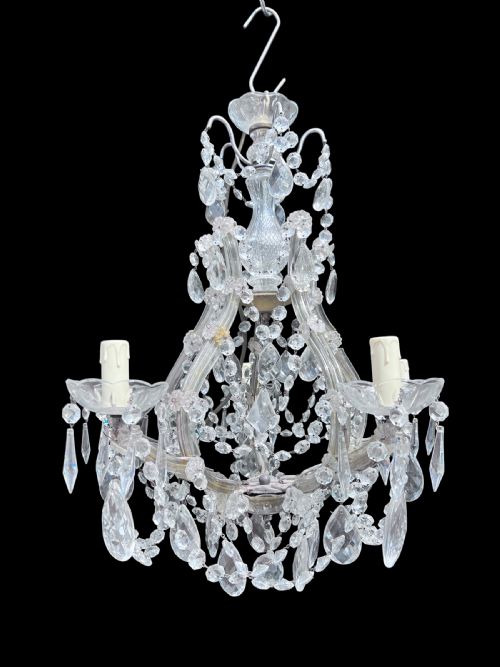
- A flat metal arm design, often associated with Austrian and Italian manufacture, where the metal framework is entirely covered with glass plaques and rosettes. This style developed in honour of the eighteenth-century Empress.
- Bag chandelier
- A compact lighting form featuring a rounded lower basket or bag constructed from rows of strung crystal beads. They fit particularly well in rooms with lower ceiling heights.
- Gilt metal
- A base metal treated with a thin layer of gold leaf or gilt wash to simulate solid gold. It provides a bright, reflective finish to the chandelier frame.
- Cut glass
- Glass that has been shaped and faceted on a wheel to create sharp geometric patterns. These cuts enhance the refractive qualities of the chandelier.
Classic Drop Chandelier: Frequently Asked Questions
How do I clean a crystal chandelier?
Cleaning requires patience and a gentle touch, using a specialist glass cleaner applied with a soft cloth rather than submerging the frame.
Techniques vary depending on whether the drops are removed individually or cleaned in situ on the ceiling.
What ceiling height do I need?
These fixtures require adequate vertical clearance so that the lowest hanging crystal drop clears head height in a walkway or sits properly above furniture.
Sizing options range from compact twelve-inch bag fixtures to multi-tiered installations spanning several feet.
How do I identify an eighteenth-century piece?
Early pieces from the eighteenth century typically exhibit hand-blown glass components, simpler iron or brass armatures, and hand-cut rock crystal or lead glass.
Later nineteenth and twentieth-century interpretations introduce machine-cut crystals and standardised cast brass frames.