


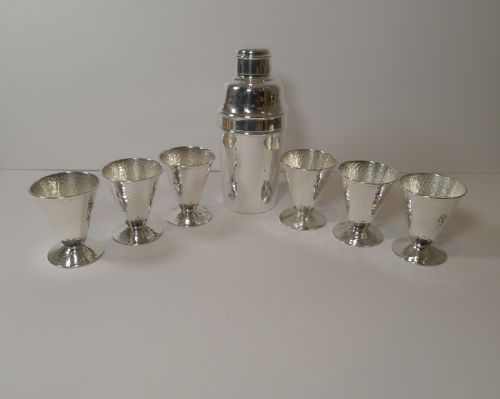

Vintage Glass Drinkware Set
A vintage glass drinkware set brings distinct period character to entertaining, ranging from delicate Edwardian cordials to bold Art Deco designs.
Vintage Glass Drinkware Set
A vintage glass drinkware set comprises coordinated vessels intended for serving and enjoying beverages, spanning forms from punch bowl sets to cordial glasses. These collections originate across several decades, capturing the distinct aesthetic shifts from late Victorian gatherings to the geometric lines of the 1930s.
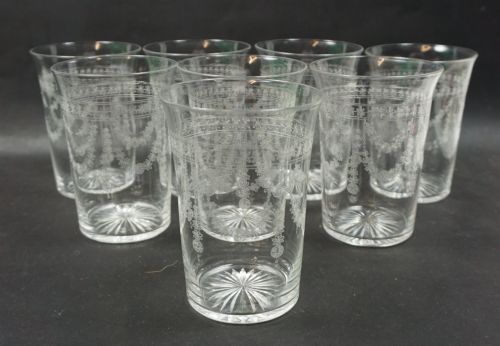
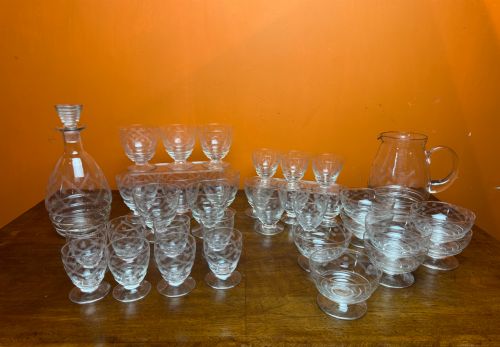
The versions most commonly met on this page include matching sets of tumblers, wine glasses, and decanter collections decorated with cut crystal or acid etching. Buyers encounter both English table service items and continental European creations from periods such as the Edwardian era and the Art Deco movement.
How they were made
Makers utilised clear glass, crystal glass, and lead crystal, shaping the material through blowing and heavy moulding techniques. Artisans then applied decoration by hand, utilising acid etching and precise cutting to create intricate patterns across the surface of tumblers and decanters.
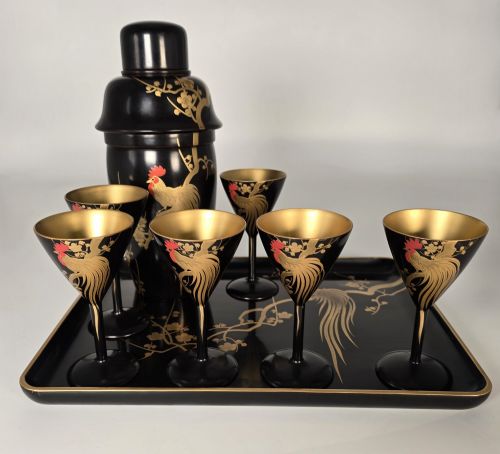
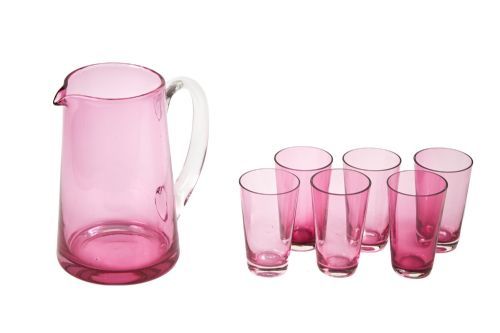
Certain pieces feature specialised coloration, such as cranberry glass achieved through the addition of gold chloride during manufacture. Other sets incorporate supplementary materials, pairing glass components with wood, lacquer, and gold leaf details.
What varies in quality
Quality in these drinking sets depends upon the crispness of the cut or etched decoration and the weight of the material itself. Heavier crystal glass and deep, sharply defined wheel-cut patterns denote a higher standard of manufacture compared to lighter, simpler press-moulded alternatives.
The consistency of the set across all matching pieces also dictates overall merit, particularly when evaluating larger suites of drinking glasses. Greater uniformity in colour tone, such as the rich saturation of cranberry glass, distinguishes superior production.
The Vintage Glass Drinkware Set Glossary
- Acid etched
- A decoration technique where acid eats into exposed glass areas to form frosted or textured patterns. This method allowed makers to achieve intricate floral or geometric designs.
- Cranberry glass
- A rich pinkish-red glass produced by adding gold to the molten batch. It gained popularity during the Victorian and Edwardian periods for decorative tableware.
- Lead crystal
- Glass containing metal oxide that increases weight, brilliance, and refractive index. This material permits deeper cutting without losing structural integrity.
- Tumbler
- A flat-bottomed drinking glass without a stem or handle. These pieces often feature heavy cut decoration for stability and grip.
- Punch set
- A large serving bowl accompanied by matching cups for communal drinks. These sets frequently occupy a central role on a sideboard during formal gatherings.
Vintage Glass Drinkware Set: Frequently Asked Questions
How do I clean vintage glassware safely?
Wash these pieces by hand using warm water and a mild detergent. Avoid sudden temperature changes to prevent thermal shock in older glass.
Place a towel at the bottom of the sink to cushion heavy crystal tumblers and decanters during washing.
Are these sets safe for daily use?
Most vintage drinking vessels function adequately for regular service, provided they are handled with care. Examine each glass for structural stability before serving beverages.
Hand washing remains essential to preserve delicate cut decoration, gold leaf, and acid-etched details over time.
What defines Art Deco glassware?
Art Deco pieces from the 1930s feature geometric motifs, sharp angles, and stylised symmetry. Riihimaki and French suites often showcase these streamlined aesthetic priorities.
This style contrasts sharply with the ornate floral curves typical of earlier Victorian and Edwardian manufacture.
How do I identify cranberry glass?
Cranberry glass displays a distinctive translucent pinkish-red hue derived from gold content during melting. Victorian and Edwardian wine glasses and jugs frequently utilise this vibrant coloration.
Under closer inspection, the depth of colour remains uniform across the body of the glass.