



Etched Crystal Decanter
These etched crystal decanter pieces combine cut glass and engraved decoration from Victorian and later periods, offering both utility and traditional table elegance.
Etched Crystal Decanter
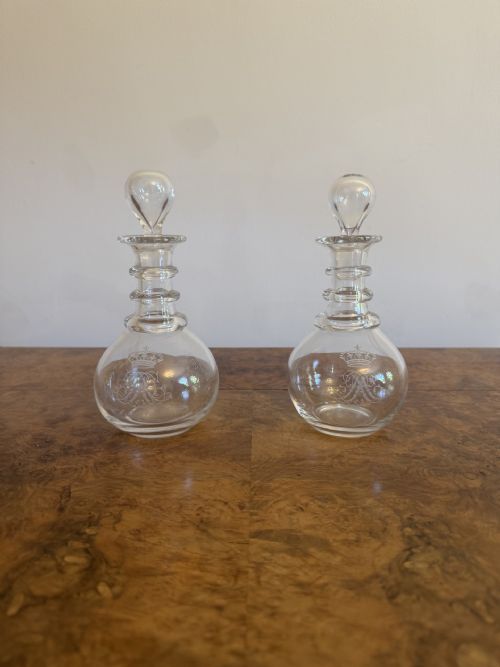
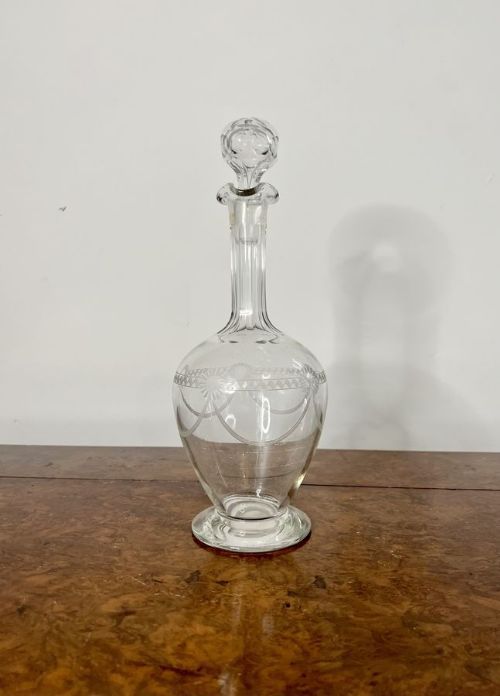
An etched crystal decanter serves to hold and pour wine or spirits, appearing primarily in Victorian and Edwardian forms alongside later Art Deco sets. These vessels range from tall cut glass decanters to claret jugs and hourglass shapes fitted with matching stoppers.
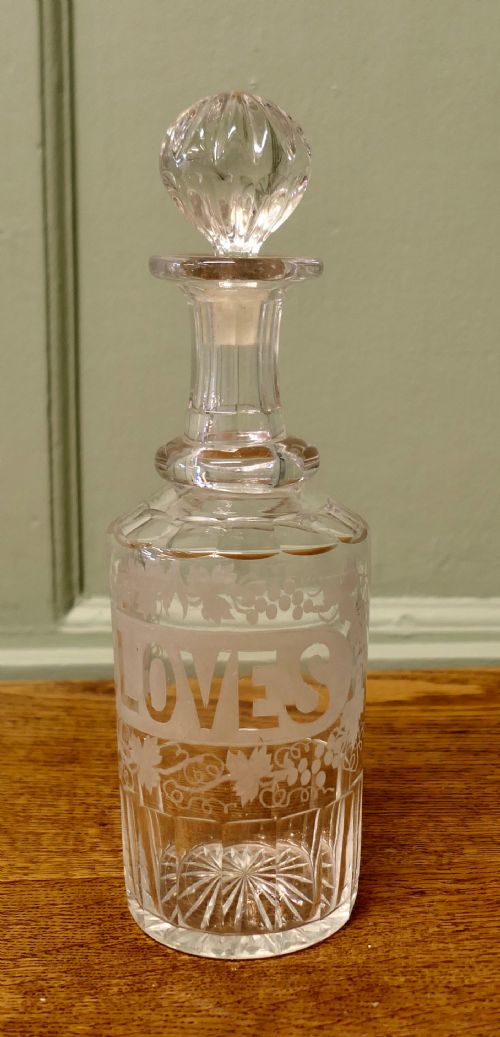
Buyers meet sturdy nineteenth-century examples decorated with grape and vine motifs alongside matching sets from the 1930s. The selection spans straightforward table jugs to elaborate pieces featuring silver-plate mounts or collars.
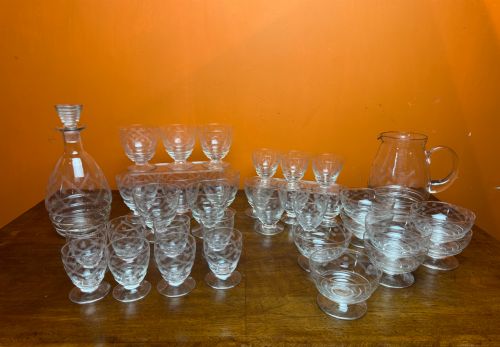
Originating largely from British and continental workshops, these items include specialised hock decanters and complete sets paired with drinking glasses. Their forms reflect the changing dining habits and social rituals of the nineteenth and twentieth centuries.
How they were made
Glassmakers shaped clear lead crystal through blowing and cutting techniques before applying surface decoration. Artisans then used wheel-engraving or chemical etching to create botanical and geometric patterns across the body.
Metalworkers added silver plate or 950 silver collars and mounts to secure handles and lips on specific claret jugs and wine ewers. These metal elements were typically cast and chased separately before being fitted to the glass body.
Listings feature clear glass, lead crystal, and silver plate across Victorian, Edwardian, and Art Deco periods.
What varies in quality
Depth and clarity in the wheel-cut or etched motifs separate standard production items from finer presentation pieces. Sharp, clean facets on the glass body and well-defined botanical details indicate superior craftsmanship.
The weight of the lead crystal and the matching quality of original stoppers or associated silver-plate mounts determine the overall standard. Pieces retaining their coordinated glass sets demonstrate greater preservation.
Asprey and Co. Ltd·Orfèvrerie Produx Saint Hilaire
The Etched Crystal Decanter Glossary
- Lead crystal
- Glass containing metal oxide to increase weight, brilliance, and refractive index. This material allows for deeper cutting and clearer engraving than standard soda-lime glass.
- Claret jug
- A specialised pouring vessel designed specifically for serving red wine. These often feature hinged metal lids and mounts.
- Wheel engraving
- A decoration technique where a glass vessel is held against rotating abrasive wheels of various sizes. This method produces crisp lines and deep hollows in the surface.
- Hock decanter
- A tall, slender vessel traditionally used for white German wine. They frequently appear in coloured glass over clear crystal.
- Stopper
- The shaped glass plug designed to seal the neck of the decanter. Original matching stoppers maintain the stylistic integrity of the piece.
Etched Crystal Decanter: Frequently Asked Questions
How do I clean an old decanter?
Residue inside can be gently loosened using warm water and non-abrasive cleaning beads rather than harsh detergents.
After washing, rinse thoroughly and allow the vessel to dry completely upside down on a soft mat.
Are these decanters safe for modern use?
Most glass and crystal vessels remain suitable for serving wine and spirits during contemporary dining.
Inspect the interior first to ensure no stubborn staining or cloudiness affects the liquid.
How can I date a Victorian decanter?
Examine the base for a polished pontil mark and study the style of the hand-engraved motifs.
Heavy lead weight and deep-cut geometric patterns typically point toward nineteenth-century production methods.
What is the difference between a decanter and a claret jug?
Decanters generally feature a fitted glass stopper designed to seal spirits or fortified wine.
Claret jugs incorporate a hinged metal handle and pourer specifically built for serving table wine.