



Vintage Glass Chimney Lamp
These vintage glass chimney lamp pieces bring period warmth and steady illumination to a room, offering functional nineteenth and early twentieth century design.
Vintage Glass Chimney Lamp
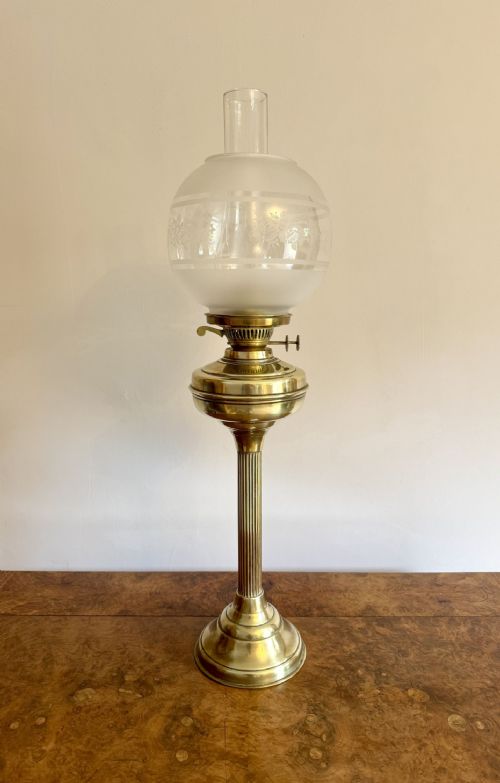
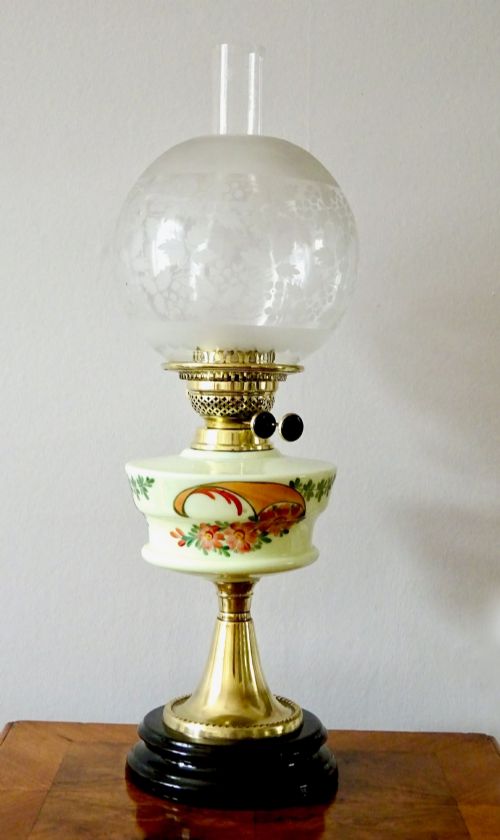
A vintage glass chimney lamp is typically encountered as an oil lamp, table lamp or pair of candlesticks fitted with a glass chimney to protect the flame. These lighting pieces span the Victorian, Edwardian and Art Nouveau periods, with dates ranging from the eighteen sixties through to the nineteen thirties.
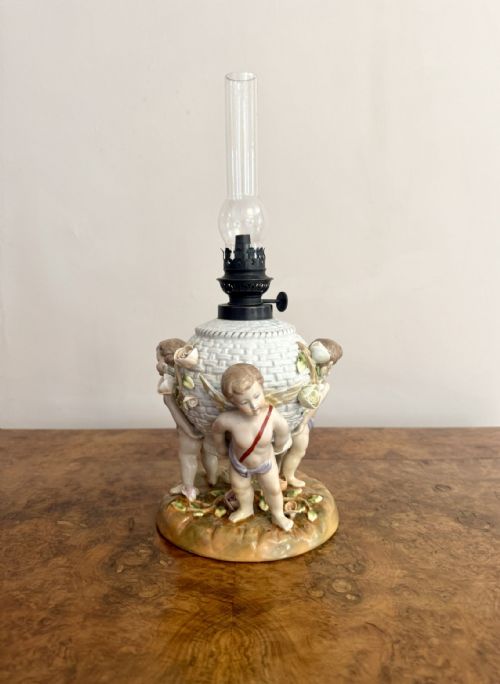
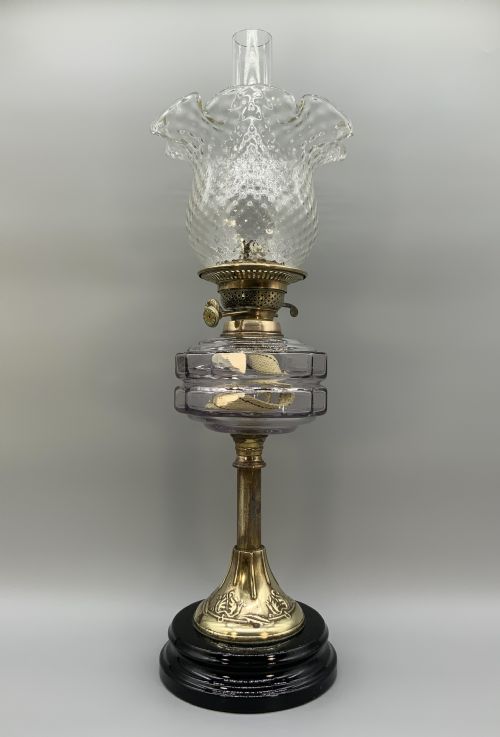
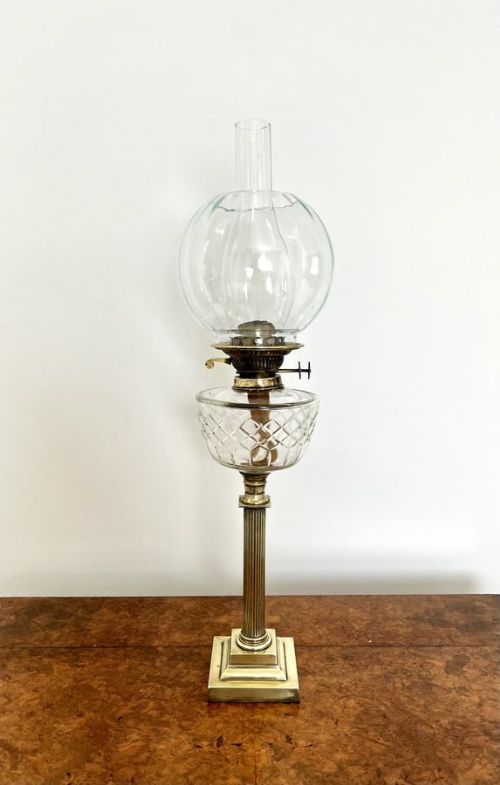
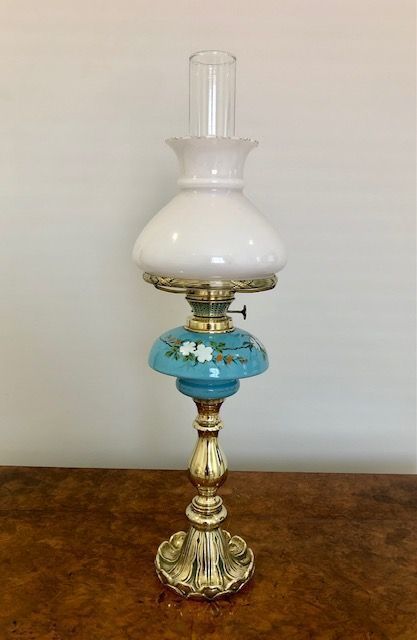
The most common form on this page is the brass and glass oil lamp, frequently standing on a ceramic or black glass base. Buyers also find porcelain bodies, opaline glass, milk glass, cranberry glass and cut crystal variants alongside terrestrial globe shades and hand-blown shades.
How vintage glass chimney lamp pieces were made
The physical construction of these lamps relies heavily upon cast or spun brass combined with moulded, cut or hand-blown glass and ceramic elements. Metal components provide structural weight and stability, whilst porcelain or opaline bodies introduce colour and ornamental detail.
Glass chimneys and shades are formed through blowing and pressing techniques, creating transparent, milk, cranberry or crystal housings designed to withstand heat. Makers integrated these materials securely, often pairing silver plated mounts with ceramic reservoirs.
Materials recorded across these items include brass, opaline glass, cranberry glass, cut crystal and porcelain.
What varies in quality in vintage glass chimney lamp pieces
Quality differences lie in the substance of the materials and the refinement of the decorative execution. Fine examples display heavier brass casting, intricate cut glass detailing, and hand-painted porcelain rather than standard production finishes.
The proportional balance between the heavy base, the glass reservoir and the delicate chimney dictates the success of the composition. Superior pieces retain matching original shades and well-defined period styling, such as Art Nouveau floral motifs or Rococo Revival curves.
Messengers·Harrods·Sitzendorf
The Vintage Glass Chimney Lamp Glossary
- Chimney
- A tall, narrow glass tube placed over the burner of an oil lamp to steady the flame and draw air. It protects the light source and ensures clean combustion.
- Opaline glass
- An opaque or semi-translucent glass, often pale in colour, used extensively for lamp shades and bodies during the Victorian era. It diffuses light with a soft glow.
- Cranberry glass
- A rich pink or red transparent glass coloured with gold chloride, popular in nineteenth-century decorative lighting. It yields deep red tones when lit.
- Reservoir
- The enclosed container that holds the oil or paraffin beneath the burner mechanism. It is frequently made of glass, ceramic or brass.
- Art Nouveau
- A stylistic movement characterised by flowing, organic lines and floral motifs, seen on lamps dating around nineteen hundred.
Vintage Glass Chimney Lamp: Frequently Asked Questions
How do I clean a glass chimney?
Wash the glass chimney gently in warm soapy water using a soft cloth to remove soot and dust.
Rinse thoroughly and dry completely with a lint-free towel before placing it back onto the lamp.
Can these oil lamps still burn oil?
Many period oil lamps retain their original burners and mechanisms, though modern users often treat them primarily as decorative objects.
If you plan to burn oil, check the wick condition and burner operation carefully before lighting.
Where should I place a table oil lamp?
Position the lamp on a stable, level surface away from drafts, foot traffic and flammable materials.
They sit well on side tables, sideboards or desks where their height and glass elements can catch the light.
How do I distinguish Victorian from Edwardian lamps?
Victorian lamps often feature heavier ornamentation, rich cranberry glass or elaborate brass castings with Rococo Revival influences.
Edwardian and later examples tend towards simpler, taller silhouettes and cleaner lines associated with the nineteen hundreds.