




Vintage Giltwood Chair
A vintage giltwood chair brings unmistakable French salon elegance to a room, offering gilded timber framing and period upholstery.
Vintage Giltwood Chair
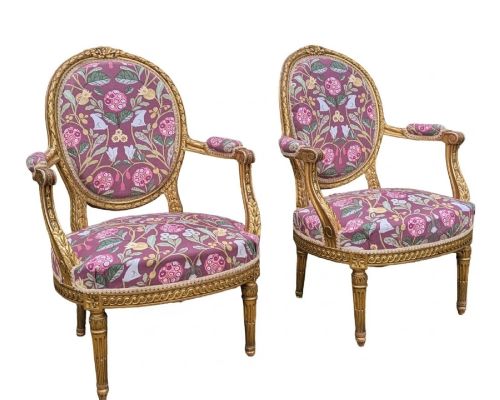
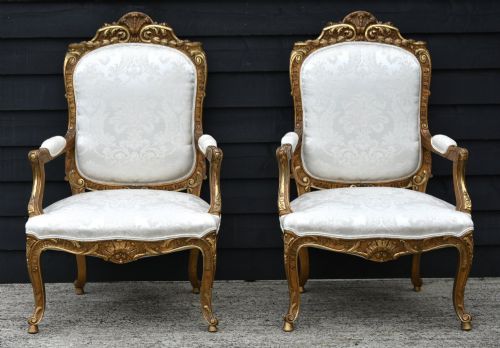
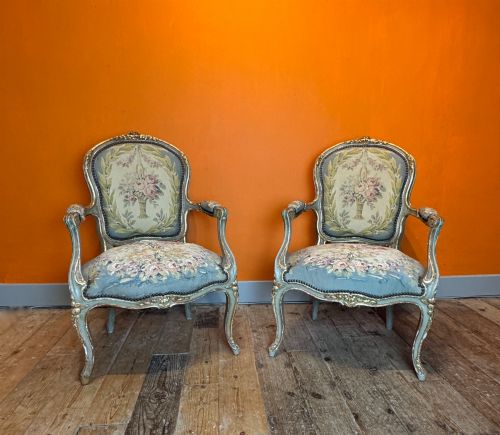
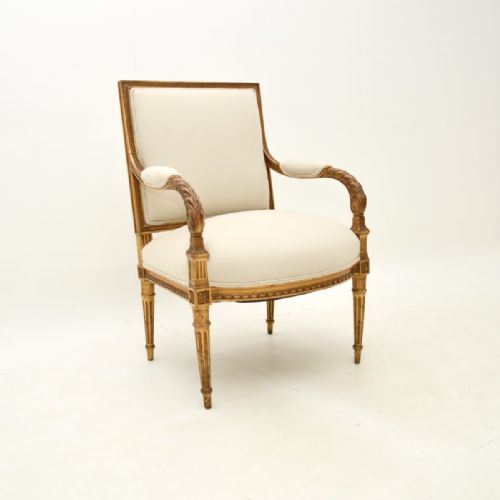
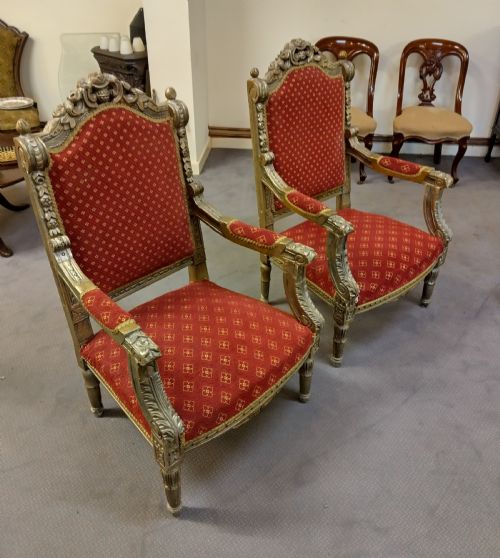
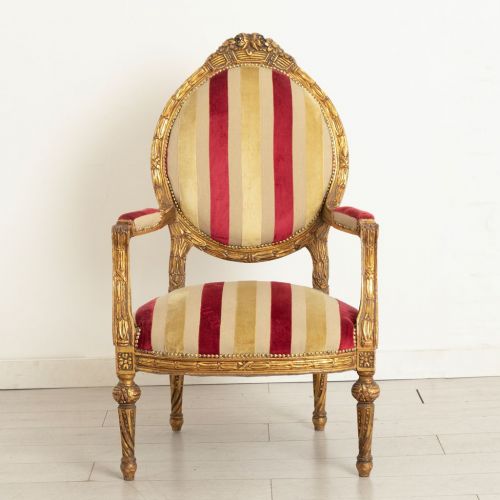
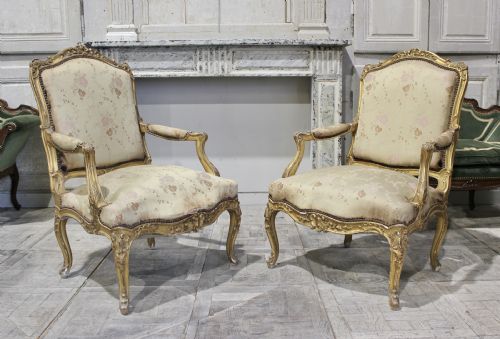
When searching for a vintage giltwood chair, buyers encounter pieces primarily originating from the nineteenth and early twentieth centuries, drawing heavily on French aesthetic traditions. The selections on this page are dominated by nineteenth century examples, particularly armchairs and salon chairs built in the Louis XVI style and Louis XV revival taste.
The inventory encompasses open armchairs, bergere chairs, side chairs, and occasional seating reflecting Continental workshops. Makers and artisans of these periods frequently employed French chateau design motifs, resulting in heavily decorated framework designed for formal reception rooms and boudoirs.
Alongside standard seating, the listings incorporate related seating forms such as day beds, settees, and stools displaying the same gold leaf or painted gilt finishes. These items represent historical revivals of earlier court styles adapted for Victorian and Edwardian domestic interiors.
How they were made
Construction relies upon timber frameworks, frequently carved from wood or walnut before receiving a layer of gesso and gold leaf or gold paint. Artisans applied thin sheets of metal leaf or specialised paint finishes to achieve the characteristic bright or antiqued surface sheen.
Upholstery techniques involve traditional stuffing materials paired with decorative textiles such as silk, velvet, tapestry, and damask fabric. Frames often feature detailed hand carvings showcasing classical scrollwork, floral motifs, and fluted legs characteristic of revivalist cabinetmaking.
Vintage Giltwood Chair Retail Price Guide 2026
Typical asking prices for vintage giltwood chair among the pieces listed under this phrase on Sellingantiques today, from the lower quarter to the upper quarter. They describe what is for sale here now, not the wider market.
One inquisitive piece even brings a silk parrot design straight into the boudoir, proving that nineteenth-century salons loved a feathered companion.
What varies in quality
The standard of a giltwood chair rests primarily on the depth and crispness of the wood carving rather than the mere presence of gold finish. Superior examples exhibit sharply defined hand-carved details along the crest rails and arms, whereas lesser pieces display softer, moulded compositions.
The integrity of the underlying timber frame and the authenticity of the gilding technique also dictate value. Pieces retaining their original gold leaf layer demonstrate higher craftsmanship compared to later surface repainting, while the retention of period-appropriate upholstery fabric adds significant contextual integrity.
The Vintage Giltwood Chair Glossary
- Giltwood
- Timber furniture coated with gold leaf or gold paint over a prepared gesso base. This decorative surface gives the wood a rich, metallic luminescence prized in formal interior design.
- Fauteuil
- An open-arm armchair with upholstered back and seat, featuring exposed wooden armrests. Originating in French domestic architecture, it is a hallmark of formal salon seating.
- Bergere
- An enclosed upholstered armchair featuring solid sides filled with upholstery or cane work. It provides a deeper and more enclosed seat than the standard open armchair.
- Louis XVI Style
- A neoclassical design movement characterised by straight lines, symmetrical geometry, and classical motifs like fluted columns. It stands in direct contrast to the curved asymmetries of earlier rococo work.
- Damask Fabric
- A reversible figured textile woven on a jacquard loom, featuring patterns formed by contrasting warp and weft threads. It is frequently selected for period upholstery restoration.
Vintage Giltwood Chair: Frequently Asked Questions
How do I identify a Louis XVI style chair?
Louis XVI style seating is distinguished by straight, tapering fluted legs, rectangular or medallion-shaped backs, and neoclassical geometric restraint. These design elements mark a distinct departure from the sweeping curves of earlier periods.
Look closely at the carving on the frame joints, where you will frequently find classical ribbon twists, acanthus leaves, or beaded detailing. The overall silhouette remains orderly and architectural rather than exuberant.
Where should I place a giltwood chair at home?
These decorative chairs suit low-traffic areas such as a formal drawing room, a bedroom corner, or a quiet reading nook. Their metallic finish catches natural light, making them effective focal points against neutral wall colours.
Because the gilded surfaces and delicate textiles benefit from gentle environments, avoid placing them in direct, harsh sunlight or damp spaces. Pairing a single armchair with a small side table creates a distinct conversational grouping.
Are these chairs comfortable for daily use?
Period salon chairs were designed for upright posture and formal entertaining rather than relaxed lounging. The seats are typically firmer and shallower than modern living room armchairs.
While perfectly suitable for occasional sitting, they function primarily as statement furniture pieces that prioritize visual elegance and historical craftsmanship over deep-cushioned comfort.