



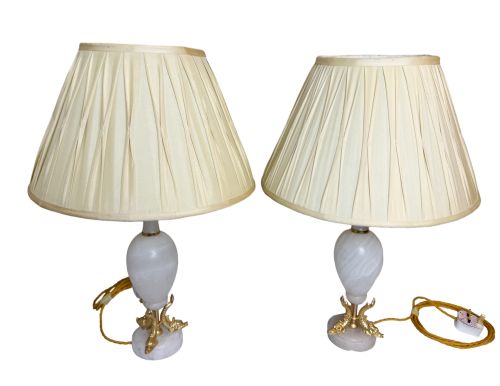
Vintage Gilt Table Lamp
A vintage gilt table lamp brings warmth and metallic lustre to a room, drawing the eye with rich gilding and period forms.
Vintage Gilt Table Lamp
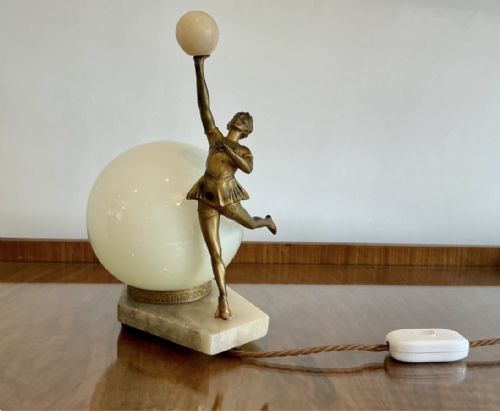
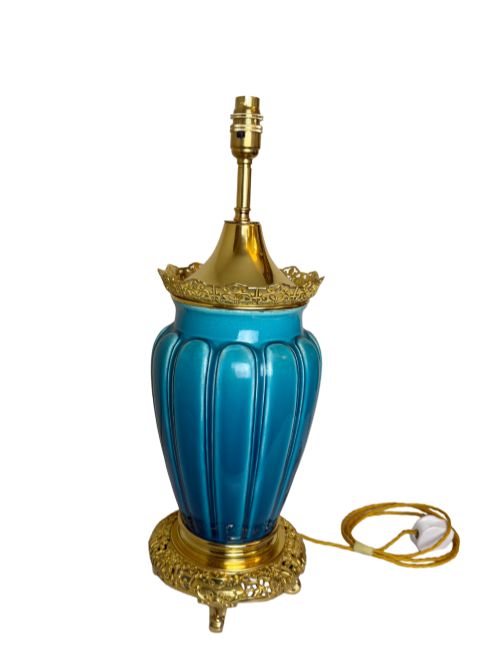
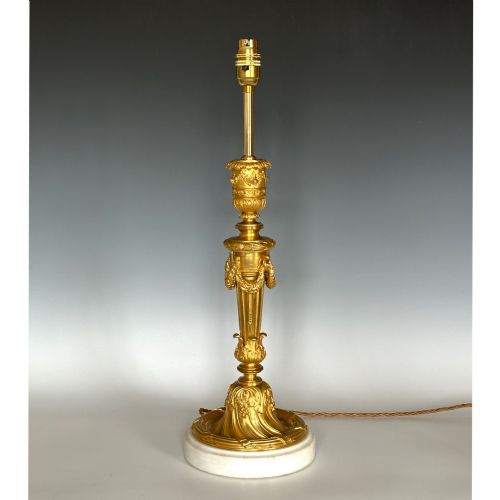
A vintage gilt table lamp is typically a decorative lighting fixture finished with gold leaf, ormolu, or gilt metal, often adapted from earlier oil lamps, vases, or candlesticks. These pieces range from the nineteenth century into the art deco period, reflecting diverse historical revivals.
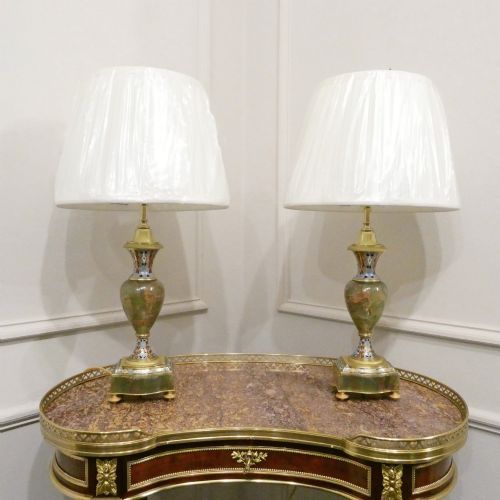
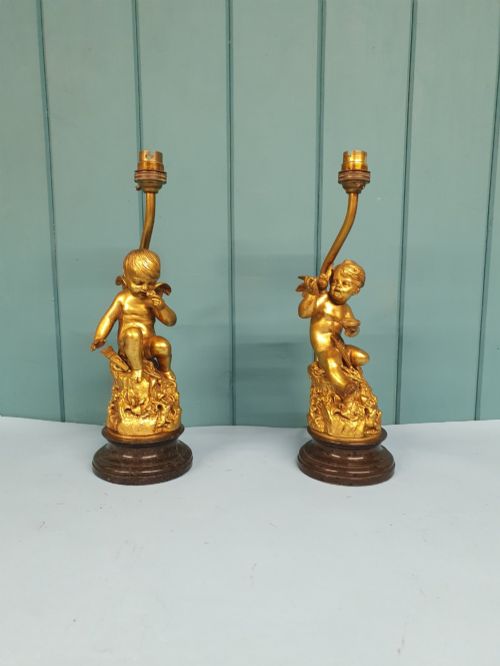
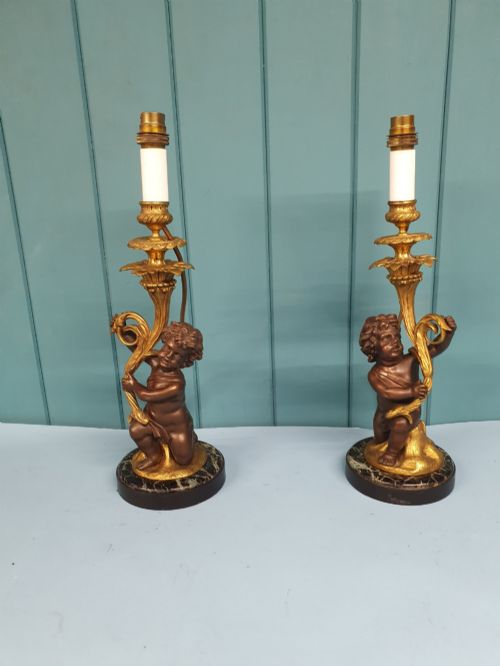
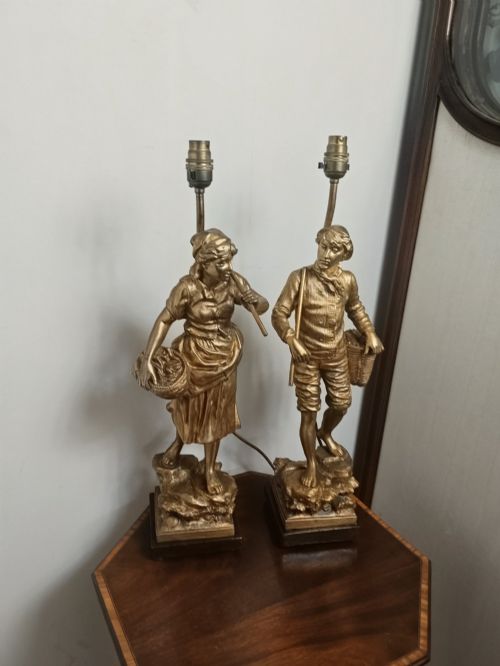
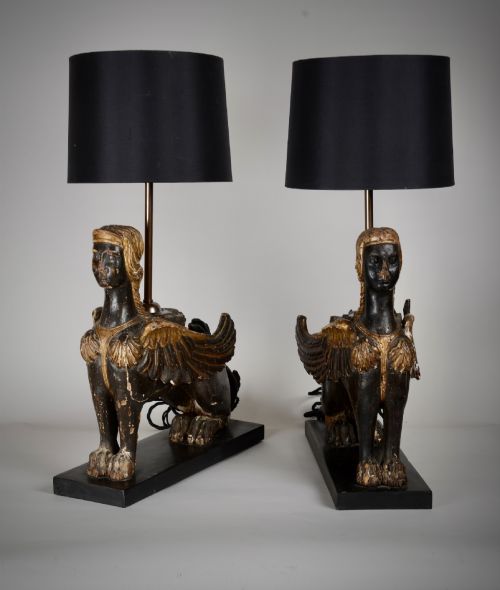
The versions most frequently met on this page include French and Italian examples from around nineteen hundred, alongside English pieces from the Victorian era. Many take the form of urns, columns, or figural compositions involving cherubs and mythical beasts.
Makers and converters utilised porcelain, marble, onyx, and crystal bodies, mounting them with gilded bronze and brass trim. Buyers encounter both single statement pieces and matched pairs intended for side tables and mantlepieces.
How they were made
Metal components were cast in brass, bronze, or gilt metal before receiving surface treatments like fire-gilding or applied ormolu. Artisans combined these metallic elements with turned marble, carved alabaster, and glazed ceramic bases.
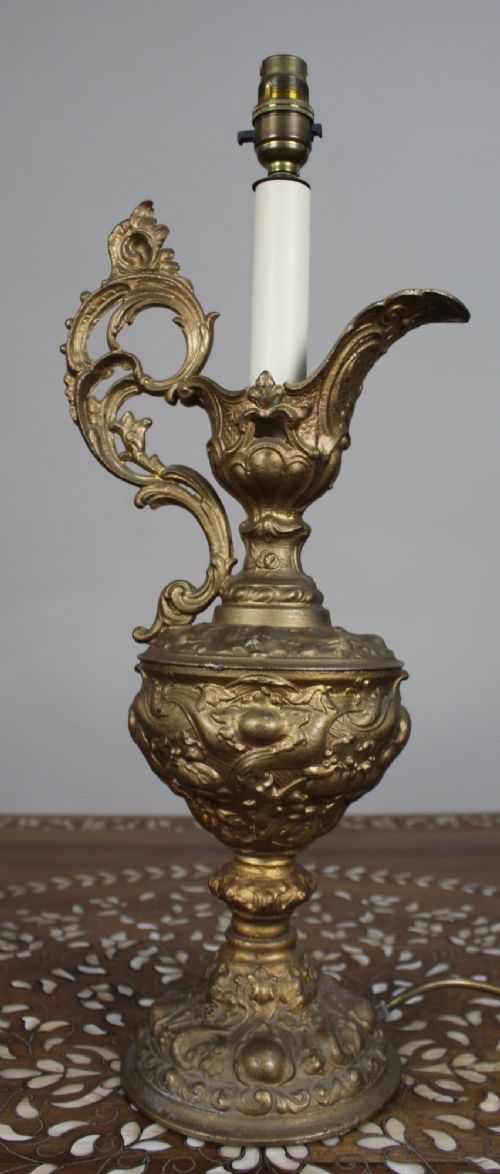
Many items originated as oil lamps, ewers, or vases before conversion into electric table lamps during later decades. Fabric shades and crystal drops frequently accompanied these assemblies to diffuse light across gilded surfaces.
Recorded periods stretch from the eighteenth century through the Victorian era and into art deco.
What varies in quality
Quality rests in the crispness of the bronze casting and the depth of the original gilding, where hand-chased details reveal the skill of the artisan. Mass-produced later items lack the sharp relief and tactile weight found in nineteenth-century French work.
The selection of secondary materials also separates standard production from superior pieces. Fine examples integrate genuine rouge or verde marble, heavy onyx, and hand-painted porcelain rather than simpler woods or plain metals.
E Rousseau·Mc Gary·François Linke
The Vintage Gilt Table Lamp Glossary
- Ormolu
- Gilded bronze, where a mercury-gilding technique creates a durable, luminous metallic finish. This process was widely used on French decorative objects during the eighteenth and nineteenth centuries.
- Champlevé
- An enamelling technique where troughs are dug into a metal surface and filled with vitreous paste before firing. It appears frequently on decorative lamp bases.
- Cloisonné
- A style of decoration where metal wire is soldered to a base to create compartments filled with enamel. These panels often form the central body of Asian export lamps.
- Satsuma
- A type of Japanese earthenware featuring a crackled ivory glaze decorated with enamels and gilt. Many genuine vases from this tradition underwent conversion into lamps.
Vintage Gilt Table Lamp: Frequently Asked Questions
How do I style a vintage gilt table lamp?
Place a gilt lamp on a dark wood side table or a marble surface to let the metallic finish reflect light against contrasting textures. They suit both traditional drawing rooms and eclectic modern interiors as focal lighting points.
Pair matching lamps on a sideboard or use a single figural piece on a desk. Keep surrounding decor simple to allow the carved details and gilding to stand out.
Are these lamps converted from older objects?
Many period pieces began life as oil lamps, porcelain vases, or bronze urns before receiving electrical fittings in the twentieth century. This practice preserves decorative items by giving them a practical function in modern homes.
Conversion methods vary, so check the wiring while keeping the original mounts and bodies intact. Such pieces bridge historical craftsmanship with contemporary household use.
How do I identify French nineteenth-century pieces?
French work from this era often combines heavy ormolu mounts with rouge marble, onyx, or painted porcelain. Motifs include neoclassical urns, rams' heads, and naturalistic floral designs executed with high precision.
Look for the characteristic weight of cast bronze beneath the gilding. Maker stamps or registry marks occasionally appear on the metal base plates.
What materials are common in these lamps?
The primary metallic materials include brass, gilt bronze, and ormolu, often paired with stone bases like marble, onyx, and alabaster. Ceramic elements such as Satsuma earthenware and Chinese cloisonné also appear frequently.
Fabric and crystal glass contribute to shades and pendant drops. Each material combination defines the regional style and period of the object.