




Vintage Gilt Border Mirror
A vintage gilt border mirror brings warmth and reflective depth to a room, offering the aged brilliance that modern frames cannot replicate.
Vintage Gilt Border Mirror
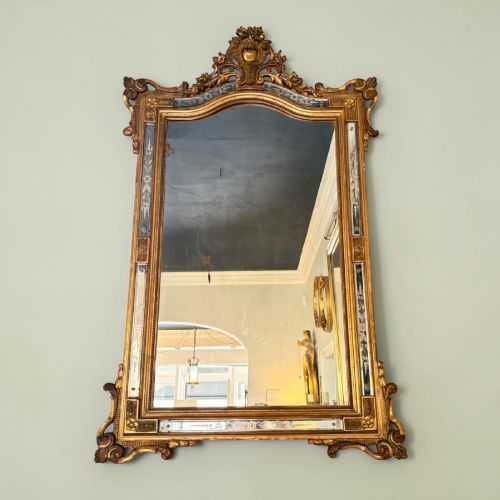
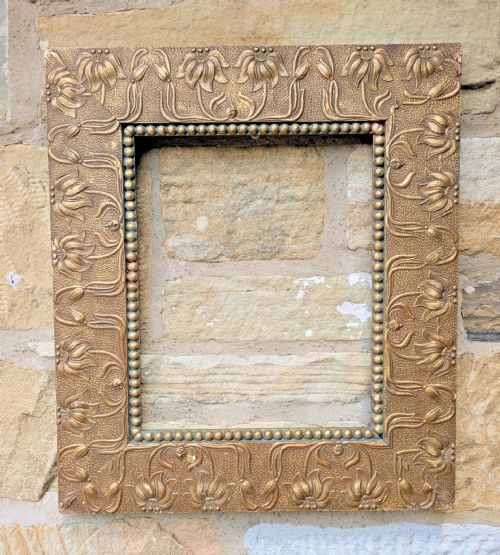
When you search for a vintage gilt border mirror, you encounter reflective pieces framed in gilded wood, gesso, or brass. These items serve as functional wall or dressing accessories that simultaneously act as decorative focal points.
The selections span from the Georgian era through the Victorian period and into the twentieth century. Common forms include wall mirrors, dressing mirrors, and margin-edged panels reflecting French, English, and Italian origins.
You are most likely to meet nineteenth-century gilt mirrors and framed wall glasses on this page. They range from simple rectangular formats to ornate Rococo Revival and Art Nouveau shapes.
How they were made
Makers fashioned the core structures from woods such as mahogany and general timber before applying layers of gesso. Guilders then added delicate gold leaf or gilt finishes to the raised decorative elements.
Glass production involved traditional silvering techniques, sometimes creating margin-edged or wavy edge effects. Artisans incorporated decorative details like rope twists, tapestry panels, and cobalt blue glass borders.
Materials recorded across the inventory include giltwood, mahogany, brass, gesso, and cobalt blue glass.
What varies in quality
The fineness of the gesso work and the crispness of the carving distinguish a superior piece from a standard one. Skilled hands rendered foliage, rope twists, and Rococo motifs with sharp definition rather than soft, muddy relief.
The preservation of the original mercury or silvered glass plate matters significantly. Authentic ageing, such as light foxing, adds character, whereas poor modern replacements alter the historical integrity of the frame.
The Vintage Gilt Border Mirror Glossary
- Giltwood
- Wood that has been coated with gold leaf or a gold-coloured metallic finish. This technique creates a radiant surface that catches interior light.
- Gesso
- A plaster-like mixture applied to wood frames to provide a smooth base for gilding. Artisans mould or carve intricate surface patterns directly into this material.
- Girandole
- A wall mirror featuring attached candle sconces or branch holders. The reflective glass multiplies the flickering candlelight within the room.
- Margin-edged
- A mirror style where a smaller central glass plate is surrounded by angled border strips. This creates a multi-faceted reflective perimeter.
- Parcel-gilt
- An object partially gilded to highlight specific carved details while leaving the underlying wood grain visible elsewhere.
Vintage Gilt Border Mirror: Frequently Asked Questions
How do I hang a heavy giltwood mirror?
Support the weight by anchoring heavy-duty fixings directly into wall studs rather than relying solely on plasterboard. Use sturdy wire or brackets rated well above the actual weight of the frame.
Ensure the hanging point secures evenly to prevent the mirror from shifting or leaning forward over time.
Where should I place a vintage wall mirror?
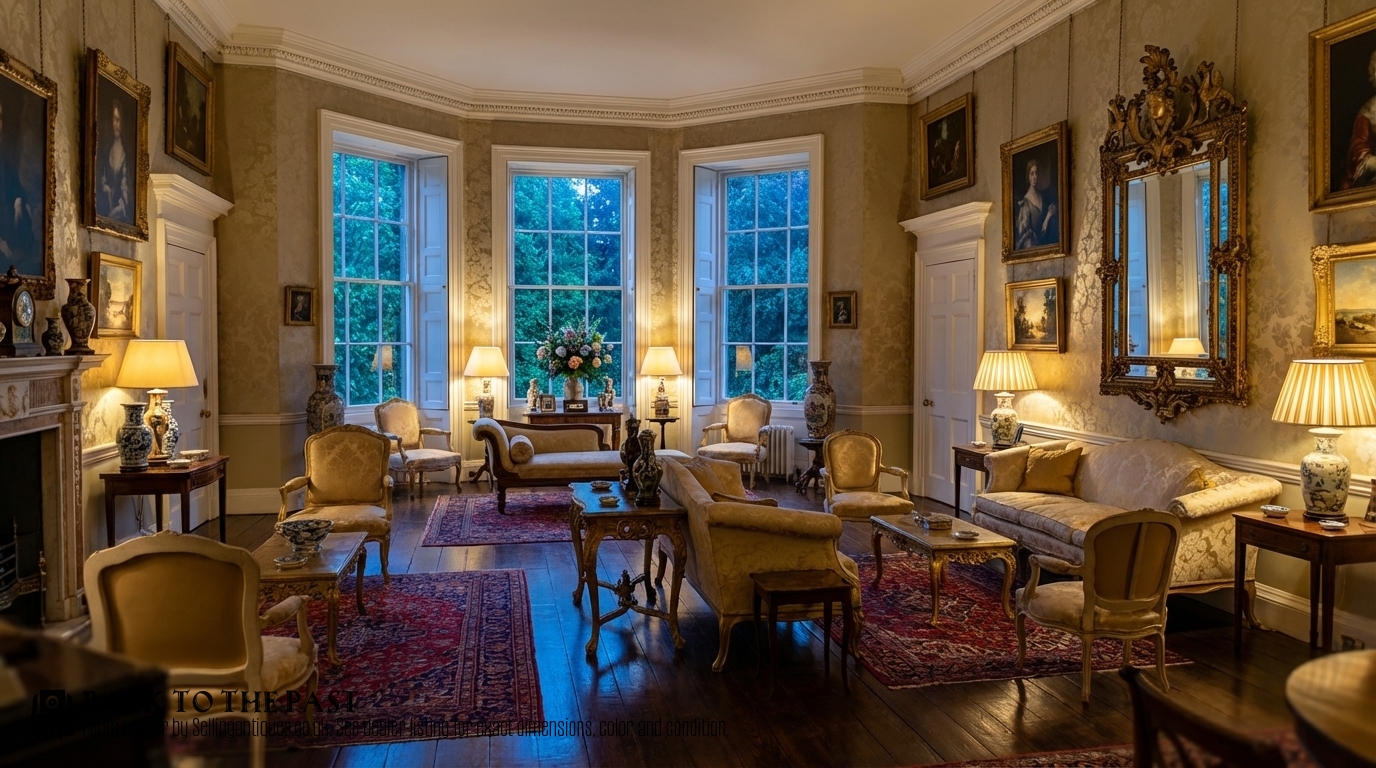
Hang the piece opposite a window to maximise natural light distribution and create the illusion of a larger space. Placing it above a mantelpiece or sideboard also anchors room proportions effectively.
Consider the reflection angle so the glass captures pleasant interior views rather than blank corners.
How do I clean antique mirror glass?
Wipe the glass gently with a soft microfibre cloth slightly dampened with distilled water. Avoid spraying liquid directly onto the surface to prevent moisture seeping behind the silvering.
Keep chemical cleaners away from the gilt borders, as ammonia and harsh solvents strip historical gold leaf and gesso.
How do I date a gilt border mirror?
Examine the construction methods of the timber frame, the composition of the gesso, and the bevel or flatness of the glass plate. Georgian and Victorian pieces often show hand-cut elements and distinct joinery behind the rebate.
Compare the decorative style, such as Art Nouveau curves or Rococo ornamentation, against established period design markers.