
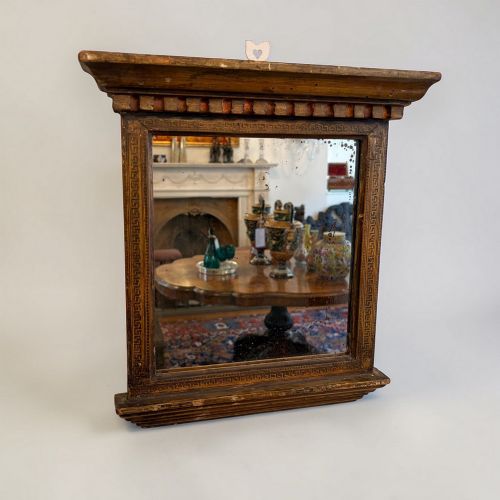
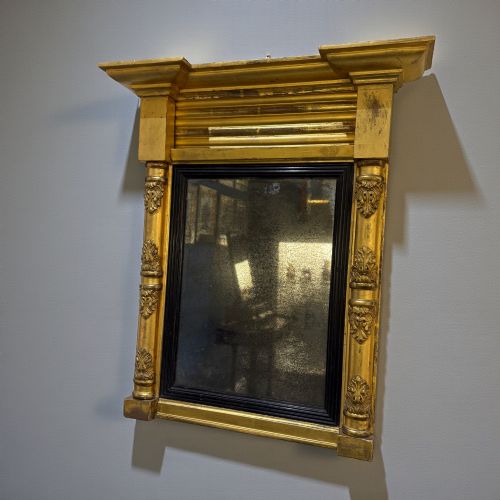
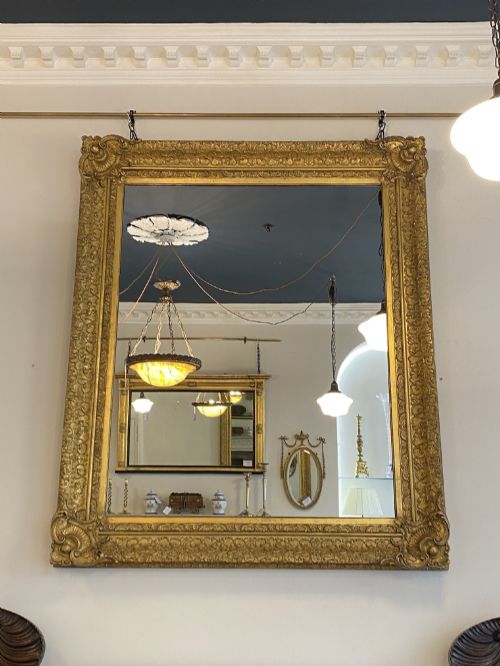
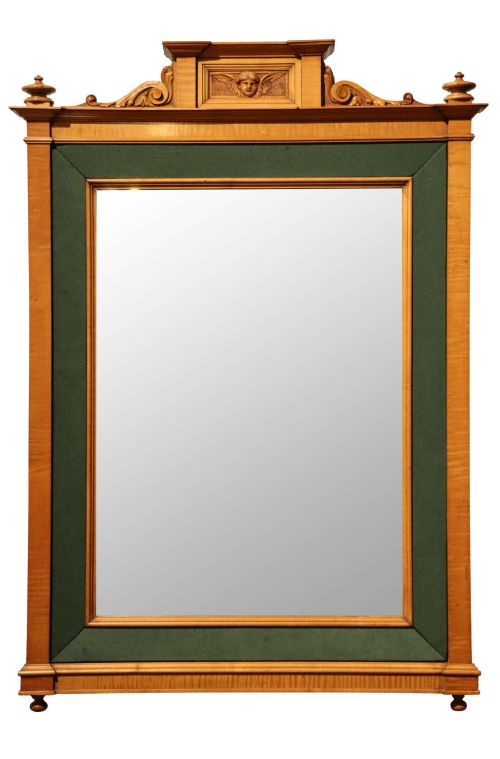
Overmantel Mirror Frame
An overmantel mirror frame brings architectural weight and reflected light to a chimney breast, defining period interiors with substantial scale and ornament.
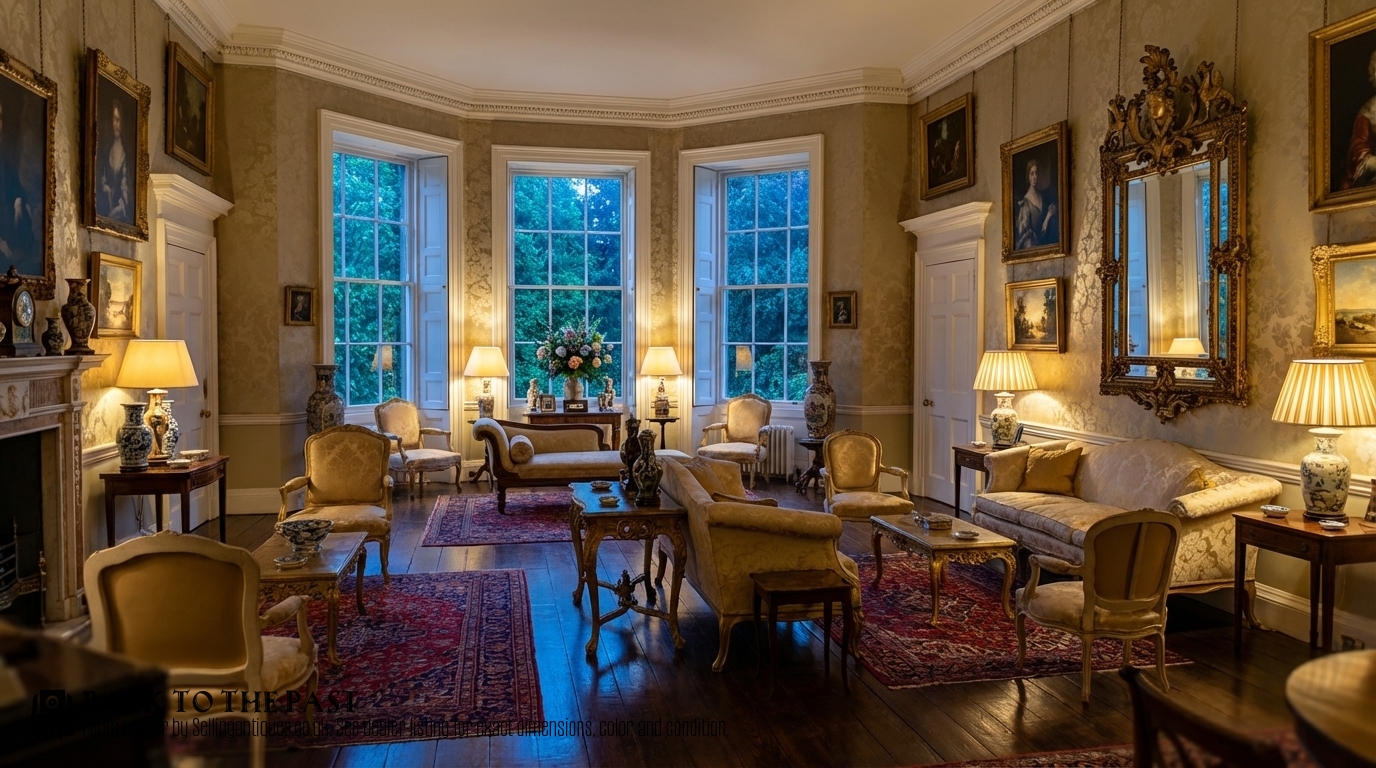
Overmantel Mirror Frame
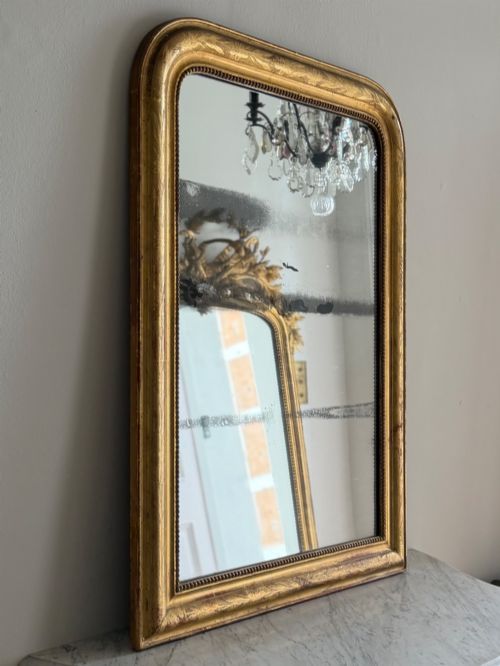
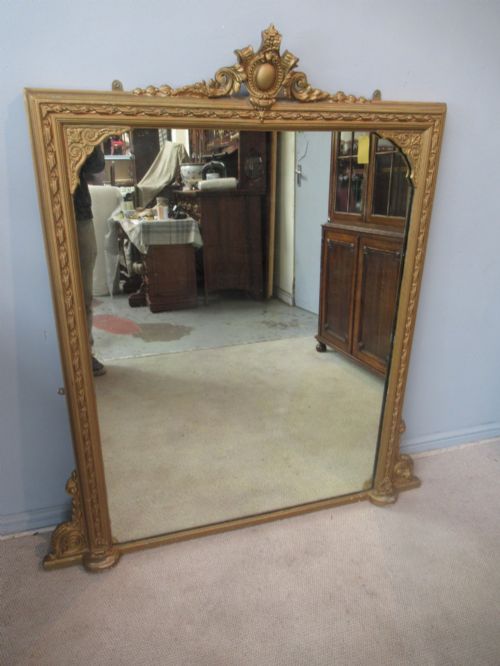
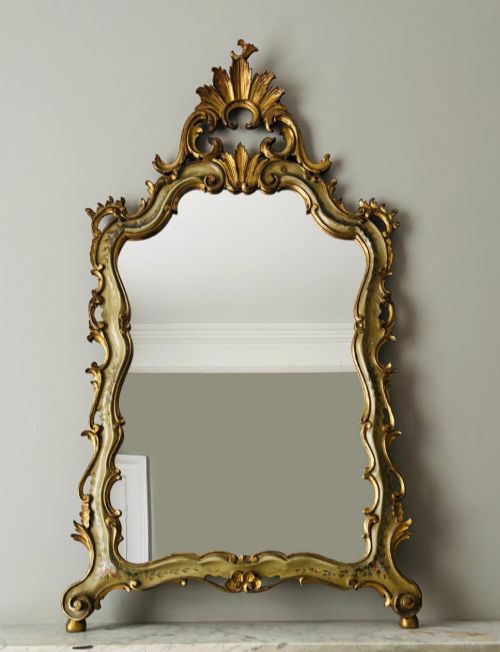
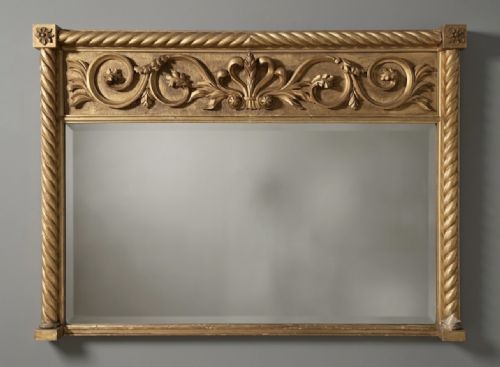
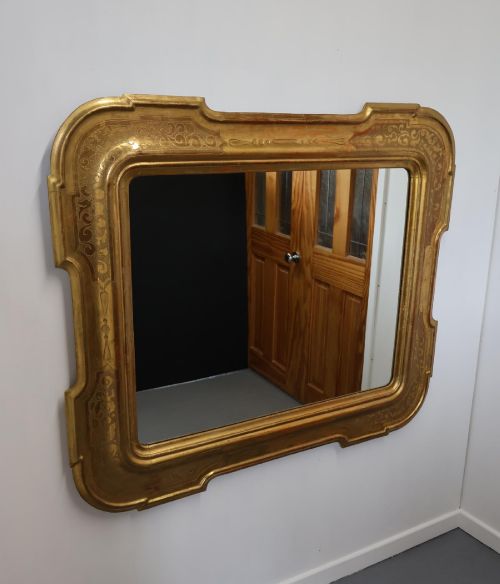
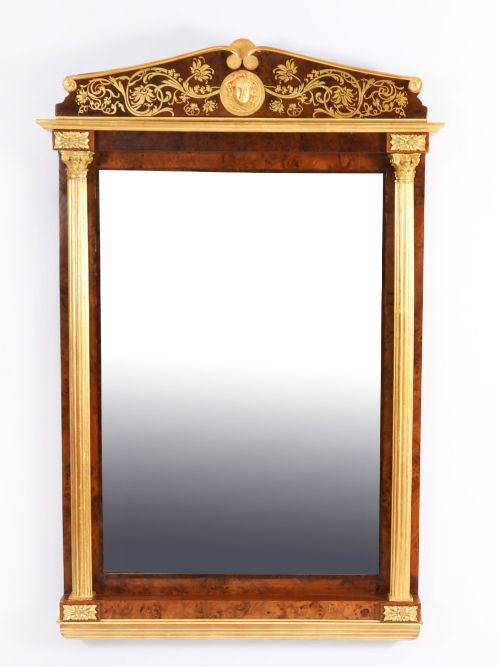
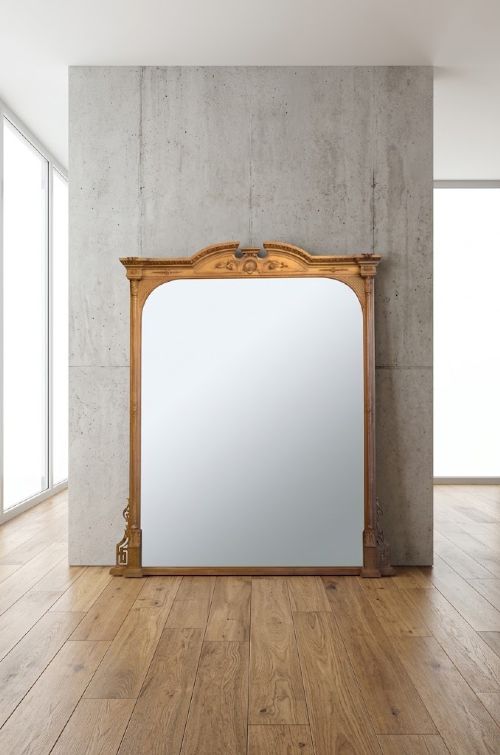
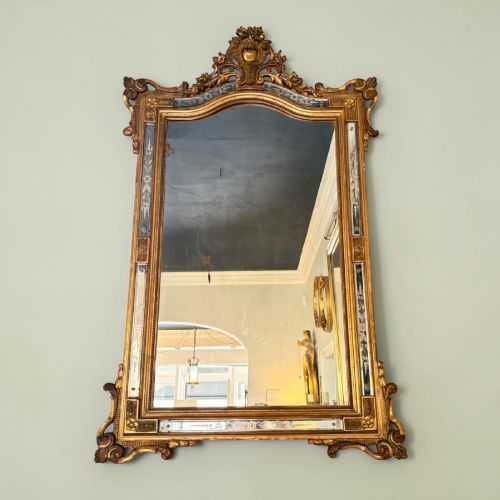
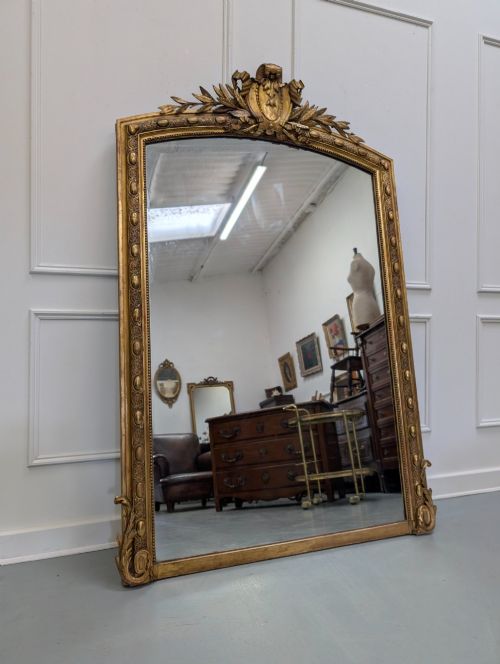
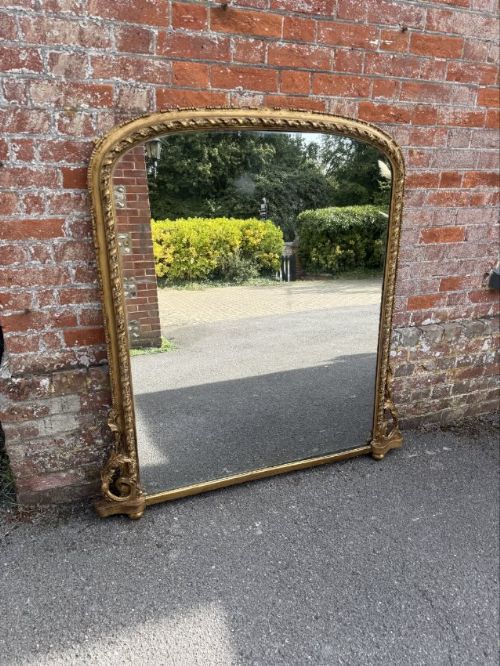
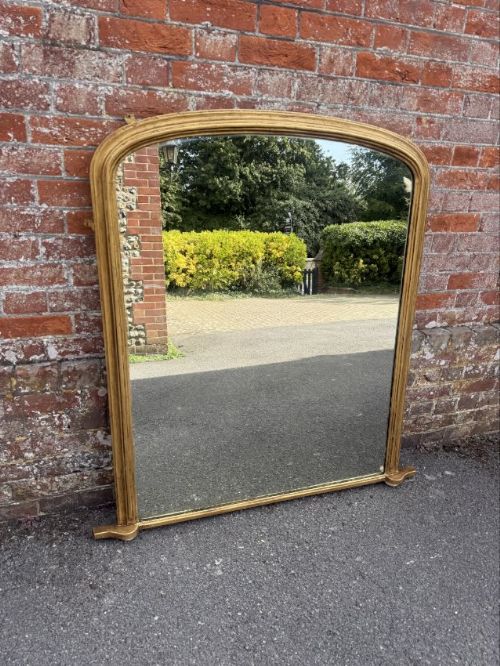
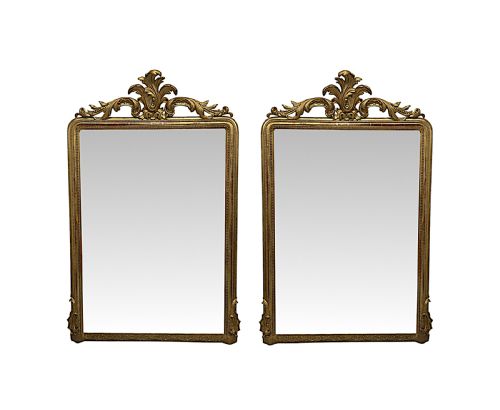
An overmantel mirror frame is designed specifically to hang above a fireplace mantel, combining the horizontal presence needed for a chimney breast with decorative woodwork or gesso moulding. These pieces appear frequently in Victorian, Regency and French Louis Philippe styles, often taking large arched, rectangular or landscape proportions.
Makers built these frames to anchor reception rooms, frequently pairing substantial timber construction with ornate crests, rope twists or classical acanthus leaf carvings. The selection on this page ranges from heavy English giltwood overmantels to tall French pier mirrors and ebonised or mahogany alternatives.
Materials and Construction
Makers constructed the foundational carcasses of these frames using solid timbers such as oak, mahogany, walnut or pine, which provided the necessary structural rigidity for large wall-hanging pieces. Carved details and relief ornaments were frequently modelled in gesso or composition applied over the wood base before gilding.
Gilding was achieved using gold leaf or metallic paint finishes applied over a prepared bole, while alternative examples feature bleached or ebonised oak, walnut and black lacquer. Mirror plates included early mercury glass with characteristic foxing alongside later bevelled plate glass.
Listings feature eighteenth-century, nineteenth-century and early twentieth-century periods, including Victorian, Regency, Edwardian, and French styles.
Assessing Quality and Execution
Quality in an overmantel mirror frame is visible in the crispness and depth of the hand-carving rather than shallow machine-moulded composition ornament. Superior examples display tightly detailed acanthus leaves, clean rope twists and well-joined corner mitres that hold their structural integrity under heavy loads.
The choice of finishing materials also dictates grade, with genuine gold leaf retaining a warmer, more nuanced lustre over time compared to flat metallic paints. Furthermore, retaining original mercury glass plates or early mirrored glass adds significant authenticity to nineteenth-century and eighteenth-century pieces.
Waring and Gillow
The Overmantel Mirror Frame Glossary
- Gesso
- A plaster-like mixture applied to wood frames as a smooth base for gilding or deep relief moulding.
- Giltwood
- Timber carved and subsequently covered with gold leaf or metallic foil.
- Pier Glass
- A tall, narrow mirror designed specifically to hang on the wall space between windows.
- Trumeau
- A decorative wall mirror or panel featuring painted or carved scenes, frequently French in origin.
- Mercury Glass
- An early double-walled glass blown with a silvering mixture, known for characteristic dark spots called foxing.
Overmantel Mirror Frame: Frequently Asked Questions
How do I hang a heavy overmantel mirror safely?
These substantial frames require heavy-duty fixings anchored directly into the masonry or wall studs above the fireplace to support their considerable weight.
Professional mirror cleats or split battens distribute the load evenly across the structure of the wall.
What is the difference between a pier mirror and an overmantel mirror?
Pier mirrors were built tall and narrow to fit the narrow wall space between windows, reflecting light back into the room.
Overmantel mirrors are wider and lower, proportioned specifically to sit horizontally along the mantel shelf above a fireplace.
How can I tell a Victorian frame from a Regency one?
Regency frames often display neoclassical restraint, architectural symmetry and gilded classical motifs dating from the early nineteenth century.
Victorian pieces tend to feature heavier, more exuberant ornamentation such as deep acanthus leaf scrolls, gesso relief and arched tops.
What does foxing on a mirror plate mean?
Foxing refers to the small dark spots and mottled patches that develop on older silvered glass over decades of oxidation.
This natural ageing process confirms the presence of antique mercury glass rather than modern manufactured replacements.