
Vintage Geometric Jewellery
These vintage geometric jewellery pieces bring sharp lines and clean angles straight from the 1920s and Art Deco decades into daily wear.
Vintage Geometric Jewellery
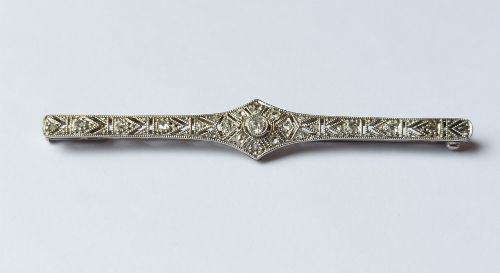
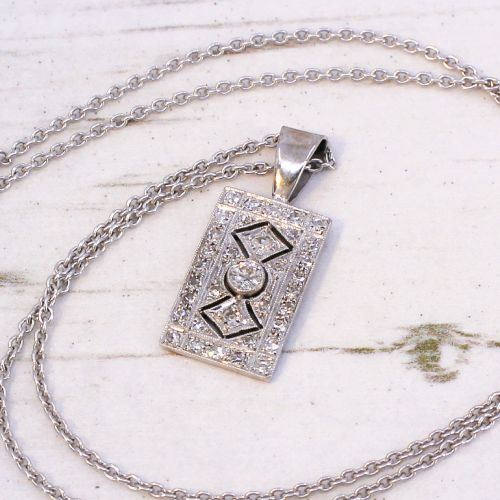
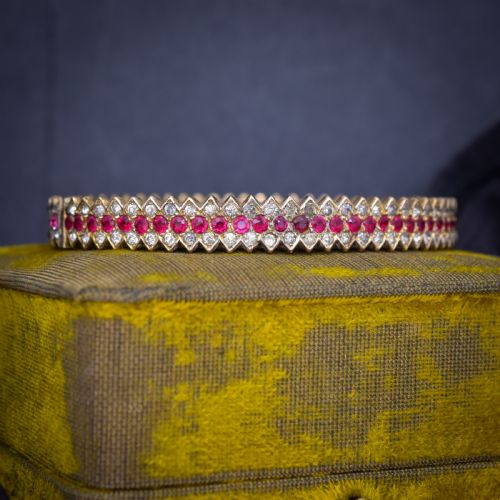
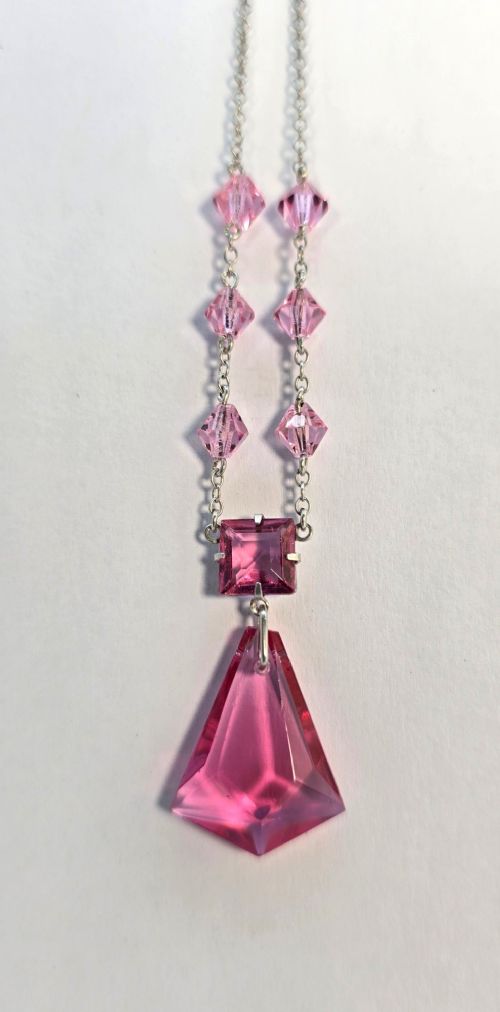
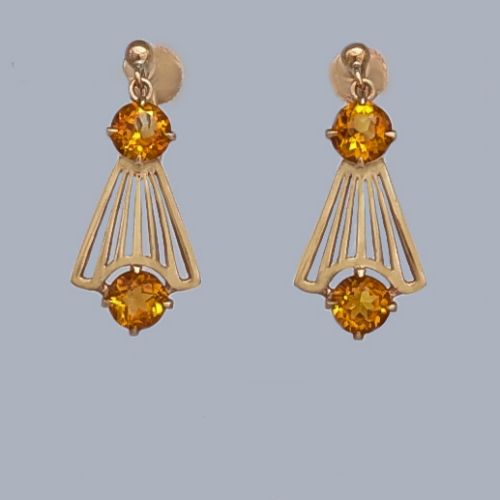
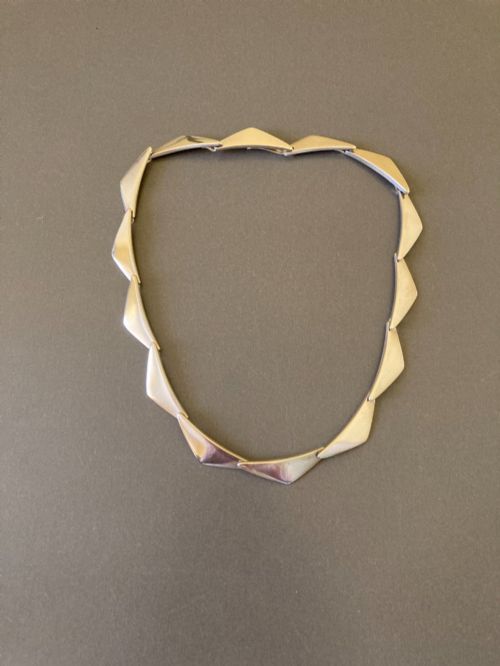
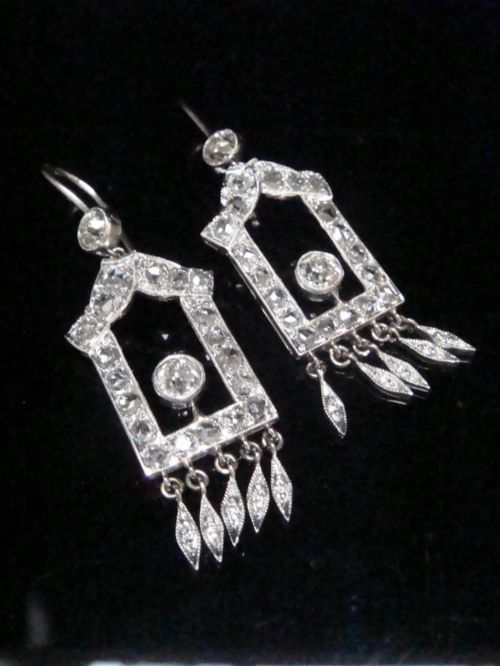
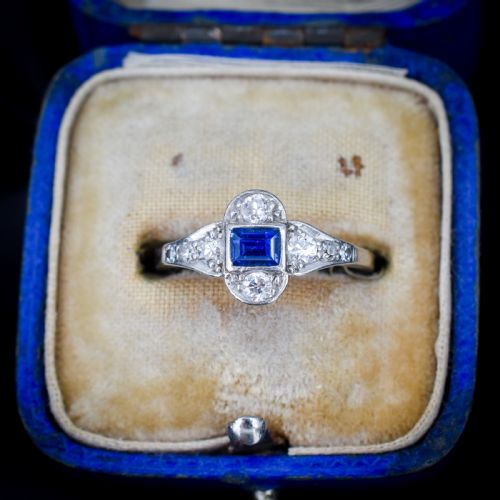
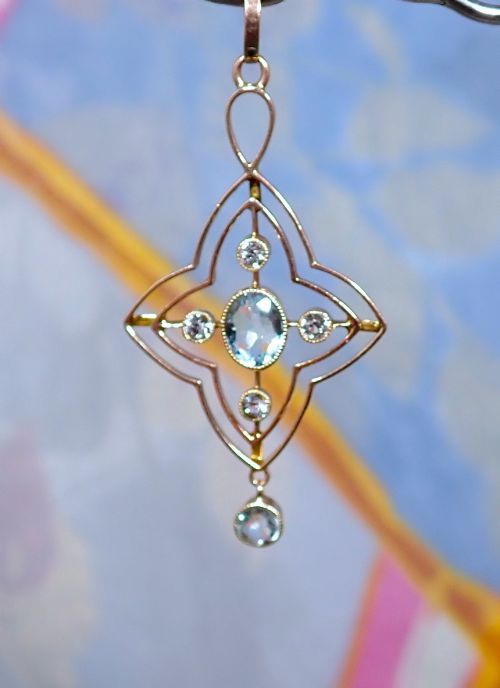
Vintage geometric jewellery brings together structured forms, repeating angles, and linear motifs that define the Art Deco movement alongside Mid-Century Modern and Edwardian periods. Buyers searching this phrase look for structured rings, drop earrings, bar brooches, and link bracelets that display a deliberate architectural arrangement. The most common examples met on this page span the 1920s and 1930s, constructed with symmetrical layouts of squares, chevrons, and rectangles.
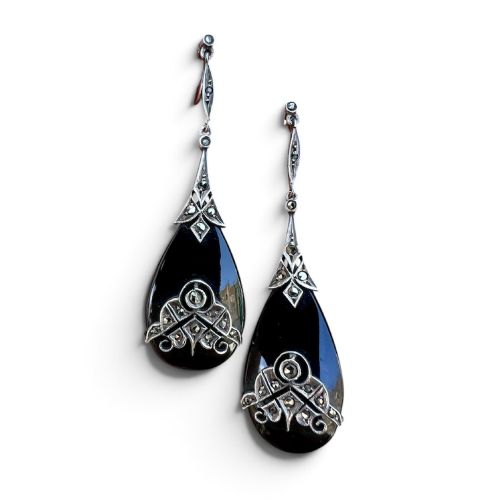
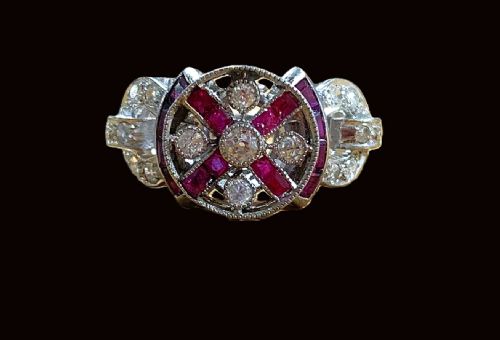
The objects take many functional forms, ranging from platinum and diamond cluster rings to chromium and enamel bracelets or rock crystal necklaces. Pieces often incorporate contrasting materials like onyx and silver to accentuate the angular patterns that give vintage geometric jewellery its distinct visual rhythm. Alongside the dominant 1920s and 1930s items, occasional mid-century pieces from the 1950s and 1960s appear with bolder, rounded geometric profiles.
Materials and construction methods
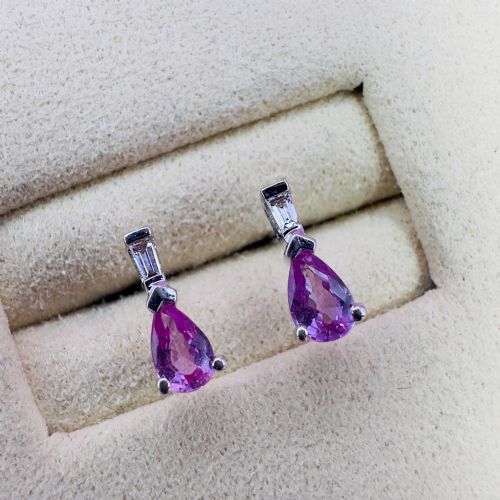
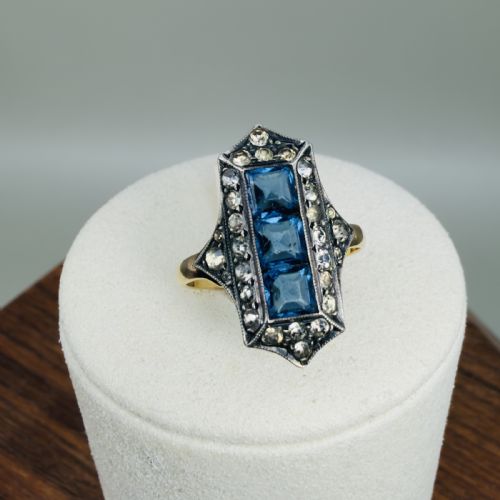
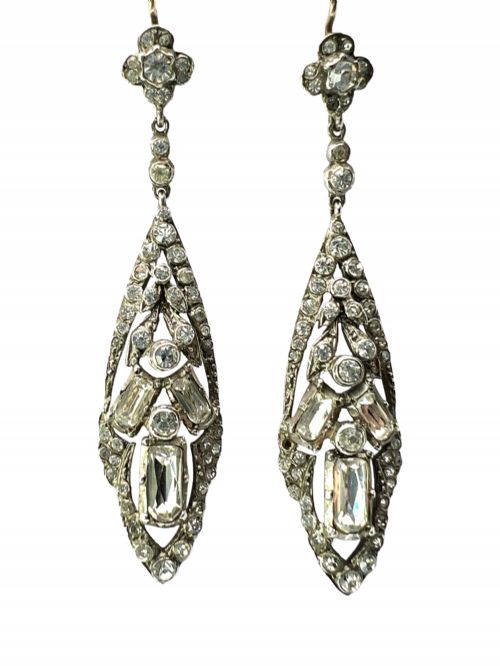
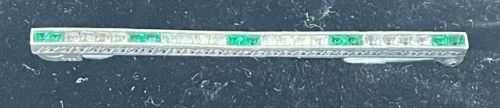
The construction relies heavily on precious metals like platinum, 18ct white gold, and yellow gold paired with precise gemstone cutting techniques. Stones are frequently shaped into baguettes, trapezoids, and calibre cuts to fit tightly into rigid metal channels and borders without gaps. Enamel and paste stones also play a significant role, providing vibrant colour contrast against stark silver or chrome settings.
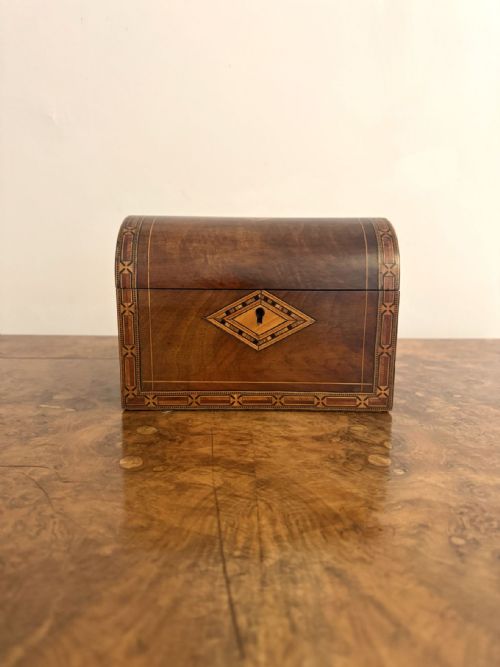
Metalwork methods range from fine platinum prong and bezel settings in high-end rings to constructed link assemblies in industrial chrome and enamel bracelets. Inlays, such as Tunbridge work found on certain wooden objects, demonstrate alternative geometric surface decoration using contrasting natural timbers.
A tea caddy with Tunbridge inlay sits among the rings and bracelets, proving that geometry governed the tea table too.
Distinctions in construction and material grade
Quality separates along the precision of stone cutting and the integrity of the metal settings holding the geometric design together. Superior examples utilise precisely fitted calibre-cut sapphires, rubies, or diamonds that follow exact angular contours, whereas lesser pieces rely on uniform moulded glass or paste stones.
The complexity of the metal fabrication dictates the standard of the piece, with hand-engraved platinum and articulated link work representing finer craftsmanship than stamped or simpler cast components. Maker attribution also influences standing, where documented workshop output carries distinct construction hallmarks.
Georg Jensen·Jakob Bengel·Randers Silver
The Vintage Geometric Jewellery Glossary
- Calibre cut
- Gemstones specifically faceted and shaped to fit tightly into a precise geometric setting without surrounding metal spacing. This technique demands high precision from the lapidary.
- Baguette
- A narrow, rectangular gemstone cut with step facets, frequently utilised in linear arrangements to outline geometric jewellery designs. It provides a sharp, clean border.
- Paste
- Hand-cut lead glass used as a substitute for precious gemstones in vintage pieces. It allows for vibrant colour and high refractive index within accessible designs.
- Marquise
- A boat-shaped gemstone cut featuring pointed ends and curved sides. It introduces a sharp focal point to symmetrical layouts.
- Trapezoid
- A four-sided geometric stone cut with two parallel sides, commonly deployed in Art Deco cluster designs to build stepped angular motifs.
Vintage Geometric Jewellery: Frequently Asked Questions
What periods do these pieces come from?
The selection spans primarily the 1920s and 1930s Art Deco era, alongside Edwardian, 1940s, 1950s, and 1960s examples.
Earlier pieces often feature platinum and delicate millegrain work, while later mid-century items introduce bolder abstract lines and different metal alloys.
How do I identify Art Deco jewellery?
Look for strict symmetry, straight lines, chevrons, and stark contrasts in colour between gemstones and metals.
Common markers include calibre-cut stones, rectangular silhouettes, and geometric motifs inspired by architecture and machinery.
Are these items suitable for everyday wear?
Many sturdy rings, bracelets, and brooches are robust enough for regular use, provided they receive gentle care.
Delicate Edwardian pendants or paste pieces with open-back settings require more mindful handling to protect the stone mounts.
What metals were used in these designs?
Makers utilised platinum, 18ct white gold, yellow gold, silver, chrome, and chromium depending on the decade.
Platinum and white gold dominate the 1920s items, while industrial metals like chrome appear in specific mid-century modernist pieces.