




Vintage Geometric Flower Vase
These vintage geometric flower vases bring sharp lines and bold colour to a room, driven by the distinct geometry of the early twentieth century.
Vintage Geometric Flower Vase
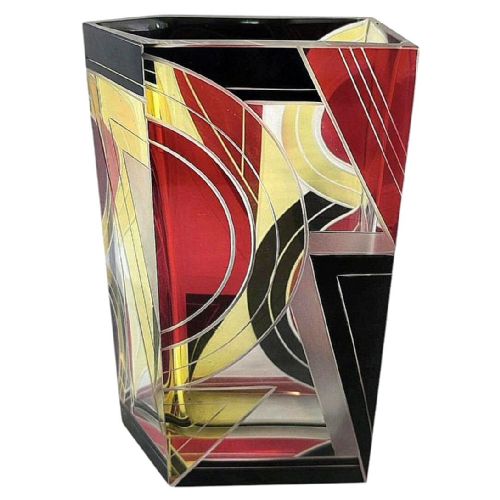
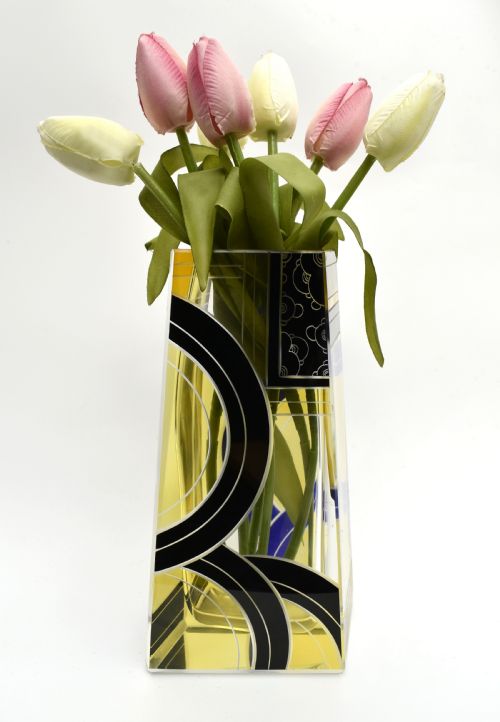
A vintage geometric flower vase is typically a product of the Art Deco and Arts and Crafts periods, spanning from the nineteen-tens through the nineteen-thirties. You will frequently encounter tall glass vessels and square profiles decorated with enamel work, alongside occasional brass twin-handled urns from earlier decades.
The aesthetic relies on straight lines, angular patterns, and repeating motifs that break away from traditional floral curves. Most examples originate from European workshops, particularly in Bohemia and Belgium, reflecting the industrial design trends of the interwar years.
How they were made
Makers utilised cased glass, lead crystal, and overlay glass, layering different colours together before cutting or etching through the surface to reveal contrasting hues beneath. Enamel decoration was then applied by hand, creating raised patterns that sit proud of the glass body.
Metal vessels from the period involve spun brass and chrome plating, often shaped with twin handles and stamped with maker details. The combination of acid etching, wheel cutting, and hand enamelling defines the manufacturing complexity of these decorative objects.
The listings span three distinct decades: nineteen-ten, nineteen-twenty, and nineteen-thirty, with the nineteen-thirties representing the largest share of glass vessels.
What varies in quality
Quality rests upon the crispness of the etchings and the precision of the geometric enamel lines. Pieces with deep, clean wheel cuts and vibrant, evenly applied enamel stand apart from simpler mould-blown variants.
The weight of the glass and the clarity of the cased or overlay layers also dictate distinction. Heavier lead crystal and complex multi-layered coloured glass demand greater skill from the glassblower and cutter.
Charles Graffart for VSL·Karl Palda·Val St. Lambert·Beldray Ltd
The Vintage Geometric Flower Vase Glossary
- Cased glass
- Glass formed of two or more distinct layers of different colours, often blown together whilst molten. This technique allows cutters to carve through the outer layer to expose the contrasting colour underneath.
- Art Deco
- A design style spanning the nineteen-twenties and nineteen-thirties characterised by sleek lines, geometric shapes, and modern industrial materials. It replaced the flowing organic curves of earlier decorative movements.
- Uranium glass
- Glass containing trace amounts of uranium oxide, which glows bright green under ultraviolet light. It was widely used during the period for decorative vessels and tableware.
- Overlay glass
- A method where a layer of coloured glass is fused over a clear or contrasting base layer. The outer layer is then selectively cut away to form patterns.
Vintage Geometric Flower Vase: Frequently Asked Questions
How do I clean a vintage glass vase?
Wash the vessel gently in warm, soapy water using a soft cloth, avoiding abrasive pads that can scratch the surface or damage enamel details.
Dry the glass thoroughly with a lint-free cloth to prevent water spots and preserve the clarity of the material.
Can I use these vases for fresh flowers?
Many of these glass and metal pieces were made to hold cut flowers and water without issue.
Take care with antique enamel work, ensuring harsh chemicals or prolonged soaking do not weaken the pigments applied to the exterior.
How can I tell Art Deco from Arts and Crafts?
Art Deco pieces display sharp angles, vibrant colours, and symmetry using glass and chrome. They date predominantly to the nineteen-thirties.
Arts and Crafts objects favour warmer metals like brass, showing hand-worked surfaces and utilitarian forms originating from the nineteen-tens.
Where were most of these vases manufactured?
The majority of the glass vessels originate from continental Europe, particularly regions known for historic glassmaking such as the Czech Republic and Belgium.
Metal items are frequently found from British firms utilising spun brass and chrome plating during the interwar years.