



Vintage Gentleman Portrait Painting
A vintage gentleman portrait painting brings a distinct character into a room, capturing individual histories from past centuries through oils and watercolours.
Vintage Gentleman Portrait Painting
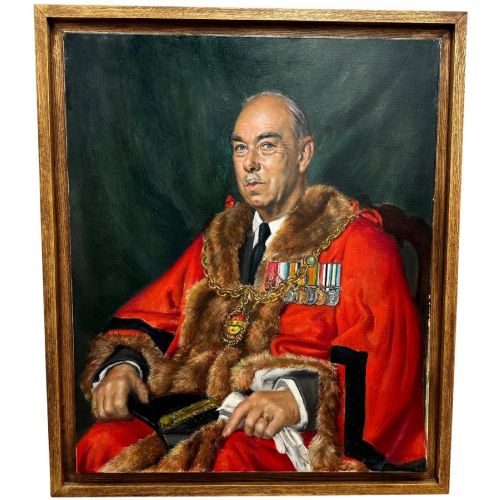
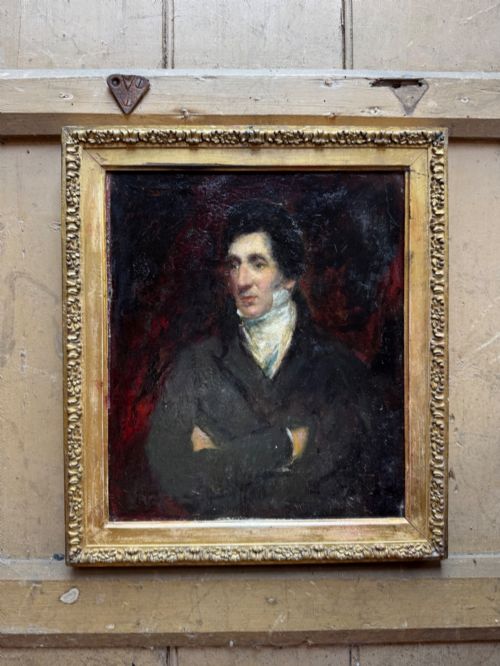
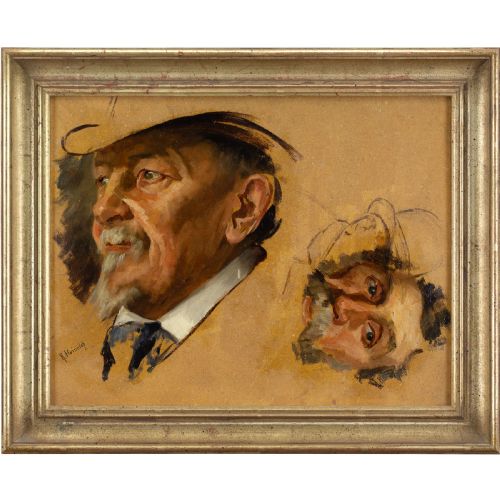
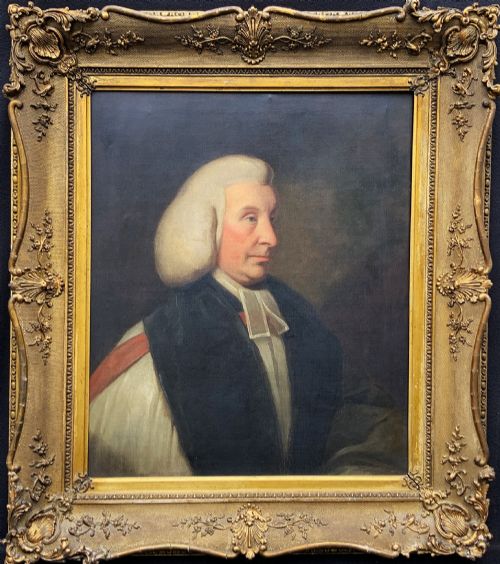
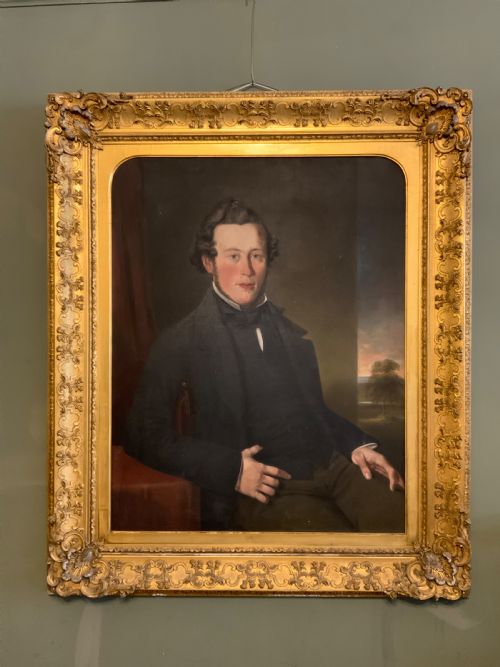
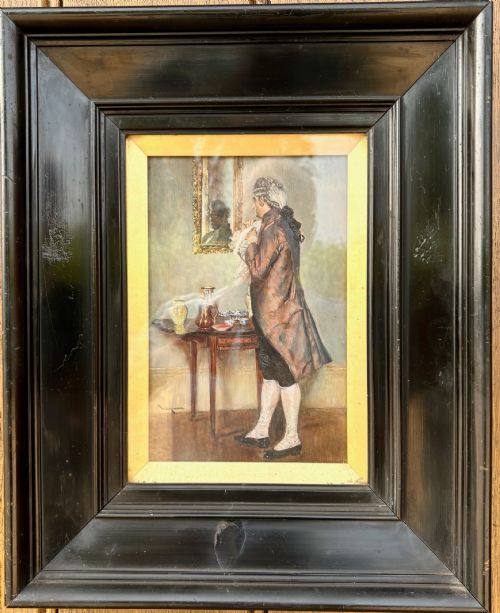
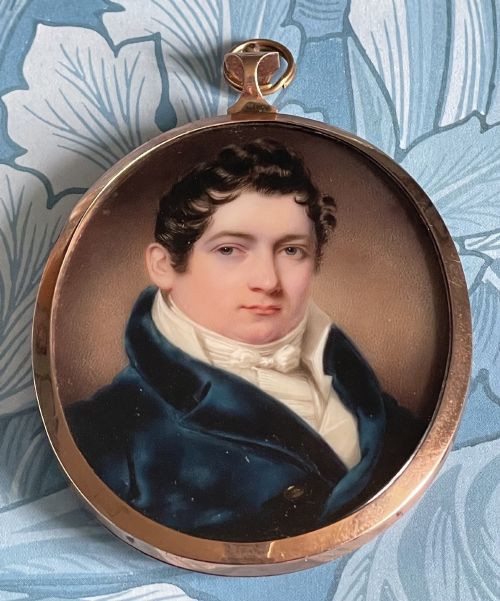
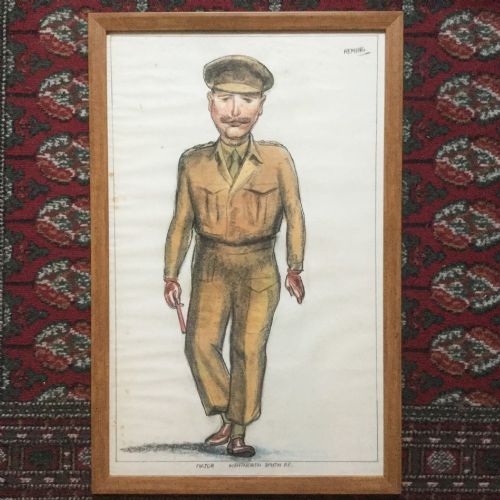
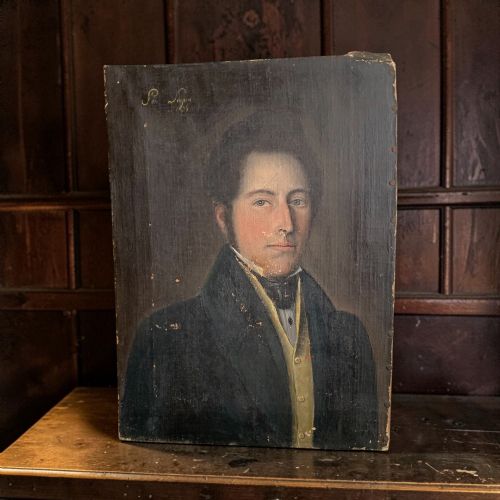
A vintage gentleman portrait painting represents historical figures, civic leaders, officers, and anonymous sitters rendered in oil paint, watercolour, or pastel. These artworks span from the Georgian and Regency periods through the Victorian era and into the mid-twentieth century.
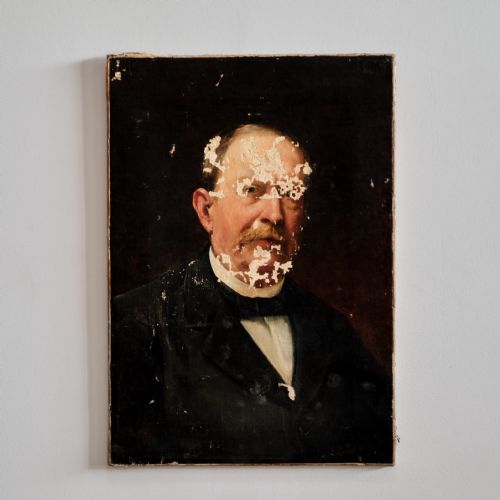
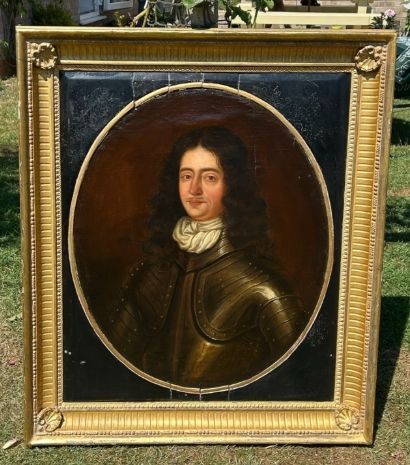
Buyers encounter canvases depicting aristocrats in armour, mayors, medical doctors, and gentlemen engaged in quiet pursuits like reading or smoking. The selection includes works by named artists alongside pieces from regional English, French, Belgian, and Swedish schools.
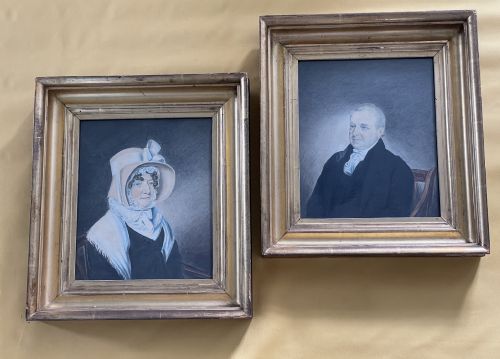
The most common formats on this page are oil paintings on canvas or panel, accompanied by occasional portrait miniatures, watercolours, and pastel sketches in period frames.
How They Were Made
Artists painted primarily with oil on stretched canvas or wooden panels, building up layers of pigment to achieve depth in clothing and flesh tones. Some works utilise watercolour, gouache, or pastel on paper, particularly for miniatures and smaller portrait studies.
Materials recorded across the inventory include oil on canvas, wood panels, watercolours, and plaster busts.
What Varies In Quality
The quality of a vintage gentleman portrait painting rests on the skill of the brushwork in capturing facial expression, bone structure, and the texture of garments like wool, velvet, and lace. Finer examples display confident handling of light and shadow, while simpler primitive or provincial works rely on flat planes and rigid outlines.
The survival of the original surface, the stability of the canvas or panel, and the authenticity of the accompanying period frame contribute significantly to the standing of an individual piece.
Bernard Hailstone·W D Almond·John C D Engleheart·J F Marie Huet Villiers·John Watkins Chapman·Jules Rambo·Rolinda Sharples·Mary Beale·Arthur Spooner·Marcellus Laroon·John McGhie·Frank C Harlow·Moussa Ayoub
The Vintage Gentleman Portrait Painting Glossary
- Oil on canvas
- Pigment mixed with drying oil applied to a woven fabric support stretched over a wooden frame. This medium allowed artists to blend tones smoothly and rework compositions over time.
- Portrait miniature
- A small, highly detailed painting designed to be held in the hand or worn on the person. These works often utilised watercolour on vellum, ivory, or card.
- Giltwood
- Wood carved and coated with a thin layer of gold leaf or metal powder. It provides reflective decorative borders for historical frames.
- School
- A group of artists working in a particular region or following a specific stylistic tradition during a given era. Attributions often use this term when the exact individual painter remains unknown.
- Regency
- The period in British history from 1811 to 1820, characterised by distinct neoclassical fashions in portraiture and interior decoration.
Vintage Gentleman Portrait Painting: Frequently Asked Questions
How do I date a portrait painting?
Dating relies primarily on the sitter's clothing, hairstyle, and facial hair, alongside the style of the frame and the physical composition of the canvas or panel. Written inscriptions on the reverse or artist signatures provide further documentary evidence.
Changes in painting technique and pigments across centuries also help narrow the window of creation, from stiff Georgian ruffs and wigs down to twentieth-century tweed suits.
Where should I hang a portrait?
These works suit traditional reception rooms, studies, and hallways where they can be hung at eye level to create a sense of historical depth. Pairing them with wooden furniture and neutral wall colours helps anchor their visual weight in a contemporary interior.
Direct sunlight should be avoided to protect oil pigments and paper works from fading over time.
Are all sitters identified?
Many portraits record the names of specific historical figures, such as mayors, military officers, or landed gentry, often noted on plaques or canvas reverses. Others depict anonymous individuals whose identities were lost over generations.
Anonymous portraits are typically categorized by their school, region, or period rather than a named person.